New Campaign ‘I Farm I Vote’ Encourages Farmers to Vote Nov. 3

The best way for the concerns of rural communities to be recognized on the local, state and national levels is for farmers and other rural residents to get out and vote.

To that end, Virginia Farm Bureau Federation has launched its “I Farm I Vote” campaign.

“All 140 seats in the Virginia General Assembly are up for election this year. It’s crucial for farmers to let their voices be heard and elect people who will make decisions in agriculture’s best interests,” said Kelly Pruitt, VFBF grassroots coordinator.

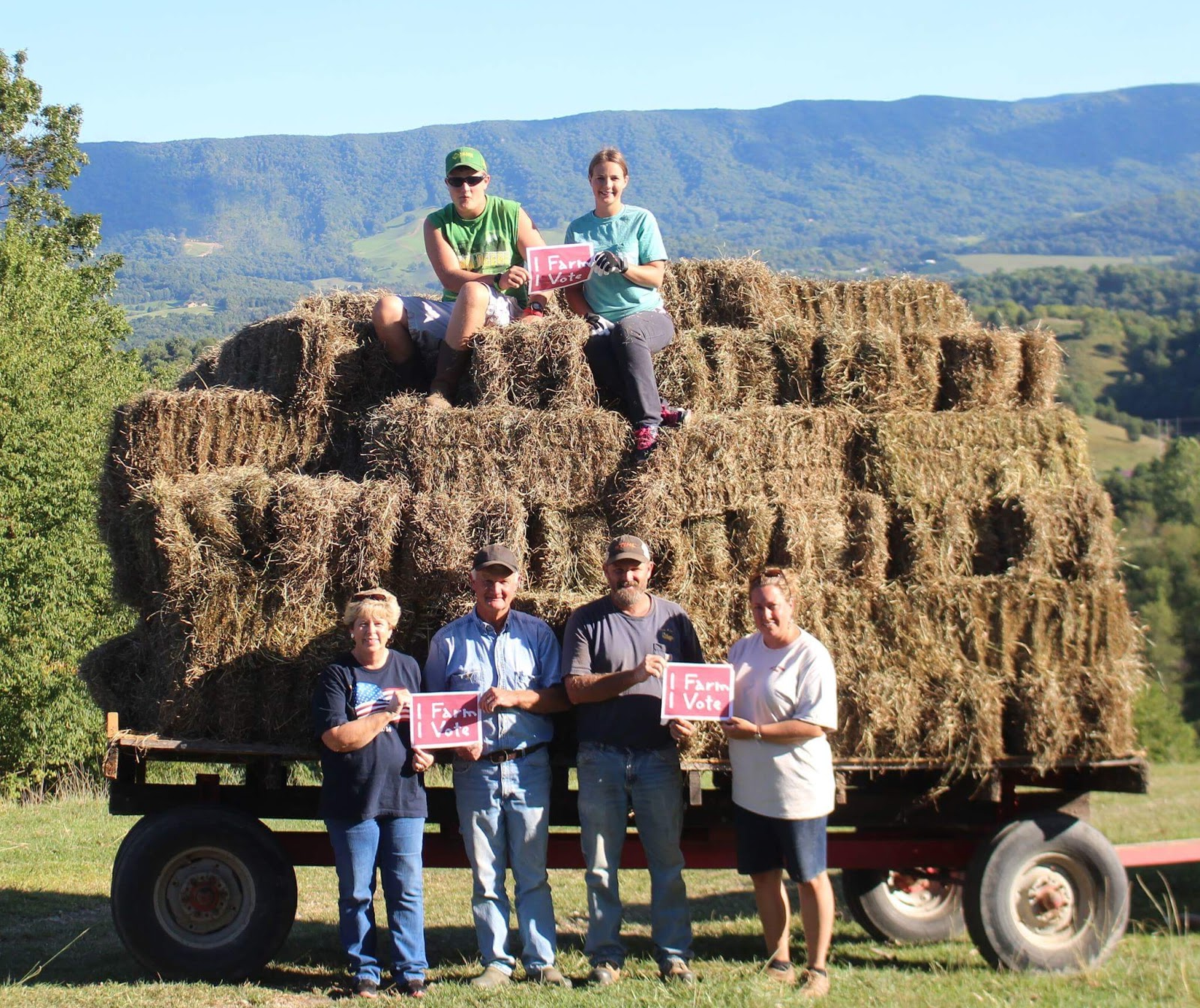
This summer Farm Bureau will be encouraging rural voters to display “I Farm I Vote” signs on their property and take photos with their signs to post to social media with the hashtag #IFarmIVoteVA.

To participate, visit VaFarmBureau.org/PolicyAction/IFarmIVote.aspx to print a sign, or contact a county Farm Bureau office for more information.

Global Tobacco Reps Learn about Quality U.S. Leaf

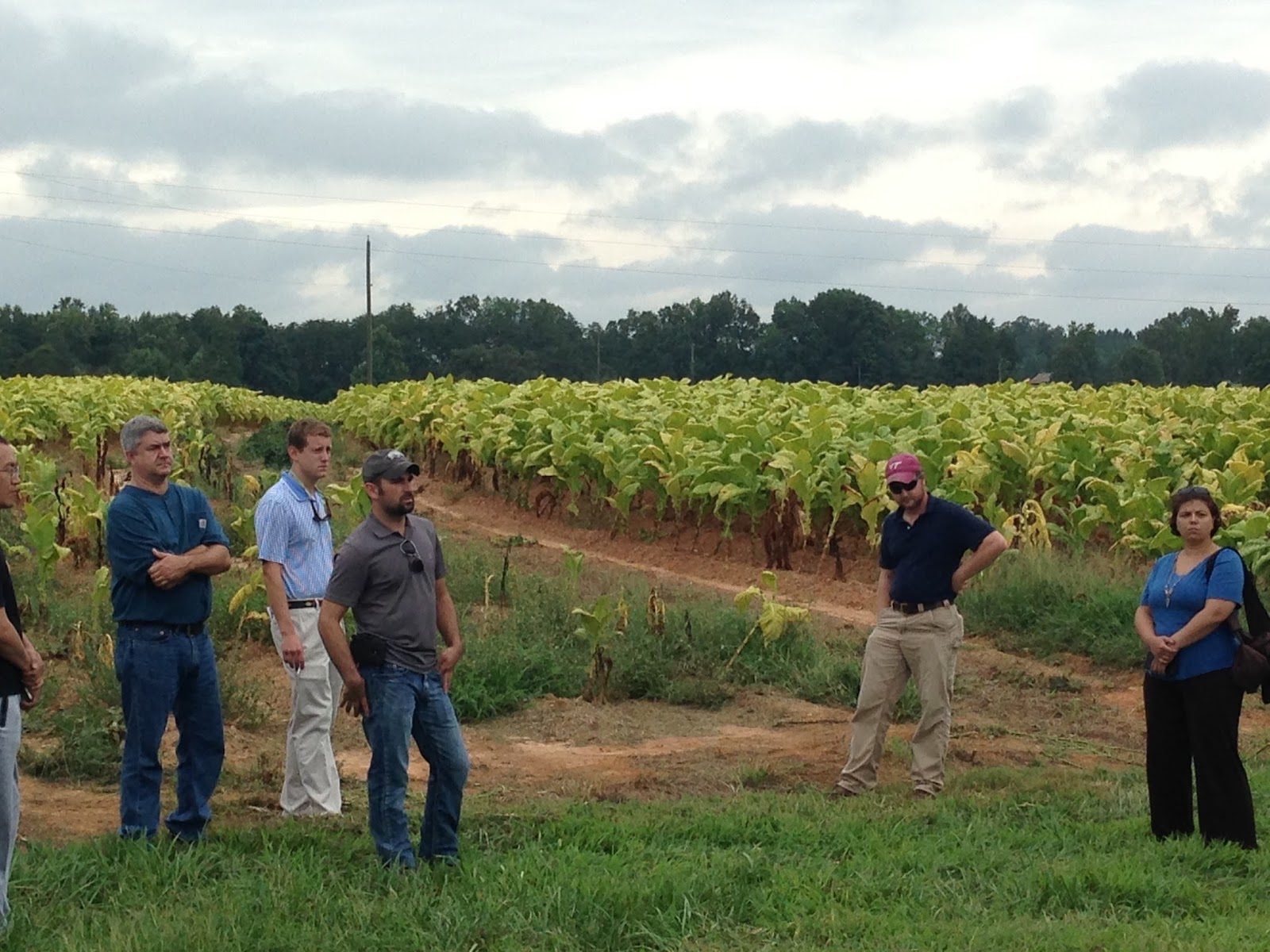
Visitors from almost a dozen countries recently learned about tobacco grown in what several people referred to as “the greatest tobacco region in the world.”

Representatives from Brazil, Bulgaria, China, Greece, Jordan, the Netherlands, the Philippines and Greece, along with a few U.S. tobacco buyers, visited two Virginia tobacco farms and a tobacco receiving station Aug. 20. It was part of Tobacco Associates Inc.’s 2015 International U.S. Leaf Grading School Tobacco Farm Production and Industry Tour. The event was co-hosted by the Virginia Farm Bureau Federation, the Virginia Department of Agriculture & Consumer Services and the Virginia Tobacco Board.

Tobacco Associates is a trade organization funded by U.S. tobacco growers to promote their products. The tour, as well as a two-week training program, helps leaf buyers and tobacco manufacturers learn more about the raising, curing and blending of U.S. tobacco.

Kirk Wayne, president of Tobacco Associates, said students receive three days of intense classroom training about tobacco leaf quality before visiting farms and seeing the process up close. “They learn about our systems and how we produce quality tobacco,” Wayne said. “Part of the program is teaching them how we use U.S. tobacco to produce our special blends.”

The tobacco school is funded by flue-cured tobacco growers in Virginia, North Carolina, South Carolina, Georgia and Florida. “It’s grown each year over the past eight years,” Wayne said.

More than 80 U.S. tobacco blends are sold worldwide, and more than 60 percent of U.S. flue-cured tobacco, the type the group viewed Aug. 20, is exported, Wayne noted. Virginia farmers grow close to 21,000 acres of flue-cured tobacco annually, according to the U.S. Department of Agriculture’s National Agricultural Statistics Service.

At the Terry family’s Golden Leaf Farms in Keeling, students observed the farm’s tobacco leaf handling and grading systems that ensure tobacco bales consist of “the cleanest, best quality tobacco there is,” explained Stephen Barts, a Pittsylvania County agriculture and natural resources agent for Virginia Cooperative Extension. “The Terrys are some of the most meticulous growers there are.”

At JF Leaf Ltd. in Mecklenburg County, the students learned about grower Jim Jennings’ leaf grading system. They also learned that one researcher, Dr. David Reed, found that reducing fuel consumption in tobacco drying barns can also improve curing efficiency. Reed works at the Southern Piedmont Regional Agricultural Research and Extension Center.

Virginia Secretary of Agriculture and Forestry Todd Haymore said, “As far as I’m concerned, this is the greatest tobacco-producing region in the world.”

The tour concluded with a visit to Universal Leaf’s tobacco receiving station in South Hill.

VFBF AgPAC Endorses 115 Candidates for General Assembly Seats

Virginia Farm Bureau Federation AgPAC, the political action committee of Virginia Farm Bureau Federation, announced Aug. 21 its endorsement of 28 candidates for the Virginia Senate and 87 candidates for the Virginia House of Delegates.

The endorsements are based on the recommendations of local committees of farmers. Candidates who receive VFBF AgPAC endorsements “have demonstrated a clear understanding of the needs and challenges farmers are facing and/or have proven their support through their favorable voting records while holding positions in the General Assembly,” said Wayne F. Pryor, chairman of VFBF AgPAC and president of Virginia Farm Bureau. “We believe the endorsed candidates will help agriculture and forestry maintain its vitality as the No. 1 industry in Virginia.”

The non-partisan VFBF AgPAC was created by Farm Bureau in 1999 and employs in-kind contributions to support candidates who can best support agriculture and Farm Bureau issues.

The following candidates were endorsed (* indicates incumbent candidates):

Virginia Senate
3rd District – Thomas K. Norment, Jr.*(R)
4th District – Ryan McDougle* (R)
5th District – Kenneth Alexander* (D)
6th District – Lynwood Lewis* (D)
7th District – Frank Wagner* (R)
8th District – Bill R. DeSteph, Jr. (R)
10th District – Glen Sturtevant (R)
11th District – Amanda Chase (R)
12th District – Siobhan Dunnavant (R)
14th District – John Cosgrove* (R)
15th District – Frank Ruff* (R)
16th District – Rosalyn Dance* (D)
17th District – Bryce Reeves* (R)
19th District – David R. Suetterlein (R)
20th District – William M. “Bill” Stanley, Jr* (R)
22nd District – Thomas A. Garrett Jr.* (R)
23rd District – Steve Newman* (R)
24th District – Emmett Hanger* (R)
25th District – Creigh Deeds* (D)
26th District – Mark Obenshain* (R)
27th District – Jill Vogel* (R)
28th District – Richard Stuart* (R)
29th District – Harry “Hal” Parrish (R)
33rd District – Jennifer Wexton* (D)
35th District – Richard L. “Dick” Saslaw* (D)
36th District – Gerald “Jerry” Foreman (R)
38th District – Ben Chafin* (R)
40th District – Charles W. “Bill” Carrico* (R)

Virginia House of Delegates
1st District – Terry Kilgore* (R)
2nd District – Mark Dudenhefer (R)
3rd District – James W. “Will” Morefield* (R)
4th District – Todd Pillion* (R)
5th District – Israel O’Quinn* (R)
6th District – Jeffery Campbell* (R)
7th District – Larry N. “Nick” Rush* (R)
8th District – Greg Habeeb* (R)
9th District – Charles Poindexter* (R)
10th District – Randy Minchew* (R)
11th District – Sam Rasoul* (D)
12th District – Joseph Yost* (R)
14th District – Danny Marshall* (R)
15th District – Todd Gilbert* (R)
16th District – Les Adams* (R)
17th District – Christopher Head* (R)
18th District – Michael Webert* (R)
19th District – Terry Austin* (R)
20th District – Richard P. “Dickie” Bell* (R)
21st District – Ron Villanueva* (R)
22nd District – Kathy Byron* (R)
23rd District – Scott Garrett* (R)
24th District – Ben Cline* (R)
25th District – Steve Landes* (R)
26th District – Tony Wilt* (R)
27th District – Roxann Robinson* (R)
28th District – William J. “Bill” Howell* (R)
29th District – Christopher Collins (R)
30th District – Nicholas Freitas (R)
31st District – Scott Lingamfelter* (R)
32nd District – Thomas “Tag” Greason* (R)
33rd District – Dave LaRock* (R)
34th District – Kathleen Murphy* (D)
35th District – Mark Keam* (D)
37th District – David Bulova* (D)
38th District – Kaye Kory* (D)
40th District – Tim Hugo* (R)
41st District – Eileen Filler-Corn* (D)
42nd District – David Albo* (R)
47th District – Patrick Hope* (D)
48th District – R. C. “Rip” Sullivan* (D)
50th District – Jackson Miller* (R)
51st District – Richard Anderson* (R)
52nd District – Luke Torian* (D)
54th District – Robert “Bobby” Orrock* (R)
55th District – H. F. “Buddy” Fowler* (R)
56th District – Peter Farrell* (R)
57th District – David Toscano* (D)
58th District – Rob Bell* (R)
59th District – Matt Fariss* (R)
60th District – James Edmunds* (R)
61st District – Thomas C. Wright, Jr.* (R)
62nd District – Riley Ingram* (R)
63rd District – Lashrecse Aird (D)
65th District – Lee Ware* (R)
66th District – Kirk Cox* (R)
67th District – James LeMunyon* (R)
68th District – Manoli Loupassi* (R)
69th District – Betsy Carr* (D)
70th District – Delores McQuinn* (D)
72nd District – Jimmie P. Massie* (R)
73rd District – John O’Bannon* (R)
74th District – Lamont Bagby (D)
75th District – Roslyn Tyler* (D)
76th District – Chris Jones* (R)
77th District – Lionell Spruill, Sr.* (D)
78th District – J. A. “Jay” Leftwich* (R)
79th District – Steve Heretick (D)
80th District – Matthew James* (D)
81st District – Barry Knight* (R)
82nd District – Jason Miyares (R)
83rd District – Chris Stolle* (R)
84th District – Glenn Davis* (R)
85th District – Scott Taylor* (R)
86th District – Raul “Danny” Vargas (R)
88th District – Mark Cole* (R)
89th District – Daun Hester* (D)
90th District – Joseph Lindsey* (D)
91st District – Gordon Helsel* (R)
93rd District – T. “Monty” Mason* (D)
94th District – David Yancey* (R)
95th District – Pricillia Burnett (I)
96th District – Brenda Pogge* (R)
97th District – Christopher Peace* (R)
98th District – Keith Hodges* (R)
99th District – Margaret Ransone* (R)
100th District – Robert S. Bloxom* (R)

Texas Farm Bureau: 5 Things You Should know About the EPA WOTUSule

By Mike Barnett
Director of Publications
Texas Farm Bureau
$37,500. Per incident. Per day. Per violation.
Does that grab your attention? It should.
That’s what you could be fined by the Environmental Protection Agency (EPA) if you have an unauthorized discharge of “pollutants” from your farmland that requires a Clean Water Act (CWA) permit. It’s all part of the new rule recently issued by the EPA and the Army Corps of Engineers defining waters of the U.S. (WOTUS). It expands the federal CWA jurisdiction over many landscape features found on farm, ranch and forest lands across the nation. The rule is expected to go into effect Aug. 28.
Here are five things you should know:
1)     Should I be concerned? You bet! Unpermitted discharges of “pollutants” into WOTUS are unlawful and carry large potential penalties, even if the farmer or rancher has no knowledge of that feature of WOTUS. The rule is so vague that EPA bureaucrats will be able to “make it up as they go along.” It will be out of compliance if they say it is. Worse still, government or citizens can reach back five years and impose penalties on a discharge.

2)     What qualifies for WOTUS? Under the broad language in the rules, just about any feature of your land could be identified as WOTUS. Easy to identify are navigable waters, including wetlands; rivers, streams and creeks that flow into navigable water. From there, you are playing a guessing game with a powerful regulator. They like it that way.
3)    What triggers CWA liability and permit requirements? The application from any sprayer, spreader or nozzle of pesticides, fertilizers or manure and manure products requires a section 402 NPDES permit from state regulatory agencies or the EPA, even if the WOTUS is dry at the time of application. In addition, a section 404 “dredge and fill” permit by the Corps of Engineers may be required for grading, laser leveling, terracing, plowing or deep ripping or construction and maintenance of roads, fences, ditches, ponds and culverts. A permit to plow? It doesn’t look all that far-fetched.
4)    What are my options? To minimize the risk of violating CWA, farmers can:
     Request a Jurisdictional Determination (JD) from the Corps of Engineers to definitively identify WOTUS on your farm or ranch.
     
     Assume that certain features are WOTUS and avoid anything that might result in a discharge to those areas.
  
     Seek clarification from the Corps of Engineers about whether your dirt-moving activities in or near WOTUS qualify for one of the section 404 permitting exemptions.
     Apply for a Section 402 or 404 permit when conducting activities that could result in a regulated discharge.
5)    Where can I get more information?
     Request a JD from the Corps of Engineers by contacting your local Corps office. Here is more information on the JD process. Be aware that the JD form on the website at the time of this writing is not based on criteria for the new rule.
For more information on the section 402 permitting process, see http://1.usa.gov/1MzZh15 andhttp://1.usa.gov/1hOhkFk.
For more information on section 404 “dredge and fill” permitting and exemptions, seehttp://1.usa.gov/1E75ekK and http://1.usa.gov/1JkF7Tg.
Farmers are navigating troubled waters with this new rule. It is important to remember that each farmer and rancher is responsible for assessing his land to ensure his practices are in compliance. Ignorance is not an excuse for the potential of exorbitant fines or civil suits.
Experts say it is unlikely EPA will go immediately into an enforcement campaign. Pending legislation in Congress has the regulators keeping their heads low, they say. Also, there are many suits against the rule in the court, including one filed in a federal district court in Galveston by Texas Farm Bureau, Matagorda County Farm Bureau, American Farm Bureau Federation and other groups.
The fact is the rule is here. And unless it is changed by Congress or the courts, it will someday be enforceable. Regulatory creep will set in. You could be affected.
It’s always good to be prepared!
Farm Bureau: Maps Show Massive Increase in EPA Authority, Regulatory Uncertainty for Everyone Else

A series of maps released today by the American Farm Bureau Federation show how the EPA will radically expand its jurisdiction over land use if its controversial Waters of the United States rule takes effect as expected August 28. That expansion comes even as major parts of the rule remain largely incomprehensible to experts and laypeople, alike.

The maps, prepared by Geosyntec Consulting, show the dramatic expansion of EPA’s regulatory reach, stretching across wide swaths of land in Pennsylvania, Virginia and Montana. In Pennsylvania, for example, 99 percent of the state’s total acreage is subject to EPA scrutiny. Landowners have no reliable way to know which of the water and land within that area will be regulated, yet they must still conform their activities to the new law.

“Farmers face enforcement action and severe penalties under EPA’s new rule for using the same safe, scientifically sound and federally approved crop protection tools they’ve used for years,” AFBF President Bob Stallman said. “This rule creates a new set of tools for harassing farmers in court, and does it all with language that is disturbingly vague and subject to abuse by future regulators. It’s worth saying again: The EPA needs to withdraw this rule and start over.”

Maps prepared to date can be found here:
  •  Montana WOTUS Maps
  •  Pennsylvania WOTUS Maps
  •  Virginia WOTUS Maps

*Additional maps are being developed for parts of Missouri, New York, Oklahoma and Wisconsin.

The interactive maps in detail:

The maps’ base layer shows areas regulated as tributaries and adjacent wetlands without a case-specific “significant nexus” analysis under previous rules. Through a progression, the maps add “ephemeral streams”—low spots in the land that drain and channel water away from farmland after a rain but are otherwise dry. The EPA has sometimes asserted jurisdiction over such areas before, but only after a site-specific finding of a “significant nexus” to downstream waters. Under the new rule, all such “ephemeral tributaries” are regulated.

With this added jurisdiction in place, the Clean Water Act will prohibit many common agricultural practices in or around these ephemeral features. Any unpermitted discharge—whether pesticides, fertilizer or even disturbed soil—will leave farmers vulnerable to enforcement by EPA, the Corps, or private citizens, with severe potential penalties. This means unless farmers are able to navigate the regulatory system to secure a costly Clean Water Act permit, farming in many areas will be significantly restricted.

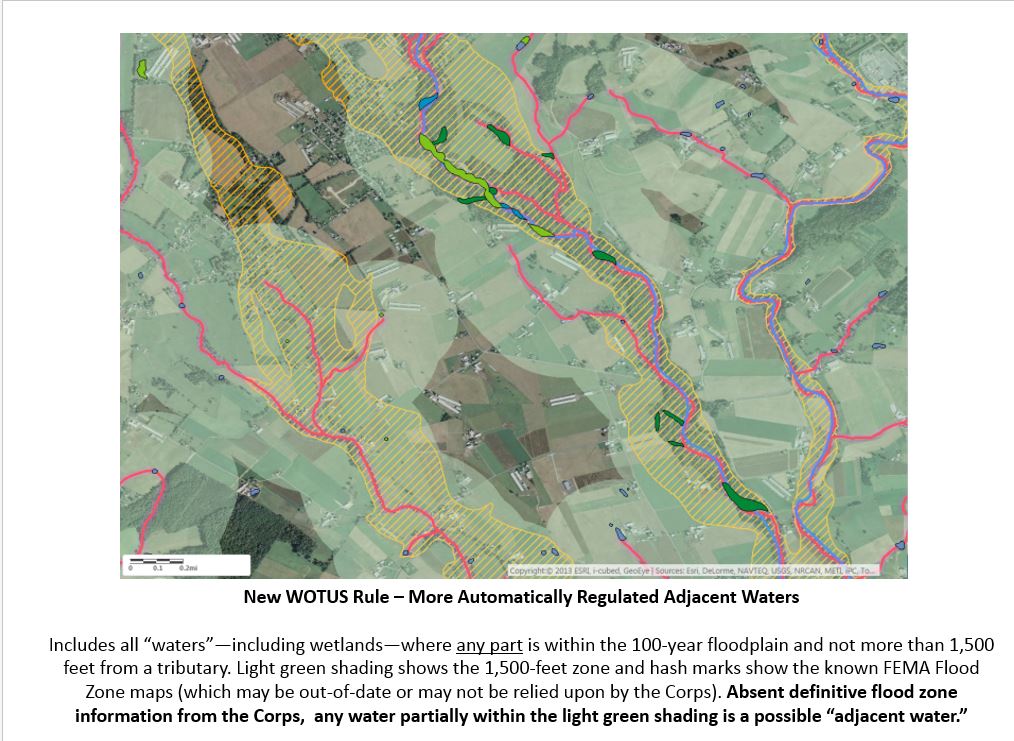
The maps’ next layer shows how the rule expands the definition of regulated “adjacent waters” to cover all waters (including wetlands) that lie, even partially, within 100 feet on either side of these newly regulated ephemeral drains. Next, they show where even more “adjacent waters” may lie—and this is where the vast uncertainty comes in. Where any part of a water or wetland is within the 100-year floodplain of a tributary, and not more than 1,500 feet (1/4 mile) from the tributary, that entire water feature is regulated. The uncertainty springs from the fact that many areas lack flood zone maps. What’s more, many such maps are out-of-date, and most ditches and ephemeral streams do not have mapped flood zones. The result is that farmers and other landowners lack even the basic tools to identify wetlands or other waters that are automatically regulated under the rule.

The final blow—the almost unlimited reach of the rule—is shown in the final map layer that covers waters that are not “tributaries” or “adjacent,” but may still be jurisdictional based on a “significant nexus” to downstream waters. The WOTUS rule allows “significant nexus” regulation of waters (including wetlands) that lie even partially within 4,000 feet (about ¾ mile) of any tributary. Mapping 4,000 feet from even just the known ephemeral streams—ignoring ditches and not-yet-identified ephemeral tributaries—shows that this 4,000-foot zone of uncertainty covers the entire landscape in many parts of the country.

Six Virginia Farm Bureau Members Compete for AFBF Rural Entrepreneurship Challenge

The 2016 American Farm Bureau Federation Rural Entrepreneurship Challenge kicked off with 165 applications, submitted by Farm Bureau members from 33 states. Six of the applications were from Virginia and they are: 
• Bryan Aycock, Willow Hill Farm (Palmyra, Fluvanna County, VA)
• Dr. Lynn C. Blackwood, Jr., Virginia Aqua-farmers Network LLC (Farmville, Prince Edward County, VA)
• Katelyn E. Junno Dinger, Farm Table (Pearisburg, Giles County, VA)
• Chezley Pillow, The Pillow Farm (Hot Springs, Alleghany County, VA)
• David Reavis, Three Brothers’ Distillery (Disputanta, Sussex County, VA)
• Jonathan Spence, Levee Ginseng (Floyd, Floyd County, VA)
Go Virginia!

Experts Directory from Virginia Tech College of Agriculture and Life Sciences Now Available

Need to find an expert on agricultural productivity or animal genetics? Bioengineering or bioluminescence? Climate change or community development? Diabetes or drought? 

Look no further than the new Experts Directory that contains detailed descriptions of nearly 300 authoritative sources from the Virginia Tech College of Agriculture and Life Sciencesand Virginia Cooperative Extension

Members of the media, fellow scientists, and others can easily find the expert they are searching for using keywords, departments, subject area, or names. 

A new Newsroom site also is available where you can learn about the latest news from the college, trends in agriculture, upcoming events, videos, research blog posts, and more. 
Go online to learn about the world-class research being conducted by faculty members and the wide array of experts in the College of Agriculture and Life Sciences and Virginia Cooperative Extension.

Nationally ranked among the top research institutions of its kind, Virginia Tech’s College of Agriculture and Life Sciences focuses on the science and business of living systems through learning, discovery, and engagement. The college’s comprehensive curriculum gives more than 3,100 students in a dozen academic departments a balanced education that ranges from food and fiber production to economics to human health. Students learn from the world’s leading agricultural scientists, who bring the latest science and technology into the classroom.