NPR Story Reports More Urban and Suburban Kids Joining FFA

Below is a story NPR ran a story this morning on the increase in urban and suburban kids’ interest in joining FFA.

No Plows, Cows, Sows: Not Your (Grand)Father’s Youth Farm Group
by Luke Runyon
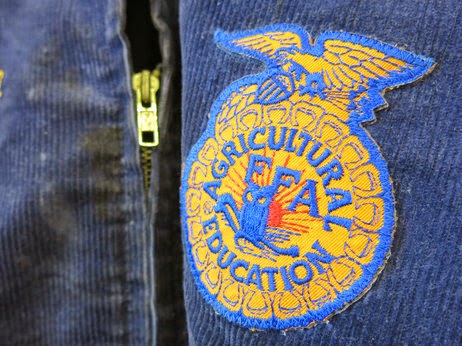
A record number of kids are donning the blue corduroy jacket of FFA, formerly known as Future Farmers of America. The jacket is an icon of rural life — the organization is sort of like Boy Scouts for farming, and it dates back to the 1920s.
Even though fewer and fewer young people grow up on farms these days, the extracurricular activity is attracting more urban and suburban kids interested in food and agricultural science.
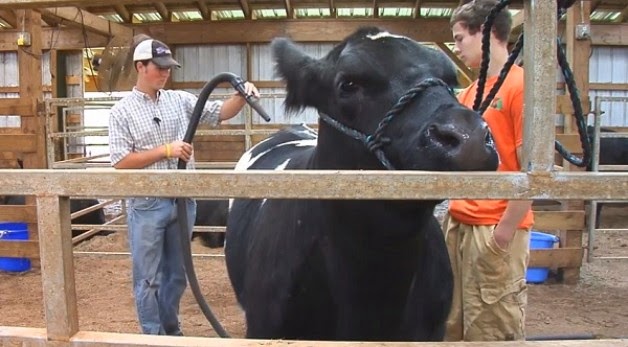
Eighteen-year-old Reece Melton unlatches the fence leading into a muddy pen at the St. Vrain Valley School District’s working farm in Longmont, Colo., near Denver.
“You wouldn’t think there’s a livestock facility back behind here,” Melton says. He’s president of the district’s FFA chapter, and takes care of the farm’s cows, goats and pigs during school hours.

From 2007 to 2012, the U.S. lost almost 100,000 farms, according to recent census data. During the same period, FFA enrolled an additional 60,000 students, and opened new chapters, bringing the organization to its highest number of students in its almost century-old history, just shy of 580,000.
That’s a lot of blue corduroy jackets.
Unlike FFA members of the past, Melton didn’t grow up on a farm. His parents did. And that’s the norm for the 60 other students in his chapter.
“We’re in an urban area, so most of our members do not grow up on property, though they still have that connection to agriculture,” he says.
But because most millennials are several generations removed from the farm, the school district is going to great lengths to make agriculture appeal to more students.
Lauren Hart, the district’s FFA adviser and an agriculture instructor, says in her eight years of teaching, she has noticed a shift. A greater number of students are interested in organic farming methods, grass-fed beef and cage-free eggs. And Hart says she can’t just ignore what students want to learn about.
“The interest and the ability both of students going into production agriculture is declining,” she says. “It’s just not something that a high school student either wants to or believes they can get into.”
That’s why Hart reaches into areas you wouldn’t typically associate with farming — law, public policy, entrepreneurship and bookkeeping. And that’s something that doesn’t always sit well with a few students’ parents who hail from farm country.
They say, ” ‘When are you going to have my student on a tractor?’ ” Hart says. “Well, never.”
FFA’s CEO, Dwight Armstrong, says programs like Hart’s are taking off. And the changing focus appears to be working. Suburban and inner-city chapters in places like Chicago, Philadelphia and New York are some of the fastest-growing in the country.
“The perception is that FFA is plows, cows and sows,” Armstrong says. “Now we talk about not vocational agriculture but the science of agriculture and the science of food.”
And reframing agriculture into food science begins to point students on more stable career paths, he says — something that couldn’t be said during the 1980s farm crisis. That’s when enrollment numbers slumped, the name went from Future Farmers to FFA, and the group’s survival mode mantra became “adapt or die.”
Back at the school farm in Longmont, Melton and his classmate are planning a coop for a flock of fast-growing chickens. Both have the iconic FFA blue corduroy jackets hanging in their closets at home.
At first, Melton says, he griped about wearing it. “It’s definitely not the most stylish outfit,” he says. “But it’s something that’s more relative to tradition.”
It’s the one tradition that’s held on while everything around it changed.

State Veterinarian Encourages Livestock Show Managers and Exhibitors to Observe Strict Biosecurity

Dr. Richard Wilkes, State Veterinarian with the Virginia Department of Agriculture and Consumer Services (VDACS), announced today that Virginia has just received laboratory confirmation of its first case of Porcine Epidemic Diarrhea  (PED) In light of this case, which coincides with the beginning of the exhibit season for 4-H members, FFA students and other livestock exhibitors, Dr. Wilkes says strict biosecurity is the most effective and most practical way to prevent the spread of PED and many other livestock and poultry diseases. 
Wilkes encourages every person involved in showing livestock to enhance their biosecurity efforts. “We always urge livestock owners who show animals and managers of show and exhibition facilities to keep biosecurity uppermost in their minds,” Wilkes said, “but with swine, it is even more important now that Virginia has experienced its first case of PED. Good biosecurity can help keep the disease from spreading.”
Anytime animals are co-mingled at events, there is a risk they may be exposed to an infectious disease agent. Some states have cancelled pre-show weigh-ins or other animal commingling events to try to prevent PED infection of swine. Virginia show managers may want to consider voluntarily cancelling some of the higher risk activities. 

The PED virus is highly contagious, and commonly spreads through pig manure. Consuming pork continues to be safe and the disease does not affect humans, but is often deadly to piglets. Practicing and implementing sound biosecurity measures is critical in keeping the state’s animals disease free and marketable.
Equine Herpes Virus is another highly contagious disease that has caused disease and death at multiple equine events across the country recently.
Wilkes says that good biosecurity and advance planning will reduce the chances of spreading an infectious disease by people, animals, shoes and clothing or equipment. Show managers should have a proper biosecurity plan ready to execute in the event that an animal disease is introduced at a major stock show or event.
VDACS offers the following guidelines to help minimize risk at events where animals co-mingle.  Note that these general recommendations also apply to diseases that can be spread between humans and animals
Biosecurity for animal exhibitors:
  • Consult your veterinarian to establish an appropriate vaccination program for your livestock prior to attending an event.
  • Before stalling your animal at an event, make sure the stall has been cleaned and disinfected and use clean, fresh bedding.
  • Minimize direct contact with other animals.
  • Use your own water and feed buckets. Avoid letting your animal(s) drink from a communal water trough. Fill water buckets from a faucet, not a shared tank.
  • For equines, do not share grooming equipment or tack. If you must, then wash and disinfect it before returning to your own animal(s).
  • Wash your hands thoroughly after handling other animals to minimize the risk of transferring a disease back to your animal.
  • Before returning home from an event, clean and disinfect your equipment (boots, tack, grooming supplies, buckets, etc.) to help reduce the risk of transporting an infectious agent back home.
  • Isolate your returning animal(s) for 2 weeks or prevent contact with your other animals and watch for signs of illness in all of your animals.
  • When you come home from a fair/exhibition be sure to disinfect your trailer.
  • Consult your veterinarian concerning these and other steps you can follow which may reduce the risk of your animal acquiring an infectious disease while traveling.

Biosecurity for event organizers:
  • Minimize contact between animals where possible.
  • Minimize spread by human hands (limit public access, provide hand sanitizer, establish restricted areas in front of stalls and trailers, post hand-washing signs).
  • Minimize spread by shared tack (post signs advising participants not to share equipment).
  • Where practical, provide solid, high-walled stalls to minimize spread of infectious nasal droplets.
  • Biosecurity when visiting an animal exhibit such as a fair or petting zoo:
  • Locate hand-washing stations and use them often. Always wash your hands after petting animals or touching the animal enclosure, especially before eating and drinking.
  • Use running water and soap whenever possible. Use hand gels if running water and soap are not available.
  • Keep food and drinks out of animal areas.
  • Never allow children to put their hands or objects such as pacifiers in their mouths while interacting with animals. 

“Livestock exhibitions are an enriching and rewarding experience for our youth,” said Dr. Wilkes. “Implementing simple biosecurity measures to prevent disease spread and having an established plan of action to address disease outbreaks if they occur protects that experience for exhibitors and event managers alike.” 
For more information about biosecurity measures and plans, contact the State Veterinarian’s Office at 804.692.0601 or your local Office of Veterinary Services at the Regional Animal Health Diagnostic Laboratory in your area. See the Laboratory Services section at http://www.vdacs.virginia.gov/about/directory-ais.shtml.

Statement by Bob Stallman, President, American Farm Bureau Federation, Regarding EPA’s Proposed ‘Waters’ Rule

Bob Stallman
AFBF President
“Last week, the American Farm Bureau Federation carefully reviewed EPA’s March 25 release of the ‘waters of the U.S.’ proposed rule. The results of our review are dismaying.
“The EPA proposal poses a serious threat to farmers, ranchers and other landowners. Under EPA’s proposed new rule, waters – even ditches – are regulated even if they are miles from the nearest ‘navigable’ waters. Indeed, so-called ‘waters’ are regulated even if they aren’t wet most of the time. EPA says its new rule will reduce uncertainty, and that much seems to be true: there isn’t much uncertainty if most every feature where water flows or stands after a rainfall is federally regulated.
“Under this proposed rule, farmers, ranchers and every other landowner across the countryside will face a tremendous new roadblock to ordinary land use activities. This is not just about the paperwork of getting a permit to farm, or even about having farming practices regulated. The fact is there is no legal right to a Clean Water Act permit – if farming or ranching activities need a permit, EPA or the Army Corps of Engineers can deny that permit. That’s why Clean Water Act jurisdiction over farmlands amounts to nothing less than federal veto power over a farmer’s ability to farm.

“EPA accompanied its proposal with a new ‘interpretive rule’ claiming to clarify certain statutory exemptions for agricultural conservation practices, including activities as commonplace and essential to farming as building a fence. But these exemptions apply only to ‘dredge and fill’ permit requirements. They do not protect farmers from federal veto power over pest and weed control, fertilizer application, and other essential farming activities that may result in the addition of ‘pollutants’ to ‘navigable waters,’ – providing one views every ditch and wet spot across the landscape as ‘navigable waters.’
“The American Farm Bureau Federation will dedicate itself to opposing this attempted end run around the limits set by Congress and the Supreme Court. The Supreme Court has ruled repeatedly that Congress meant what it said: ‘navigable waters’ does not mean all waters. This proposed rule shows that EPA refuses to accept those limits.”

From the Field: Main Street Agriculture Coming to a Community Near You

From the Field is a bi-monthly column written by Mark Campbell, Farm Bureau Field Services Director for the Central District. He writes about Farm Bureau member benefits and County Farm Bureau activities.
If you haven’t heard about Main Street Agriculture, then you will have a couple of opportunities to experience it at events in Charlottesville and Winchester this fall.  Main Street Agriculture is a movement with a mission to bring education and awareness of the importance of agriculture to the community year-round with a Main Street Agriculture celebration event in early Fall. 
Bringing the farm to the city has been well received by the general public since it was first launched in Winchester in October 2012.  Bringing the message to the nonfarming public where they live and work is very effective.  In 2013, the Winchester Main Street Agriculture event drew more than 10,000 people on one day.  The events are always downtown and on a Saturday.  The movement connects farmers, families, agribusinesses, city government, and merchants.

In addition to the mission of increasing the awareness of the importance of agriculture, a sideline benefit, and really important one, is the new partnerships created with city government, chamber of commerce, city leaders, and downtown businesses.  This is one area that Farm Bureau and the agriculture community haven’t really explored until the Main Street Agriculture movement.  I have been pleasantly surprised at how accommodating the city of Charlottesville has been.  They have welcomed us with open arms and will be providing the Downtown Walking Mall, Lee Park and closing several streets.  Downtown restaurants are planning to offer a local food menu the night before as well as the day of the event.  This movement also provides advertising for Farm Bureau. The exposure is a good buy considering the alternative cost of media advertisement. The movement also creates year-round awareness of the importance of agriculture and the power of Farm Bureau through membership while enjoying the benefits.
Putting on a Main Street Agriculture event can feel overwhelming at first because it is a big event and it is not like anything we have ever done before.  However, Dee Cook of Virginia Farm Bureau provides significant help and guidance in getting things started by making inroads with city government leaders, and businesses. She has also developed a guide for county Farm Bureaus to follow when delivering this event.
The Main Street Agriculture event is sponsor-funded which helps the county Farm Bureau connect to community leaders who offer support. In many cases, the sponsors and community leaders had no previous connection or understanding of our grassroots mission. The county Farm Bureau contributes startup funds to launch the program. All proceeds above and beyond expenses are donated to Virginia Foundation for Agriculture in the Classroom.  Donations to AITC are based on the percentage of sponsorship and given in the name of the sponsor.
If you are interested in doing a Main Street Agriculture event in your community, visit the website at www.mainstreetag.organd contact your county Farm Bureau president.  I’ll keep you updated on this. 
Until next time,

Mark

Urban Agriculture Summit to Include Film Screening, Farm Tour

Virginia’s second Urban Agriculture Summit will feature a screening of the documentary Growing Cities: A Film About Urban Farming in America and tours of the nonprofit urban farm Lynchburg Grows.

Most of the event will be held April 15 and 16 at the Holiday Inn Lynchburg. The movie will be shown April 14 at Randolph College.

Virginia’s first lady, Dorothy McAuliffe, will speak at the summit’s opening lunch, and speakers from the U.S. Environmental Protection Agency and the Virginia Department of Environmental Quality will address “Fostering Urban Agriculture through Brownfield Redevelopment” that afternoon.

The April 16 agenda will feature panel discussions on the health, nutritional and social aspects of urban agriculture; urban food systems and opportunities for economic development; and urban agriculture and city governments.

Registration is $75 for two days or $50 for one day, and participants can register or print a registration form to mail at http://events.SignUp4.com/UrbanAgSummit2014.

Organizers of the summit are Centra; the Federation of Virginia Food Banks; Lynchburg Grows; Shalom Farms; the Society of St. Andrew; Virginia Cooperative Extension; the Virginia Department of Agriculture and Consumer Services; the Virginia Department of Health; Virginia Farm Bureau Federation; the Virginia Food System Council; the Virginia Foundation for Agriculture Innovation & Rural Sustainability; and Virginia’s Region 2000 Partnership Local Government Council.