Virginia Farm Bureau News Lead: Eminent domain constitutional amendment is ‘finally in sight’

This story appeared in the Jan. 19 edition of News Leads, the week’s top ag stories sent out by the VFB Communications Department to media across the state:

A Virginia constitutional amendment to protect private property rights has progressed further than ever before in the legislative approval process.

HJ3 and SJ3, the state House of Delegates and Senate versions of the bill, tighten the definition of public use and require just compensation for owners of property taken for eminent domain. The bills passed in last year’s General Assembly.

“We have never gotten past that first step, but last year we did,” said Del. Robert Bell, R-Charlottesville, the chief patron of HJ3. “This year we are finally in sight of our goal.”

For a constitutional amendment to be enacted, it must pass in the General Assembly two years in a row with the exact same wording. If it passes in 2012, as it did in 2011, it will be placed on the ballot this November and would have to be approved by a majority of Virginia voters.

The constitutional amendment has three key parts: Public entities can take private property for public use only; the entities cannot take more land than is necessary for that public use; and landowners must receive just compensation.

“Farmers have a particular interest, because they own a lot of land and they are especially vulnerable,” Bell said. “Farmers in my area have been very supportive of the constitutional amendment.”

Virginia Farm Bureau Federation, the state’s largest farm organization, has been calling for a constitutional amendment for the past several years. Farm Bureau members believe that land ownership is a fundamental right deserving of constitutional protection.

Virginia’s constitution recognizes that some ‘takings’ are necessary for public use; however, public use should be narrowly defined, and just compensation should be provided to an individual whose property is taken, said Trey Davis, VFBF assistant director of governmental relations.

“Because farmers’ assets are mostly land-based, they feel constantly under threat from eminent domain,” Davis said. “The only way to truly protect them is to have a constitutional amendment that ensures farmland cannot be taken and given to another private owner.”

In July, Farm Bureau launched a postcard campaign urging state legislators to back the constitutional amendment. The organization will deliver more than 13,000 postcards signed by its members during this year’s General Assembly.

Last winter, Del. Johnny Joannou, D-Portsmouth, introduced the bill that would amend the state constitution to mirror 2007 statutory changes to the state’s eminent domain law that strictly define public use.

Those changes were made as a result of the 2005 Kelo et al v. City of New London, Conn., et al decision, in which the U.S. Supreme Court ruled that private land can be justifiably transferred to another private party for economic development purposes.

“That was never the intent of eminent domain,” Bell said.

Sen. Mark Obenshain, R-Harrisonburg, and Attorney General Ken Cuccinelli also have championed efforts to change state law to restrict when private land can be taken for public use.

“Farmers and homeowners deserve to know that their properties cannot be taken at the behest of a private developer, and that any legitimate takings receive just compensation,” Obenshain said. “As any farmer knows, when you cut across a field or bisect a farming operation, the losses exceed the value of the land that was taken—and the compensation given should reflect that. Farmers face enough challenges; they shouldn’t have to battle a government that has other ideas for the land.”
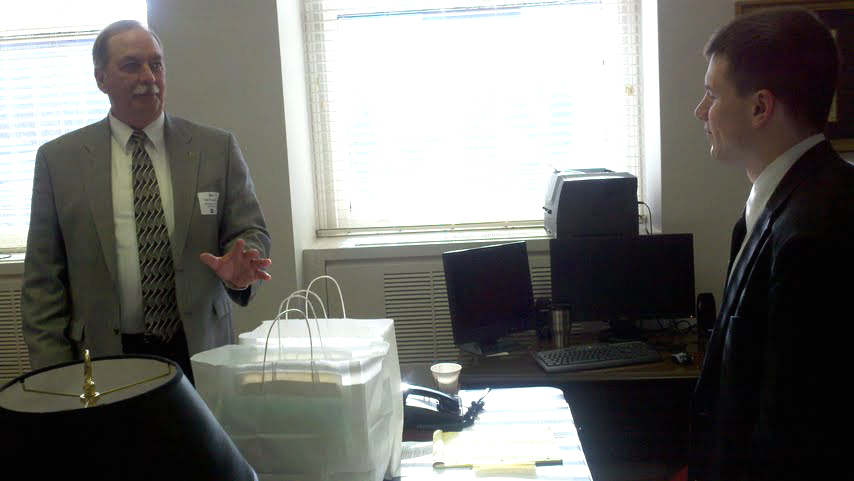
Farm Bureau members attend Leglislative Day at the Capitol

Bob Threewitts, a producer member in Rockingham County,
delivers postcards to Sen. Mark Obenshain’s office on
Legislative Day.

Thanks to everyone who attended Legislative Day! More than 150 producer members participated in the event, which included a training session by the U.S. Farmers and Ranchers Alliance on speaking effectively to the general public.

The training session was followed by lunch with Attorney General Ken Cuccinelli, who motivated members with a rousing speech about the property rights constitutional amendment before their visits with legislators at the Capitol.

“There is no substitute to being present…emails don’t compare to a good, solid handshake,” Cuccinelli said.

After lunch, Farm Bureau leaders made their way to the Capitol to deliver more than 14,000 signed postcards in support of the property rights constitutional amendment to their senators. They also met with their representatives in the House of Delegates as well as their adopted urban legislators.

In addition to eminent domain reform, county leaders urged lawmakers to uphold the state’s ban on Sunday hunting.

Farm Bureau has opposed Sunday hunting for decades. When deliberating on the policy, representatives cited faith-based beliefs as well as the ability of horse riders and landowners to use the outdoors one day a week without worrying about hunters.

Other issues discussed with legislators included cost-share money to implement conservation practices to comply with the U.S. Environmental Protection Agency’s Watershed Implementation Plan in the Chesapeake Bay region and total maximum daily load requirements in the Southern Rivers region.

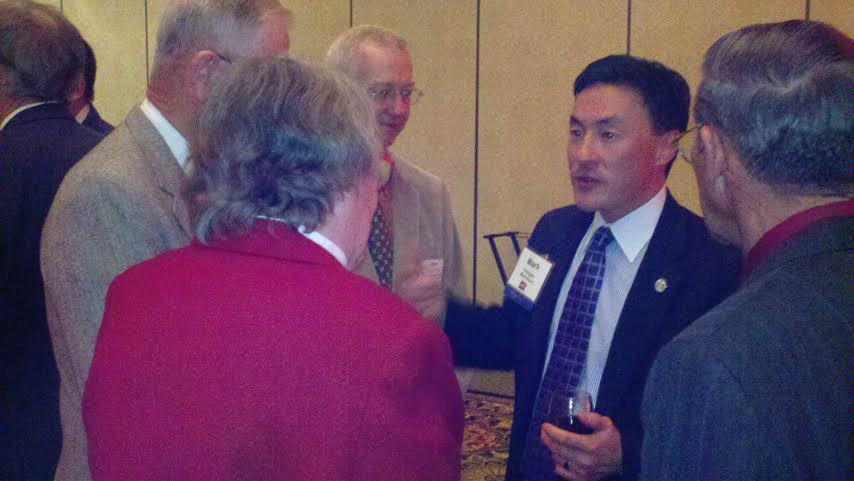
Del. Mark Keam of the 35th district in Northern Virginia met with
members of Albemarle County Farm Bureau at the legislative
reception.
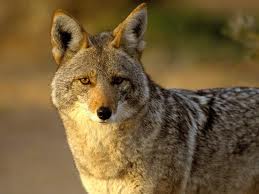
Additionally, Farm Bureau representatives asked for funding for the state’s coyote damage control program. Virginia saw a 32 percent increase in coyote attacks on sheep and a 69 percent increase in attacks on calves last year.

That evening, the annual Farm Bureau legislative reception, hosted by the Virginia Farm Bureau Women’s Committee, was held at the Downtown Marriott. Along with county leaders, about 40 legislators attended the event, including Lieutenant Governor Bill Bolling.

How Many Bills is Farm Bureau Watching and When Do Members Get Involved?

Virginia Farm Bureau is following approximately 200 bills in the General Assembly from the ones that have been introduced. There are hundreds and hundreds of more bills due out next week. For our county Farm Bureau leaders, we will be sending out a summary of all of the various bills that we are tracking on Friday, January 27.

This year our communications process has changed. If Governmental Relations can positively represent Farm Bureau members’ official policy position on these bills, we will not send out an action request through our electronic Capital Connections Action Request system. We activate our grassroots system on bills that we need an extra push on to help our lobbying efforts.

This has been the case regarding Virginia Farm Bureau’s position on Sunday hunting. We have asked our members to correspond with their legislators regarding our position. There is a grassroots movement pushing for its passage. Virginia Farm Bureau has had a policy position in opposition since 1993. We are joined by other agriculture groups including the horse industry and Virginia Agribusiness Council in opposing the passage of these bills. In addition, some hunting groups, religious groups and realtors are expressing their opposition.

Today, the Senate Agriculture, Conservation and Natural Resources Committee passed SB494 to allow Sunday hunting on private lands with landowners permission. This is one step in a multi-step process at the General Assembly. Today, Farm Bureau policy did not prevail but with grassroots support of our policies we can continue to fight for our member’s positions. If you haven’t signed up for our electronic action request system and you are a producer member, please email me at Kelly Pruitt at Kelly.pruitt@vafb.com. I will contact you to get you signed up.

Game Laws update: Coyote Control Program

Coyotes are on the prowl across Virginia. This worries Virginia livestock farmers. Virginia livestock farmers saw a 32 percent increase in the reported sheep predation by coyotes and a 69 percent increase in calf predation by coyotes from FY2010 compared to FY2011.

This is why Virginia Farm Bureau is working hard to keep the program at least minimally funded during these tight budget times. Virginia Farm Bureau hopes that during better economic times that a case can be made to fully fund the state’s portion of this program at $250,000.

The Virginia Cooperative Coyote Damage Control Program has been in place since 1991. This is a state and federal program serves Virginia livestock producers suffering coyote predation on livestock by providing technical assistance, direct control, and education.

Delegate Poindexter and Senator Ruff are carrying budget amendments to restore $40,000 to bring the program back to the bare minimum of $120,000 needed for a state and federal program to continue to operate.

While the coyote harvest has increased from 1,295 in the 1993-94 hunting season to 24,449 in the 2008-2009 hunting season, this hasn’t seemed to slow down the explosion in population of coyotes. More and more farmers are reporting livestock predation on farms that historically never had coyote predation problems.

A cost-benefit analysis on sheep alone determined that $7.78 was saved for every dollar spent on the coyote damage control program. This means real money and profits to Virginia livestock farmers.

We would like to know more about the problems that Virginia livestock farmers are facing from this predator. Please click Post a Comment below and tell us about how coyotes have hurt your livestock production.

Wilmer Stoneman: Sunday hunting poised to be a hot topic in the General Assembly

Hello, everyone! My name is Wilmer Stoneman, and one of the issues I cover for Farm Bureau is game laws.

With the first day of the 2012 General Assembly behind us, there are already rumblings of several bills to be introduced regarding Sunday hunting. It’s too early to tell any specific details, but the Farm Bureau Governmental Relations team is monitoring the situation and will send any updates through the Capitol Connections Action Center. So please keep an eye on your e-mail!

Historically Farm Bureau, through our grassroots policy process, holds the position: “We oppose hunting on Sunday.” Representatives of a vast majority of our farmer members have annually discussed and voted for such a position since 1993. In the discussions, our members cite faith-based beliefs, as well as the ability of horse owners and riders and landowners to use the outdoors one day a week without worry from hunters.

Below are some questions that frequently get asked regarding Sunday hunting. It’s important to remember these points as we move forward in the General Assembly.


Will allowing hunting on Sunday increase the number of hunters?

There is no definitive evidence that indicates allowing hunting on Sunday will increase the number of hunters. The same number of hunters will simply adjust their schedules to hunt when the conditions are suitable to their individual desires.

Shouldn’t Virginia follow other states by allowing hunting on Sunday?

Other states allow a variety of methods and practices for hunting that are not allowed in Virginia (e.g. baiting and others). There is no reason to conform our laws to other states and no reason to turn away from traditions like family, farming and the use of the outdoors by all citizens in favor of an expanded opportunity for a few.

Will allowing hunting on Sunday affect the number of wildlife?

Virginia Department of Game and Inland Fisheries staff have stated that hunting on Sunday will not impact the population of wildlife, which also means there will be no significant relief of crop damage from wildlife by hunting on Sunday. Game department staff consistently cite that there is no biological reason not to hunt on Sunday because wildlife has no concept to the day of week; however, wildlife learn habits of hunters and avoid them by feeding at night and other times.

Will allowing hunting on Sunday increase tourism or economic activity?

It is impossible to judge whether hunting on Sunday will lead to more tourism and economic activity; most traveling hunters are willing and have the means to take time off from work to do so.

Will this encourage more youth to start hunting?

We question the assertion that there will be an increase in youth hunting as a result of Sunday hunting. With ever-increasing demands on young people’s time for various activities (school, sports, religious, etc.), allowing hunting on Sundays is not likely to increase the number of younger hunters. Currently, the core of the hunting season is dictated by school holidays in November and December and, therefore, allowing hunting on Sundays will not lead to a significant increase in youth hunting.

YOU can make an impact on the decisions your legislators make affecting agriculture

This week your legislators are making their way to Richmond for the 2012 General Assembly where they’ll make decisions that will ultimately affect you and your families.
If you thought you did your part to ensure your voice would be heard by visiting the polls in November, think again.
 As grassroots coordinator for the Governmental Relations Department, it’s my job  to provide you, our producer members, with the information, materials and confidence to contact your legislators effectively. Today’s entry is a good reminder of things you can do during and after the General Assembly to create relationships with the people representing you in office. If there’s a Farm Bureau policy issue that you are passionate about and want to contact your legislators, please don’t hesitate to contact me, Kelly Pruitt, to help make sure your voice is heard. You can e-mail me at kelly.pruitt@vafb.com or call me at 804-290-1293.
The following is from an article by the Washington State Legislature (updated with Virginia links) on effectively communicating with your legislators.

A Citizen’s Guide to Effective Legislative Participation

The Legislative Process

Every year the Legislature meets to engage in the process of public decision making. The objective is to reach consensus on a wide range of issues affecting every citizen . The process involves cooperation to make critical decisions in everyone’s best interests.

We have chosen representatives to carry out the difficult task of determining which laws and policies will best serve these interests. However, to effectively perform their job, legislators rely heavily on input from many different sources.

They receive a great deal of technical information from their staffs, state agency personnel and professional lobbyists. Yet, much of what they actually decide depends on the views, interests and preferences of the citizens who elect them.

This is precisely how the legislative process was designed to work. It is based on a close, open and positive relationship between elected officials and the citizens whom they represent.

You can actively participate in the legislative process in a variety of ways. Select the method that allows the fullest expression of your personal interest and commitment, but follow some basic steps.

Know How the Process Works

For your individual participation to be most effective, a basic understanding of the whole legislative picture is essential. If there is something you do not understand about the process, ask someone who can provide an answer. Here are some resources:

•Visit the Virginia General Assembly Website.
•Call your legislator’s office.

•Read the How a Bill Becomes a Law page.

•Learn how to track a bill.

Make Yourself the Expert

Before you address an issue, do some homework. Know the whole issue: who it affects, what others feel about it, how it will influence future trends, and any other information you are able to gather. Thorough research allows you to present your viewpoint with confidence and credibility, and, combined with your personal experience, is the most effective information you can provide.

Get to Know Your Legislators

To make a difference in the legislative process, you must develop a relationship with your legislators. Keep in mind that you can work effectively with someone, regardless of the personal opinions either of you may hold. Although you are unlikely to agree on every issue, you can still build a positive relationship in the long run.

The best way to get to know your legislators on a personal basis is to spend time with them when the Legislature is not meeting. Arrange a meeting during the months between sessions when they are home.

Your legislators are also your neighbors. You share many of the same interests and concerns, so make a strong effort to build on the common ground you both hold. Take the time to find out who they are as people.

You can contact your legislators in a number of ways:

•Personal visit. Call the office, introduce yourself, tell the legislator or the legislative assistant what you would like to discuss, and make an appointment for a visit. If you plan a visit, be prepared for your discussion. Know what you want to say, be factual, and make your comments as brief and specific as you can. If you do not know something, be willing to admit it and offer to follow up with more information later, which is also an avenue for further discussion.

•Attend a Town Hall Meeting. Most legislators conduct periodic town hall meetings at various locations in their district. This is a good opportunity to meet your legislator and to express your views and concerns in an informal setting.

•Write a letter. Express your views and request the member’s attention through the mail. Make your letters brief, to the point, clear, and formal. Include your mailing address and phone number so the legislator knows where to respond. Use the Member Rosters to find the mailing addresses. Bulk form letters are less effective, but a personal letter is always welcomed.

•Send an e-mail message. Like letters, e-mails should be brief, to the point, clear, and formal. Include your name and mailing address, as well as your e-mail address, and let the legislator know how you’d prefer to be contacted.

•Testify before a committee. Make your views and positions known by testifying before a committee that is having public hearings on an issue or bill.

Get to Know Legislative Staff

Legislators rely heavily on professional staff for information gathering and analysis. You can play an equally supportive role by making sure staff are aware of the perspective your personal knowledge and experience can provide.

Legislative staff work on a wide range of issues. They always appreciate new sources of clear and accurate information, and they can provide you with the most current information they have.

Network with Other Citizens (Like Farm Bureau members)

Much of the information you need to be effective in the legislative process can be obtained from other concerned and active citizens. Most interest areas are represented by informal citizen groups, if not formal membership organizations.

Find out whether there are groups that share your concerns and establish a network. A group of concerned citizens can be much more effective working together, rather than as separate individuals trying to accomplish the same goal.

Key Points to Remember

Regardless of how frequently you contact your legislators, you will be far more effective if you follow these points:

1.Be well prepared for your discussions.

2.Provide a written statement with all verbal presentations.

3.Make letters and e-mail formal, specific, and concise.

4.Don’t berate or argue with your legislator when you disagree. Simply thank the member for the time spent with you and express a desire for further discussion.

Whatever position you represent, however, remember your participation makes a difference. Our legislative process is one way each of us may contribute to the quality of life we experience in our state. Your willingness to be a responsible, involved participant is crucial to the decision-making process.

2012 Virginia General Assembly convenes Jan. 11

This busiest time of year for the Governmental Relations team is upon us. The 2012 Virginia General Assembly will convene next Wednesday in Richmond, and we’ve been busy preparing to fight for the legislative priority issues that you, our producer members, deemed the most important.

A big thank you goes out to all of you who attended our Senatorial District meetings across the state, as well as our Field Services Directors who helped set up the meetings. We had a great turn out this year and were very successful educating our legislators about our issues.

We will be updating you on the statuses of these issues and other issues that affect agriculture as they arise in a few different ways. We will be updating the blog every Tuesday and Thursday with important articles, so please make sure you bookmark this page under your Favorites folder or subscribe by e-mail on the left of this page.

 We will also be sending out important action and information alerts on Wednesdays and Fridays. I can already foresee us calling on your support and action several times during this session, so please make sure you are receiving these important e-mails from the VFB Capitol Connections Action Center by e-mailing kelly.pruitt@vafb.com.

There is a change this year–we will only be sending out three paper General Assembly update mailings. Those will be on: January 27, February 17 and March 23. These are the only times we’ll be sending out updates through the mail, so, if you can, please sign up for the blog and the Capitol Connections Action Center when you can.

Legislative Day is January 24. We have an exciting day planned starting with the United States Farmers and Ranchers Alliance training session in the morning, lunch with Attorney General Ken Cuccinelli, meeting with legislators and delivering the Stand Our Ground: Property Rights postcards, and ending with our legislative reception hosted by the VFB Women’s Committee. I know a lot of you have registered, and we look forward to seeing you at the Capitol.

Thanks to your action and support, we’ve had much success over the years at the General Assembly. We hope you will step up again to help us keep you and all of Virginia agriculture in business.

Thanks for all that you do,

Martha