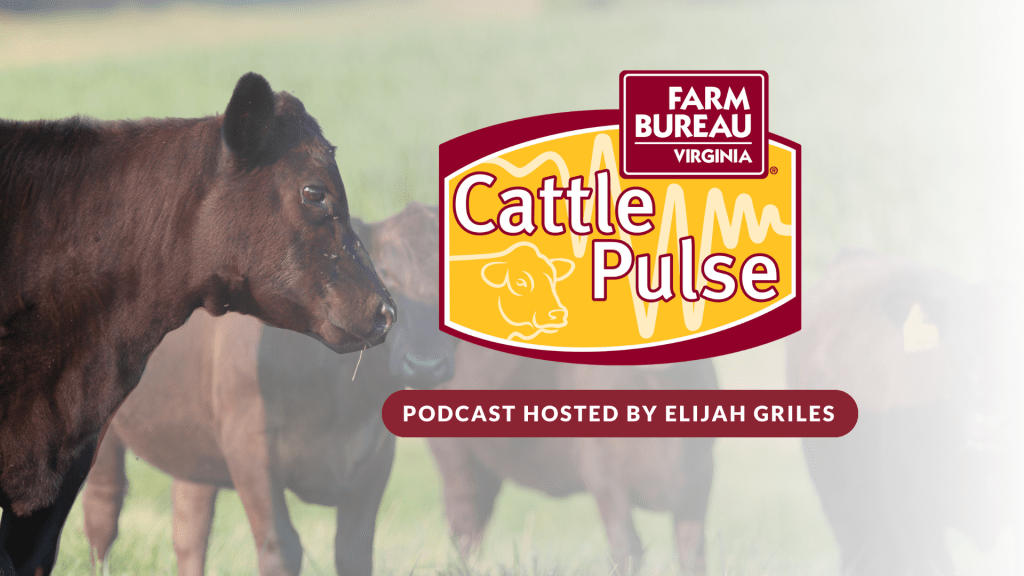
Cattle Pulse: Cattle Counts and Market Moves

CattlePulse is a monthly update from Virginia Farm Bureau on the Virginia feeder cattle markets, the national trends that affect them and stories of cattle producers across the commonwealth.

In this month’s episode of CattlePulse, host Elijah Griles sits down with Dr. Josh Maples from Mississippi State University to unpack the July Cattle Inventory report and explore what it means for producers. With feeder cattle futures hitting all-time highs, Elijah and Dr. Maples discuss actionable strategies cow-calf producers can consider to manage price risk.

Want to get in touch? Contact Elijah at 804-290-1713 or elijah.griles@vafb.com.

Listen to the latest episode

Not Too Hot: Three Bears Cool The Cattle Market – CattlePulse

Cattle markets have faced a challenging stretch over the past two months, with feeder cattle prices pulling back amid several bearish developments. In this episode of CattlePulse, host Elijah Griles breaks down three key factors weighing on the market: expanded beef imports, the reopening of Mexican feeder cattle imports, and recent reductions in U.S. beef packing capacity.Despite those headwinds, there are still reasons for optimism. Elijah discusses why beef demand remains remarkably strong, even with record-high retail prices, and what tight cattle supplies could mean for the longer-term outlook. Plus, get the latest update on Virginia drought conditions and Virginia feeder cattle markets.In this episode:• Feeder cattle futures rebounded from recent lows, with October futures up 5.6% and November futures up 6.7% from the previous month.• The Trump Administration's beef import plan is allowing 300,000 metric tons of lean beef trimmings into the U.S. without out-of-quota tariffs, raising concerns among cattle producers.• USDA has reopened cattle imports from Mexico through select border crossings, potentially increasing feeder cattle supplies in the coming months.• Beef packing capacity has tightened following recent plant closures and operational reductions, adding another source of market uncertainty.• Beef demand remains resilient despite record retail prices, with consumers continuing to show a willingness to pay for beef.• Virginia drought conditions have improved significantly thanks to recent rainfall, although portions of the state remain in severe to extreme drought.• Virginia feeder calf prices continued to soften, with the six-market average falling 6.2% from August to September.• For the first time since CattlePulse launched in 2023, Virginia's September feeder calf average was below the same month a year earlier.Resources Mentioned• USDA feeder cattle import updates• USDA beef import quota announcements• Kansas State Meat Demand Monitor• U.S. Drought Monitor• NOAA Climate Prediction Center outlook• Market analysis from Dr. James Mitchell and Dr. Stephen KoontzCattlePulse is produced by Virginia Farm Bureau. Have a question or topic suggestion? Email elijah.griles@vafb.com.
  1. Not Too Hot: Three Bears Cool The Cattle Market
  2. Rebuilding the Herd? Markets, Mexico & Theileria
  3. Road Trip to Beef Cattle U
  4. The Screwworm Is Back
  5. Enjoy It While It Lasts

Cattle Pulse: Virginia Verified Beef Goes Live

CattlePulse is a monthly update from Virginia Farm Bureau on the Virginia feeder cattle markets, the national trends that affect them and stories of cattle producers across the commonwealth.

In this month’s episode, host Elijah Griles unpacks the factors fueling the feeder cattle futures rally. He also shares positive developments in the battle against the New World Screwworm fly. Plus, Franklin County cattle producer and meat processor Chase Scott shares his motivation to use the new Virginia Verified Beef label.

Want to get in touch? Contact Elijah at 804-290-1713 or elijah.griles@vafb.com.

Listen to the latest episode

Not Too Hot: Three Bears Cool The Cattle Market – CattlePulse

Cattle markets have faced a challenging stretch over the past two months, with feeder cattle prices pulling back amid several bearish developments. In this episode of CattlePulse, host Elijah Griles breaks down three key factors weighing on the market: expanded beef imports, the reopening of Mexican feeder cattle imports, and recent reductions in U.S. beef packing capacity.Despite those headwinds, there are still reasons for optimism. Elijah discusses why beef demand remains remarkably strong, even with record-high retail prices, and what tight cattle supplies could mean for the longer-term outlook. Plus, get the latest update on Virginia drought conditions and Virginia feeder cattle markets.In this episode:• Feeder cattle futures rebounded from recent lows, with October futures up 5.6% and November futures up 6.7% from the previous month.• The Trump Administration's beef import plan is allowing 300,000 metric tons of lean beef trimmings into the U.S. without out-of-quota tariffs, raising concerns among cattle producers.• USDA has reopened cattle imports from Mexico through select border crossings, potentially increasing feeder cattle supplies in the coming months.• Beef packing capacity has tightened following recent plant closures and operational reductions, adding another source of market uncertainty.• Beef demand remains resilient despite record retail prices, with consumers continuing to show a willingness to pay for beef.• Virginia drought conditions have improved significantly thanks to recent rainfall, although portions of the state remain in severe to extreme drought.• Virginia feeder calf prices continued to soften, with the six-market average falling 6.2% from August to September.• For the first time since CattlePulse launched in 2023, Virginia's September feeder calf average was below the same month a year earlier.Resources Mentioned• USDA feeder cattle import updates• USDA beef import quota announcements• Kansas State Meat Demand Monitor• U.S. Drought Monitor• NOAA Climate Prediction Center outlook• Market analysis from Dr. James Mitchell and Dr. Stephen KoontzCattlePulse is produced by Virginia Farm Bureau. Have a question or topic suggestion? Email elijah.griles@vafb.com.
  1. Not Too Hot: Three Bears Cool The Cattle Market
  2. Rebuilding the Herd? Markets, Mexico & Theileria
  3. Road Trip to Beef Cattle U
  4. The Screwworm Is Back
  5. Enjoy It While It Lasts

Cattle Pulse: Smart Herds and High Rewards

CattlePulse is a monthly update from Virginia Farm Bureau on the Virginia feeder cattle markets, the national trends that affect them and stories of cattle producers across the commonwealth.

In this month’s episode, host Elijah Griles breaks down the record-setting feeder cattle prices driven by tight national inventories and strong seasonal demand. He also discusses the impact of the New World screwworm fly on U.S. cattle imports and what it could mean for Virginia producers. Plus, Halifax County cow-calf producer Adam Davis shares how he’s using genetic data to improve herd performance.

Want to get in touch? Contact Elijah at 804-290-1713 or elijah.griles@vafb.com.

Listen to the latest episode

Not Too Hot: Three Bears Cool The Cattle Market – CattlePulse

Cattle markets have faced a challenging stretch over the past two months, with feeder cattle prices pulling back amid several bearish developments. In this episode of CattlePulse, host Elijah Griles breaks down three key factors weighing on the market: expanded beef imports, the reopening of Mexican feeder cattle imports, and recent reductions in U.S. beef packing capacity.Despite those headwinds, there are still reasons for optimism. Elijah discusses why beef demand remains remarkably strong, even with record-high retail prices, and what tight cattle supplies could mean for the longer-term outlook. Plus, get the latest update on Virginia drought conditions and Virginia feeder cattle markets.In this episode:• Feeder cattle futures rebounded from recent lows, with October futures up 5.6% and November futures up 6.7% from the previous month.• The Trump Administration's beef import plan is allowing 300,000 metric tons of lean beef trimmings into the U.S. without out-of-quota tariffs, raising concerns among cattle producers.• USDA has reopened cattle imports from Mexico through select border crossings, potentially increasing feeder cattle supplies in the coming months.• Beef packing capacity has tightened following recent plant closures and operational reductions, adding another source of market uncertainty.• Beef demand remains resilient despite record retail prices, with consumers continuing to show a willingness to pay for beef.• Virginia drought conditions have improved significantly thanks to recent rainfall, although portions of the state remain in severe to extreme drought.• Virginia feeder calf prices continued to soften, with the six-market average falling 6.2% from August to September.• For the first time since CattlePulse launched in 2023, Virginia's September feeder calf average was below the same month a year earlier.Resources Mentioned• USDA feeder cattle import updates• USDA beef import quota announcements• Kansas State Meat Demand Monitor• U.S. Drought Monitor• NOAA Climate Prediction Center outlook• Market analysis from Dr. James Mitchell and Dr. Stephen KoontzCattlePulse is produced by Virginia Farm Bureau. Have a question or topic suggestion? Email elijah.griles@vafb.com.
  1. Not Too Hot: Three Bears Cool The Cattle Market
  2. Rebuilding the Herd? Markets, Mexico & Theileria
  3. Road Trip to Beef Cattle U
  4. The Screwworm Is Back
  5. Enjoy It While It Lasts