 The U.S. Department of Agriculture (USDA) announced the availability of $3 million for grants through its new Office of Urban Agriculture and Innovative Production. The competitive grants will support the development of urban agriculture and innovative production projects through two categories, Planning Projects and Implementation Projects. USDA will accept applications on Grants.gov until midnight July 6, 2020.
VFBF Livestock Advisory Committee Meeting Scheduled for May 18
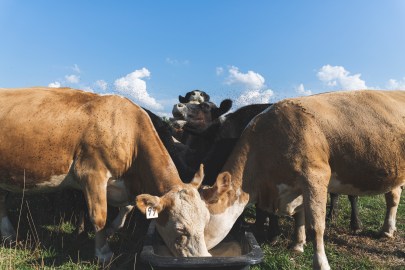 Livestock producers are welcome to participate in the Virginia Farm Bureau Livestock Advisory Committee meeting via WebEx on Monday, May 18, at 2:00 p.m. The purpose of the meeting is to discuss current marketing conditions facing livestock producers in the wake of COVID-19. Mitigation measures to control disease spread have disrupted normal livestock marketing channels and created multiple supply chain issues. The meeting should last approximately one hour unless new conditions warrant additional time.
There will be updates from the following industry representatives:
- Michael Nepveux, Economist- AFBF, will provide a national perspective of livestock markets and meat supply chain issues.
- Mike Carpenter, Manager of Livestock Services- VDACS, will discuss Virginia cattle sales and what future trends are expected for the Commonwealth.
- If the Coronavirus Food Assistance Program (CFAP) producer direct payment details have been finalized and announced by May 18, we will discuss CFAP.
This meeting is open to all livestock producers. If you plan to attend the meeting, please register here.
For those unable to attend, the meeting will be recorded and made available via the VFBF Farmer Resources page. All meeting questions can be directed to Whitney Perkins at whitney.perkins@vafb.com or 804-516-0374.
Merchandiser Minute- May 8, 2020
Check out this week’s Merchandiser Minute. Topics include weather influences price, China conference call next week, and good export sales this week.
Farm Bankruptcies on the Rise Amid COVID-19 Pandemic
 Year-to-year farm bankruptcies increased 23 percent, according to recently released data from U.S. Courts. An American Farm Bureau Federation Market Intel report shows a total of 627 filings during the 12-month period ending March 2020, marking five consecutive years of Chapter 12 bankruptcy increases, including an accelerated rate since January.
Wisconsin was the hardest hit with 78 filings in the 12-month period, followed by Nebraska with 41 Chapter 12 filings and Iowa at 37. More than 50 percent of the Chapter 12 filings were in the 13-state Midwest region, followed by 19 percent in the Southeast.
Farmers Branching into New Markets, Offering New Products
 Shore Breeze Farms had just started a new hydroponic lettuce venture when the COVID-19 pandemic hit, and suddenly, the owners had to rethink their business model.
“We were just getting our feet wet and getting the ball rolling, and then this whole thing happened,” said Kyle Sturgis, manager of Shore Breeze Farms in Northampton County and chairman of the Virginia Farm Bureau Federation Young Farmers Committee. “We’re having to reinvent the wheel because a lot of our sales were to restaurants.”
The solution? Salad kits and direct-to-consumer retail sales.
Learn Your Medicare Options at Free Virtual Seminars
 A series of free virtual Medicare 101 Educational Seminars, sponsored by Virginia Farm Bureau Health Insurance, are scheduled through August.
The organization has facilitated Medicare seminars since 2016, but this is the first year the sessions will be held online due to the coronavirus pandemic. Tracy Cornatzer, sales manager for the VFB Health Insurance Agency, said access to health information is more crucial than ever.
2019 Virginia Apple Production Declines
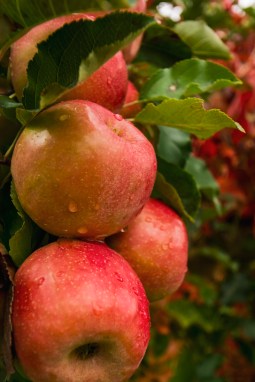 Virginia total apple production for 2019 was estimated at 190.0 million pounds, down 7 percent from 2018. Utilized production totaled 188.1 million pounds, down almost 14 million pounds from 2018. Apples for fresh market totaled 89.3 million pounds, up 7 percent from 2018. Apples for processing accounted for 98.8 million pounds of the 2019 crop, down 16 percent from 2018.
Total value of utilized production was $34.6 million for the crop, down $2.7 million from the 2018 value of $37.3 million. The average price received for 2019 apples was 18.4 cents per pound, down from the 2018 price of 18.7 cents. Fresh market apples brought 25.1 cents per pound in 2019, down 2.2 cents from 2018. Processed apples sold for $246.00 per ton, up $2.00 per ton from 2018. The number of bearing acres of apples totaled 9,500 acres in 2019, down 200 acres from 2018. The yield per acre was 20,000 pounds, 1,000 pounds less than in 2018. Based on utilized production, Virginia ranks 5th in the nation for apple production.
SBA to Make Economic Injury Disaster Loans Available to U.S. Agricultural Businesses Impacted by COVID-19 Pandemic
 U.S. Small Business Administration Administrator Jovita Carranza announced today that agricultural businesses are now eligible for SBA’s Economic Injury Disaster Loan (EIDL) and EIDL Advance programs. SBA’s EIDL portal will reopen today as a result of funding authorized by Congress through the Paycheck Protection Program and Healthcare Enhancement Act. The legislation, signed into law by the President one week ago, provided additional funding for farmers and ranchers and certain other agricultural businesses affected by the Coronavirus (COVID-19) pandemic.
Merchandiser Minute: Short covering rally to end the month for soybeans
Check out this week’s Merchandiser Minute!
Virginia Poultry Production Value Mixed in 2019
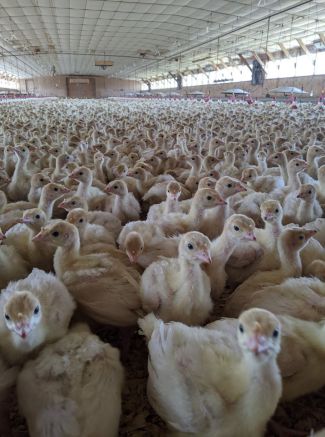 According to the Virginia Field Office of the USDA’s National Agricultural Statistics Service production value of broilers and eggs in the Commonwealth declined in 2019, while turkeys increased.
Virginia broiler value of production in 2019 was $848 million, down 9 percent from $935 million in 2018. The pounds produced was 1.74 billion pounds, an increase of 4 percent from the previous year. The number of head grown increased 1 percent, to 281 million head.
Virginia turkey production totaled 16 million head in 2019, down 3 percent from 16.5 million head raised in 2018. The pounds produced was 446 million pounds, a decrease of 2 percent from the previous year. Value of production in 2019 was $258 million, up 12 percent from $231 million in 2018.
 Plows and Politics