FEDERAL Action Alert: Ask Congress to support the Death Tax Repeal Act of 2021

Farmers are disproportionately impacted by estate taxes due to the value of farmland, making it difficult to continue a family business after the death of a loved one. Many of you have experienced the impacts of the estate tax, or death tax. Imagine if other farmers did not have to deal with this subject.

American Farm Bureau firmly supports the Death Tax Repeal Act of 2021 [H.R. 1712/S. 617] introduced by Representatives Jason Smith (R-SD) and Sanford Bishop (D-GA), and Senator John Thune (R-SD).

The Tax Cuts and Jobs Act of 2017 temporarily doubled the estate tax exemption from $5.5 million to $11 million per person through 2025. If this exemption were to be reduced it would be devastating to the continuity of America’s farms, impacting 10% of farms or 65% of farmland.

Learn more: “Estate Taxes Are A Threat to Family Farms”

Write your members of Congress today to urge their support for this legislation that would help keep American agriculture thriving! Add a personal message to your e-mail by noting your county Farm Bureau, and describing how your farm and family are personally impacted by estate taxes.

To take action, click here: https://www.fb.org/advocacy/action-alerts/the-estate-tax-needs-your-support
Ethanol Production Takes a Hit During Pandemic

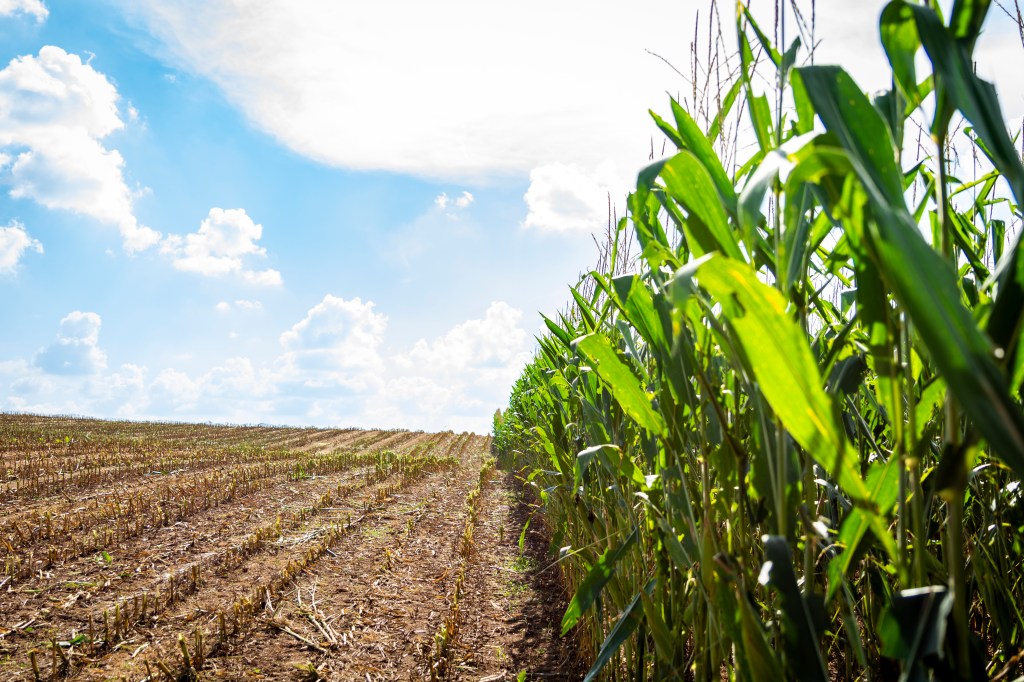
Corn and other crop prices are at multiyear highs right now from exports, but ethanol production has declined as people work from home and leave their cars parked in their driveways.

“When ethanol demand fell, that pushed corn prices down,” said American Farm Bureau Federation chief economist Dr. John Newton during the virtual 57th Annual Crop Insurance and Reinsurance Bureau Annual Meeting. “The cash corn price around the country fell, and we still haven’t seen the ethanol industry recover. We’re 2 billion gallons less in terms of ethanol production compared to prior year levels. That’s about 600 to 700 million bushels of corn that weren’t used for ethanol production.”

According to the National Corn Growers Association, roughly 30% of field corn is used for ethanol, making it the second-largest market for U.S. corn.

Continue reading

Estate Plan Crucial to Securing Ownership of Family Farmland

A formal succession plan for family land ownership can secure and sustain prosperity for future generations. This reality has enhanced opportunities for some Virginia farm families, but has hurt others.

A February webinar, organized by the Alliance for the Shenandoah Valley, explored the topics of family land, farming and race. It also addressed Virginia’s recent efforts to slow the loss of family-owned farmland, and how to ensure that historically underrepresented groups can continue farming.

Ebonie Alexander, executive director of the Black Family Land Trust, said the 1920s were the height of African American U.S. land ownership, at about 15 million acres. Between then and early 2000, 90%-97% of those land assets were lost due to systemic discriminatory practices. Alexander said that heirs’ property—informal generational property transfers that occur without wills or estate plans—resulted in fractional ownership.

“Heirs’ property is one of the leading causes of land loss in the African American community today,” Alexander explained. She said the loss can be attributed to a lack of access to competent legal services and affordable resources to build solid wills and estate plans.

Continue reading

Governor’s Agricultural Trade Conference Set for March 30

For the first time in 13 years, the Governor’s Conference on Agricultural Trade will be conducted virtually.

The event will be held 1-4 p.m. on March 30 and will highlight Gov. Ralph Northam’s trade priorities and initiatives. It’s co-hosted by Virginia Farm Bureau Federation, the Virginia Department of Agriculture and Consumer Services, The Port of Virginia and the Virginia Tech Department of Agricultural and Applied Economics.

“I am pleased that Virginia Farm Bureau has been involved with this annual trade conference since it began more than a decade ago,” said Wayne F. Pryor, VFBF president. “We’ve seen a remarkable increase in agricultural trade across the globe. It’s helpful each year to step back and examine how much our farmers are exporting, and who they are trading with.”

Continue reading

USDA Extends Farmers’ Application Deadline for CFAP Payments

The U.S. Department of Agriculture has extended the deadline for farmers to apply for Coronavirus Food Assistance Program payments.

USDA granted a 30-day extension to the previous application deadline of Feb. 26, which was announced to producers on Jan. 15.

American Farm Bureau Federation requested the extension in a Feb. 24 letter addressed to U.S. Secretary of Agriculture Tom Vilsack. AFBF President Zippy Duvall noted severe weather and the temporary suspension of CFAP payments during the presidential transition had created challenges for farmers to meet the previous application deadline.

“AFBF applauds Secretary Vilsack for his swift response to our call for an extension to the CFAP application deadline,” Duvall said. “Coronavirus aid is a lifeline for farmers and ranchers who are suffering from losses due to the pandemic. The extra time will help ensure America’s farmers have the opportunity to apply for help.”

CFAP assistance is available to farmers whose operations have been impacted by the coronavirus pandemic. Payment eligibility was expanded under CFAP 2 to include turfgrass producers and contract livestock and poultry growers. Contract producers include those raising broilers, laying hens, chicken eggs, turkeys and hogs.

For additional details or to find information related to a specific eligible crop, visit farmers.gov/cfap/commodities.

Farmers can apply through a local Farm Service Agency office or online at farmers.gov/cfap/apply.

Farm Group Pleased with Confirmation of Tom Vilsack as Secretary of Agriculture

American Farm Bureau Federation expressed its appreciation for Tom Vilsack’s confirmation as the new secretary of agriculture.

“AFBF congratulates Tom Vilsack on his confirmation as the next Secretary of Agriculture. His strong track record of leadership and previous experience at USDA will serve rural America well,” said AFBF President Zippy Duvall.

“Secretary Vilsack and I have spoken several times in recent weeks about opportunities and challenges facing America’s farmers and ranchers, and I look forward to close collaboration,” Duvall said.

Vilsack is a former Iowa governor and previously led the USDA during the Obama administration. He received bipartisan backing during his Feb. 2 confirmation hearing and was approved by the Senate and sworn in Feb. 23.

Duvall said the organization plans to work with Vilsack on resuming the CARES Act program and continuing to build on advances made in trade.

Cotton Growers Optimistic About Working with New Administration

Virginia cotton growers are optimistic that they can work with members of the Biden administration.

Reece Langley, president and CEO of the National Cotton Council of America, told participants in a virtual Virginia Cotton Growers Association meeting in February that many new Senate and House members hail from Cotton Belt states.

Sen. John Boozman, R-Ark., is the ranking member of the U.S. Senate Committee on Agriculture, Nutrition & Forestry, and was a key player in getting cotton added to the safety net portion of the farm bill, Langley said. “He’s been a real champion of ours.”

Also in the favor of cotton growers in Virginia and across the U.S. is that the chairman of the House Committee on Agriculture, Rep. David Scott, D-Ga., “is a strong friend of the cotton industry.” And the House committee’s ranking member, Rep. Glenn Thompson, R-Pa., has spent time visiting cotton farms and “taken an interest in learning about” cotton farming, Langley shared. “I think we can work closely with both of them.”

Foremost on both the Senate and House agriculture committees’ agendas are climate policies, racial equity and the farm bill. The Senate committee is considering the Climate Solutions Act, which establishes renewable energy standards and greenhouse gas emission reduction targets.

Continue reading

Farmers Anticipate Price Fluctuation as China Books Massive U.S. Feed Grain Shipments

Bookings for record-breaking shipments of U.S. corn and soybeans to feed a Chinese hog herd recovering from African swine flu has bumped the crop price to multiyear highs.

That demand means U.S. grain growers will fetch a good price, while livestock farmers are concerned that higher feed costs, and the potential loss of pastureland, will impact their bottom lines.

The U.S. Department of Agriculture recently confirmed three separate sales of U.S. corn to China for delivery in the 2020-21 year, ending Aug. 31. Those sales total 3.74 million tons, or 147 million bushels. A January booking of 1.7 million tons is the sixth-largest, single-day sale of U.S. corn since 1977, and two of the sales to China last summer are in the top five.

“Farmers are excited about it, because the more demand we have, the higher their cash price goes,” said Robert Harper, grain division manager for Virginia Farm Bureau Federation. “Today in Virginia, looking at the futures market, we’re around a six-to-seven-year high on corn prices, and we’re at an eight-year high on soybean prices.”

Harper said so much feed grain was purchased that U.S. supplies are low, so he expects prices to stay elevated throughout the summer.

Continue reading