Check out this week’s Merchandiser Minute.
Producers with Crop Insurance to Receive Premium Benefit for Cover Crops
Agricultural producers who have coverage under most crop insurance policies are eligible for a premium benefit from the U.S. Department of Agriculture (USDA) if they planted cover crops during this crop year. The Pandemic Cover Crop Program (PCCP), offered nationally by USDA’s Risk Management Agency (RMA), helps farmers maintain their cover crop systems, despite the financial challenges posed by the pandemic.
The PCCP is part of USDA’s Pandemic Assistance for Producers initiative, a bundle of programs to bring financial assistance to farmers, ranchers and producers who felt the impact of COVID-19 market disruptions.
“Cultivating cover crops requires a sustained, long-term investment, and the economic challenges of the pandemic made it financially challenging for many producers to maintain cover crop systems,” said RMA Acting Administrator Richard Flournoy. “Producers use cover crops to improve soil health and gain other agronomic benefits, and this program will reduce producers’ overall premium bill to help ensure producers can continue this climates-smart agricultural practice.”
Continue readingMerchandiser Minute- May 28, 2021
Check out this week’s Merchandiser Minute.
Farm Bureau Looking Forward to Working with New Ag Officials

Brad Copenhaver was named Virginia’s 17th commissioner of agriculture by Gov. Ralph Northam on May 21.
Copenhaver comes to the post after serving as deputy secretary of agriculture and forestry since May 2018. Prior to that he was director of government affairs for the Virginia Agribusiness Council and worked as a legislative correspondent for Rep. H. Morgan Griffith, R-9th.
“From his farming roots to his advocacy on behalf of agriculture, we have had many opportunities to work with Brad and look forward to continuing our collaboration with him as commissioner,” said Wayne F. Pryor, president of the Virginia Farm Bureau Federation. “We are confident in his abilities to provide leadership for a number of critical programs that support farmers and agribusinesses in the Virginia Department of Agriculture and Consumer Services.”
Copenhaver, a native of Washington County, grew up on his family’s beef cattle and burley tobacco farm. He was a Pamplin Scholar at Virginia Tech, where he earned bachelor’s degrees in political science and agricultural economics. He also holds a master’s degree in business administration from the University of Washington.

Northam also appointed Heidi Hertz as Virginia’s deputy secretary of agriculture and forestry. Hertz previously served as assistant secretary of agriculture and forestry, and prior to joining the Northam administration she held positions in the office of the former first lady of Virginia Dorothy McAuliffe, the Virginia Foundation for Healthy Youth and the Virginia Department of Health.
“We appreciate all of the work that Ms. Hertz has accomplished in connecting farmers and food banks to increase access to healthy food for families facing food insecurity,” Pryor said. “We look forward to working with her as she starts this new role as deputy secretary, and we know that she will be taking on several initiatives to fortify agriculture and forestry as the top industries in Virginia.”
Raised in Lunenburg County, Hertz holds a bachelor’s degree from the College of Agriculture and Life Sciences at Virginia Tech and a master’s degree from James Madison University.
Virginia Dairy Farmers Help Quench a Need
Milk is a rich resource in Virginia, with 505 dairy farms producing 173 million gallons of milk in 2019.

But not all Virginians have access to milk, so some dairy farmers and food banks have teamed up to help those in need.
“Fluid milk in particular is one of the most requested items by the people we serve, but it’s simultaneously one of the least donated,” explained Eddie Oliver, executive director of the Federation of Virginia Food Banks. “The logistics of milk are just challenging because of shelf life. It’s perishable. It has to move quickly.”
During June Dairy Month, Oliver wanted to highlight the “Milk for Good” campaign, a collaboration of food banks, milk processors and dairy farmers. Launched in 2019 with grants and donations from Farm Credit of the Virginias and The Dairy Alliance, the campaign helps the federation purchase, store and distribute milk.
“We just recently crossed the 200,000 half-gallon threshold,” Oliver noted.
In rural Franklin County, dairy farmer Joanna Shipp and her father, Laird Bowman, sprang into action last spring to help their local food bank, Heavenly Manna, during the pandemic.
“There’s a statistic that says most food pantries give out 1 gallon of milk per person per year, which isn’t very much,” Shipp said.
Continue readingEPA Report Finds Agriculture Remains Small Part of Emissions Pie
A recently released “Annual Greenhouse Gas Inventory Report” from the Environmental Protection Agency revealed good news for agriculture.

The report captured emissions for all industries in 2019. U.S. agriculture remains a small slice of the greenhouse emissions pie at just 10.2% overall compared to other economic sectors, including transportation, electricity and industry. That small percentage is attributed to farmers’ conservation efforts.
“We’re actively trying to make our footprint even smaller, converting waste into energy, applying conservation and working lands programs into our everyday cropping systems, and really utilizing the tools at hand to work on things like carbon sequestration,” noted American Farm Bureau Federation economist Shelby Myers.
“And if you look over the last 70 years, U.S. farms have nearly tripled in production, but the amount of resources we put into that, like land, energy and fertilizer, have remained nearly stable,” she added.
AFBF President Zippy Duvall noted that the results of the report show great achievement for agriculture. “When you factor in land management and forestry practices, agriculture boasts net emissions of -2%,” he explained.
Continue readingMerchandiser Minute- May 21, 2021
Check out this week’s Merchandiser Minute.
Copenhaver Appointed New VDACS Commissioner
Brad Copenhaver has been appointed Commissioner of the Virginia Department of Agriculture and Consumer Services. He has served as Deputy Secretary of Agriculture and Forestry since May 2018, where he led the Northam Administration’s legislative efforts to legalize cannabis for adult use, regulate hemp-derived oils intended for human consumption, maintain federal produce safety compliance, and meet Virginia’s Chesapeake Bay cleanup commitments with regard to urban fertilizer application.
Brad grew up on his family’s beef cattle and burley tobacco farm in Washington County. After working on Capitol Hill as a legislative correspondent for Congressman H. Morgan Griffith, he was the Director of Government Affairs at the Virginia Agribusiness Council, where he worked closely with the General Assembly and Virginia congressional delegation on a variety of issues including animal welfare, food safety and labeling, the environment and water quality, and international trade. Brad was a Pamplin Scholar at Virginia Tech and graduated with degrees in political science and agricultural economics and completed his Master of Business Administration degree at the University of Washington. During his education career, Brad has served as a National Beef Ambassador, Virginia 4-H President, and treasurer of the UW Graduate and Professional Student Senate, and he spent summers working with the U.S. Department of Agriculture in Washington, D.C., the U.S. Meat Export Federation in Tokyo, and Bryant Christie, Inc., an agricultural exports consulting firm in Seattle.
Farmers Encouraged to Report Feral Hog Sightings
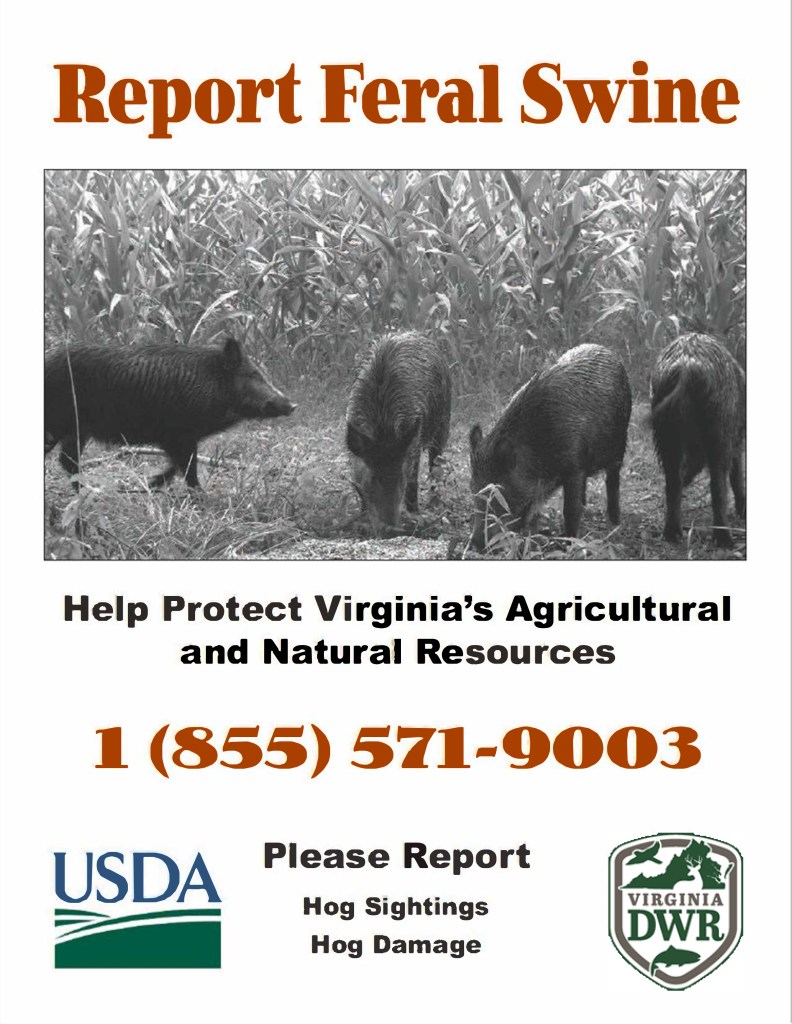
As farmers know, feral hogs can be detrimental to crops, pastures, and infrastructure, as well as a serious risk for the spread of disease to livestock. Wildlife agencies, in cooperation with various stakeholders across the commonwealth, have managed to suppress the population in Virginia, but there is still work to be done to achieve eradication. Farmers who see feral hogs or experience hog damage are encouraged to contact the Wildlife Conflict Helpline at 1 (855-571-9003).
Virginia Farm Bureau members with questions or concerns can also contact Stefanie Taillon at 804-363-9505 or stefanie.taillon@vafb.com.
USDA Expands Aquaculture Disaster Assistance to Include Fish Raised for Food
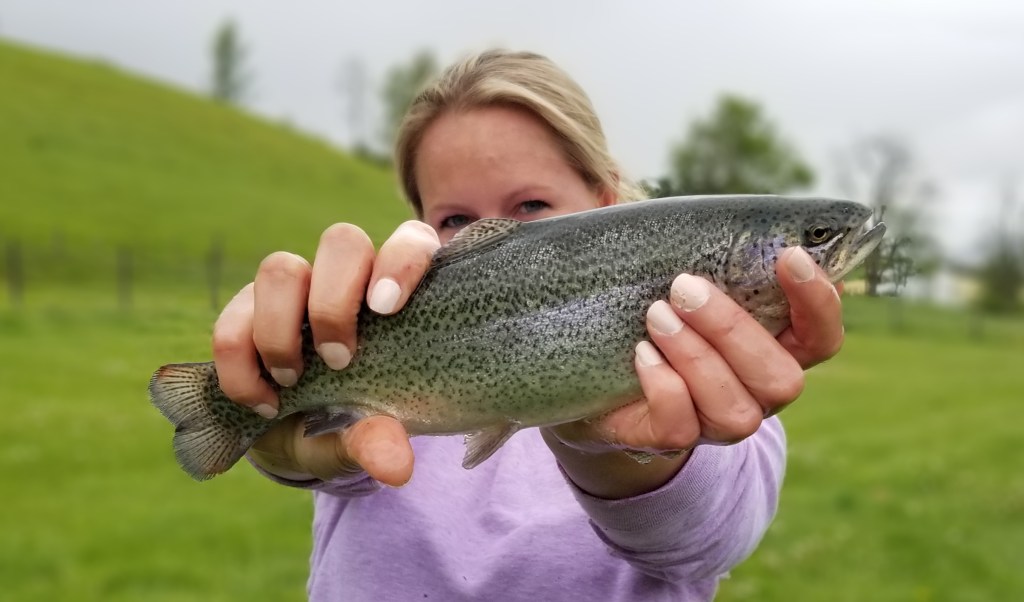
In response to catastrophic aquaculture losses due to major winter storms that hit states along the U.S. Gulf Coast in February, the U.S. Department of Agriculture’s (USDA) Farm Service Agency (FSA) today announced a policy change that makes food fish and other aquatic species eligible for the Emergency Assistance for Livestock, Honey Bees and Farm-raised Fish Program (ELAP). Previously, only farm-raised game and bait fish were eligible for death loss ELAP benefits. Beginning June 1, eligible aquaculture producers can request ELAP assistance for 2021 losses. This policy change is for the 2021 and subsequent program years.
ELAP provides financial assistance to eligible producers of livestock, honeybees and farm-raised fish for losses due to disease, certain adverse weather events or loss conditions, including blizzards and wildfires, as determined by the Secretary.
To be eligible, losses must have occurred on or after Jan. 1, 2021. For farm-raised fish and other aquatic species death losses only that occurred prior to June 1, 2021, FSA is waiving the requirement to file a notice of loss within 30 calendar days of when the loss is apparent. An aquaculture producer will still need to be able to provide contemporaneous records upon request to document the eligible loss event and demonstrate the beginning and ending inventory. The deadline to file an application for payment for the 2021 program year is Jan. 31, 2022.
“We want producers of all kinds to know that we’re listening. Today’s announcement demonstrates that USDA is committed to helping the aquaculture industry recover from losses due to Winter Storm Uri and other disaster events,” said FSA Administrator Zach Ducheneaux. “We are pleased to offer these policy flexibilities and related financial relief to impacted aquaculture producers; and we encourage them to contact their local FSA office for assistance.”
USDA also announced today that it will purchase up to $159.4 million in domestically produced seafood, fruits, legumes, and nuts for distribution to a variety of domestic food assistance programs, including charitable institutions, under the authority of Section 32 of the Agricultural Adjustment Act. The bulk of today’s purchase includes American seafood—the largest single purchase of American seafood in the Department’s history. Combined, these actions will address disruptions in the food production and supply chains resulting from the COVID-19 pandemic.
 Plows and Politics