Check out this week’s video!
VDACS Announces Collection Dates for the 2021 Pesticide Collection Program

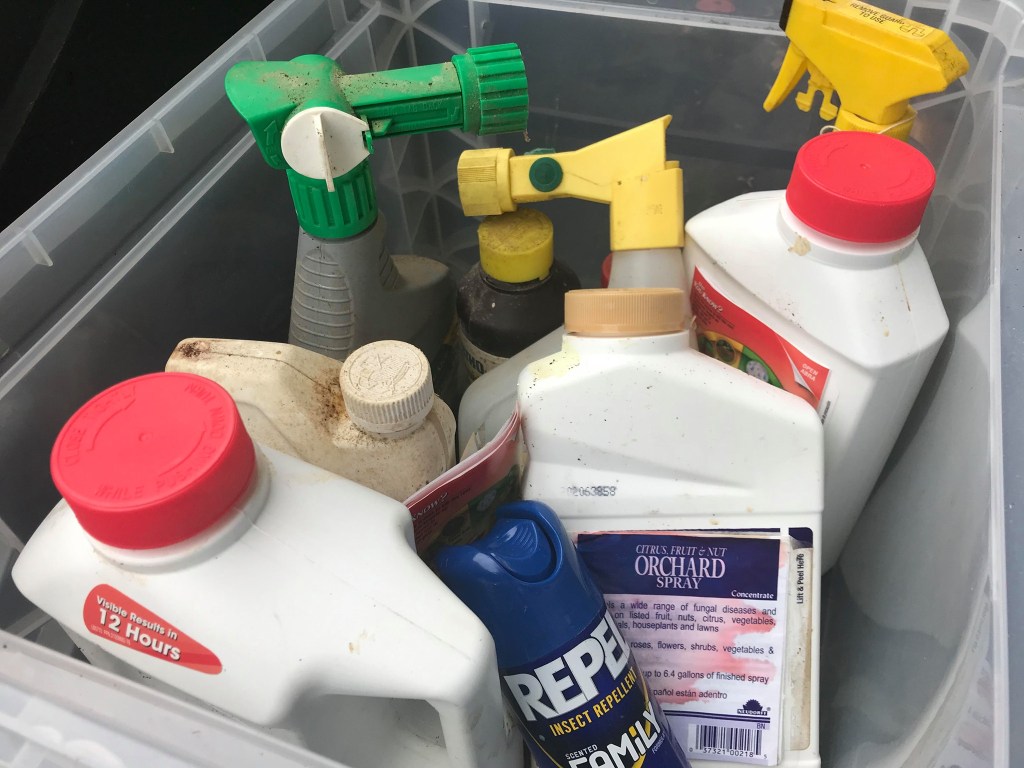
Farmers, pesticide dealers, pest control firms, certified applicators, homeowners and golf course operators are encouraged to participate in the Virginia Pesticide Collection Program. The program collects unwanted, outdated or banned pesticides and disposes of them in a safe manner. Since its inception, the Virginia Pesticide Collection Program has collected and destroyed more than 1.5 million pounds of outdated and unwanted pesticides, protecting public health and eliminating the environmental threat they could have posed.
The Virginia Department of Agriculture and Consumer Services (VDACS), through its Office of Pesticide Services (OPS), and in partnership with Virginia Cooperative Extension, provide this service at no charge. The program is funded through pesticide product registration fees collected by OPS.
The following is a list of the 2021 collection sites and schedule. All locations are open from 9 a.m. to 1 p.m.
| Aug. 23 – Greenline Service Corporation 11417 Tidewater Trail Fredericksburg, VA 22408 | Aug. 24 – Helena Agri-Enterprises 100 Commerce Parkway Warsaw, VA 22572 |
| Aug. 31 – Hartfield Fire Department 3309 Twiggs Ferry Road Hartfield, VA 23071 | Sept. 1 – Nutrien Ag Solutions 15277 Richmond Tappahannock Hwy. St. Stephens Church, VA 23148 |
| Sept. 9 – Merrifield Garden Center 12101 Lee Highway Fairfax, VA 22030 | Sept. 10 – James S Long Regional Park. 4603 James Madison Highway Haymarket, VA 20169 |
In administering the Pesticide Collection Program, VDACS divides Virginia into five regions. Each year, the department conducts a collection in a different region. Once all five regions have been served, the program starts another cycle. Click here to view a map of future collection localities.
Participants must transport their unwanted pesticides to one of the central collection sites located within the service area. If participants cannot safely containerize the unwanted pesticides for transport, VDACS may arrange assistance on a case-by-case basis. ONLY pesticides will be accepted. Pesticide contaminated material (for example, pesticide contaminated fertilizer) will NOT be accepted as part of the collection program. In addition, the program does NOT accept motor oil, paint, fuel, fertilizer or other chemicals.
Participants are asked to complete a pesticide collection registration form prior to arrival and return the completed form to jeffrey.rogers@vdacs.virginia.gov or mail to Office of Pesticide Services, VDACS, P.O. Box 1163, Richmond Virginia 23218. The form is available at vdacs.virginia.gov/pesticide-collection.shtml or by contacting the program at 804.786.3798.
Participants should direct questions to their local Virginia Cooperative Extension agent or to Jeffrey Rogers using the contact information above.
Merchandiser Minute – August 13, 2021
Check out this weeks video!
Merchandiser Minute – August 6, 2021
Check out this week’s video!
Merchandiser Minute – July 30, 2021
Check out this week’s video!
Upcoming Webinar to educate about County Committees

USDA Farm Service Agency (FSA) will be hosting a webinar on Thursday, July 29th at 3:00 p.m. titled “FSA County Committees and You.”
FSA county committees are a critical component of the day-to-day operations of FSA. The county committees encourage grassroots input and local administration of federal farm programs. Farmers and ranchers who are elected to serve on FSA county committees use their judgment and knowledge to help with the decisions necessary to administer FSA programs in their counties. These members are elected from their local farmers, ranchers and landowners who also make decisions regarding hiring county office employees in FSA county offices.
When: Thursday, July 29th, 2021 at 3:00 p.m. (EST)
Registration Link: https://globalmeetwebinar.webcasts.com/starthere.jsp?ei=1483938&tp_key=efbd88000f
Nomination period for FSA County Committees closes nationwide on August 2nd.
Look both ways at the Crossing!

Last year I heard some farmers talking about moving farm equipment on the roadways and the many potential hazards that could happen. One mentioned was railroads and the respect we all need to have for the “iron horse”. It’s a force that you need to watch out for and realize that you can’t make assumptions around railroad crossings and always look and don’t take chances. I remembered a 2019 article I was quoted in about railroad safety. As this is a busy time of year for farming, I thought it was worth another read. I hope you agree.
Here’s the article from 2019.
Railroad crossings can pose a danger on farms
RICHMOND—Farming can be a dangerous job, but there’s one hazard farmers may not have on their radar: railroad crossings.
Many farmers live near rural railroad crossings or have railroad tracks on their property, which can pose a risk for train collisions. According to Operation Lifesaver, Inc., a national rail safety education organization, approximately 15% of all rail collisions each year occur on private crossings such as those on farmland.
“Anytime you’re crossing a railroad, there’s always a chance of something happening,” said Andrew Smith, associate director of governmental relations for Virginia Farm Bureau Federation. “Farmers usually have to go slower to make sure their equipment isn’t dragging or likely to get caught on rail lines, or if they’re going up an incline or over bumps. The safety concerns are there.”
In May an Augusta County farmer using a railroad bridge to cross a stream while repairing fences was fatally struck by a train.
Risk can increase with rural, private railroad crossings because some areas lack the gates or lights that signal an oncoming train. In addition, farm machinery is loud and farmers can’t count on hearing a train in time. Having visual contact with rail lines and looking both ways before crossing is critical. The American Farm Bureau Federation and Operation Lifesaver recently teamed up to remind farmers about the dangers associated with rail lines. Operation Lifesaver published the following safety tips:
- Slow down as you approach a railroad crossing.
- Stop no closer than 15 feet from the crossing.
- Look and listen for a train. Open cab windows, turn off radios and fans and remove headphones. Rock back and forth in your seat to see around obstacles.
- Look both ways again before crossing.
- Once you start across, do not hesitate. Do not change gears.
“We can’t take a crossing for granted, and we can’t compete with a train,” Smith said.
Our friends at Operation Lifesaver, Inc. – Railroad Safety Education has some great materials such as this one on Farm Equipment around railroad crossings. Brochure
For more information visit https://oli.org/.

Merchandiser Minute- July 23, 2021
Check out this week’s video!
Sales Tax and Ag Products – Avoid a painful and potentially costly lesson

The other day I got a call about a farmer being audited by the Virginia Department of Taxation, the caller was asking me about the “agricultural exemption” for the sales and use tax. It wasn’t an unfamiliar call; I usually get at least one or two a year about the tax and the production of farm products. That’s why I pulled together a handout we house on the Virginia Farm Bureau Resource page to help educate folks about it to help in running their operation. Virginia Cooperative Extension also updated their publication on the tax for the industry, theirs a link to it on our page as well. To some it’s confusing, but once you have a better understanding it makes a lot more sense.
In Virginia, sales tax is levied on the sale of tangible goods and some services. The tax is collected by the seller and remitted to state tax authorities. Many think if you are a farmer you are exempt from paying the tax when buying products, but that is how the tax works.
When a farmer is buying something, items they buy used in the “producing an agricultural product for market” should qualify for the exemption, they buyer would file a Form ST-18 from the Virginia Department of Taxation with the retailer claiming the purchase met the exemption. The retailer would maintain the form on file. The same goes for farmers that sell products directly to consumers. If the farmer is selling to another farmer something that would be used in the production of an agricultural product for sale, then the buyer farmer would make sure he has completed and given the seller farmer Form ST-18 for him to maintain in their files in case they were audited.
Think it like this, the end user of a product pays the tax. When you buy a television, you pay the sales tax as you are the one buying the item for your use at home. In the case of a gallon of milk, every thing purchased to go into the production of that milk should qualify for a sales tax exemption (think input), and then when that milk is sold at the store to the consumer, they are the one that pays the tax.
Continue reading