Check out this week’s video!
Merchandiser Minute – July 30, 2021
Check out this week’s video!
Upcoming Webinar to educate about County Committees

USDA Farm Service Agency (FSA) will be hosting a webinar on Thursday, July 29th at 3:00 p.m. titled “FSA County Committees and You.”
FSA county committees are a critical component of the day-to-day operations of FSA. The county committees encourage grassroots input and local administration of federal farm programs. Farmers and ranchers who are elected to serve on FSA county committees use their judgment and knowledge to help with the decisions necessary to administer FSA programs in their counties. These members are elected from their local farmers, ranchers and landowners who also make decisions regarding hiring county office employees in FSA county offices.
When: Thursday, July 29th, 2021 at 3:00 p.m. (EST)
Registration Link: https://globalmeetwebinar.webcasts.com/starthere.jsp?ei=1483938&tp_key=efbd88000f
Nomination period for FSA County Committees closes nationwide on August 2nd.
Look both ways at the Crossing!
Last year I heard some farmers talking about moving farm equipment on the roadways and the many potential hazards that could happen. One mentioned was railroads and the respect we all need to have for the “iron horse”. It’s a force that you need to watch out for and realize that you can’t make assumptions around railroad crossings and always look and don’t take chances. I remembered a 2019 article I was quoted in about railroad safety. As this is a busy time of year for farming, I thought it was worth another read. I hope you agree.
Here’s the article from 2019.
Railroad crossings can pose a danger on farms
RICHMOND—Farming can be a dangerous job, but there’s one hazard farmers may not have on their radar: railroad crossings.
Many farmers live near rural railroad crossings or have railroad tracks on their property, which can pose a risk for train collisions. According to Operation Lifesaver, Inc., a national rail safety education organization, approximately 15% of all rail collisions each year occur on private crossings such as those on farmland.
“Anytime you’re crossing a railroad, there’s always a chance of something happening,” said Andrew Smith, associate director of governmental relations for Virginia Farm Bureau Federation. “Farmers usually have to go slower to make sure their equipment isn’t dragging or likely to get caught on rail lines, or if they’re going up an incline or over bumps. The safety concerns are there.”
In May an Augusta County farmer using a railroad bridge to cross a stream while repairing fences was fatally struck by a train.
Risk can increase with rural, private railroad crossings because some areas lack the gates or lights that signal an oncoming train. In addition, farm machinery is loud and farmers can’t count on hearing a train in time. Having visual contact with rail lines and looking both ways before crossing is critical. The American Farm Bureau Federation and Operation Lifesaver recently teamed up to remind farmers about the dangers associated with rail lines. Operation Lifesaver published the following safety tips:
- Slow down as you approach a railroad crossing.
- Stop no closer than 15 feet from the crossing.
- Look and listen for a train. Open cab windows, turn off radios and fans and remove headphones. Rock back and forth in your seat to see around obstacles.
- Look both ways again before crossing.
- Once you start across, do not hesitate. Do not change gears.
“We can’t take a crossing for granted, and we can’t compete with a train,” Smith said.
Our friends at Operation Lifesaver, Inc. – Railroad Safety Education has some great materials such as this one on Farm Equipment around railroad crossings. Brochure
For more information visit https://oli.org/.
Merchandiser Minute- July 23, 2021
Check out this week’s video!
Sales Tax and Ag Products – Avoid a painful and potentially costly lesson

The other day I got a call about a farmer being audited by the Virginia Department of Taxation, the caller was asking me about the “agricultural exemption” for the sales and use tax. It wasn’t an unfamiliar call; I usually get at least one or two a year about the tax and the production of farm products. That’s why I pulled together a handout we house on the Virginia Farm Bureau Resource page to help educate folks about it to help in running their operation. Virginia Cooperative Extension also updated their publication on the tax for the industry, theirs a link to it on our page as well. To some it’s confusing, but once you have a better understanding it makes a lot more sense.
In Virginia, sales tax is levied on the sale of tangible goods and some services. The tax is collected by the seller and remitted to state tax authorities. Many think if you are a farmer you are exempt from paying the tax when buying products, but that is how the tax works.
When a farmer is buying something, items they buy used in the “producing an agricultural product for market” should qualify for the exemption, they buyer would file a Form ST-18 from the Virginia Department of Taxation with the retailer claiming the purchase met the exemption. The retailer would maintain the form on file. The same goes for farmers that sell products directly to consumers. If the farmer is selling to another farmer something that would be used in the production of an agricultural product for sale, then the buyer farmer would make sure he has completed and given the seller farmer Form ST-18 for him to maintain in their files in case they were audited.
Think it like this, the end user of a product pays the tax. When you buy a television, you pay the sales tax as you are the one buying the item for your use at home. In the case of a gallon of milk, every thing purchased to go into the production of that milk should qualify for a sales tax exemption (think input), and then when that milk is sold at the store to the consumer, they are the one that pays the tax.
Continue readingHunting & Trapping in Virginia Regulations Digest

Meet our Summer Interns
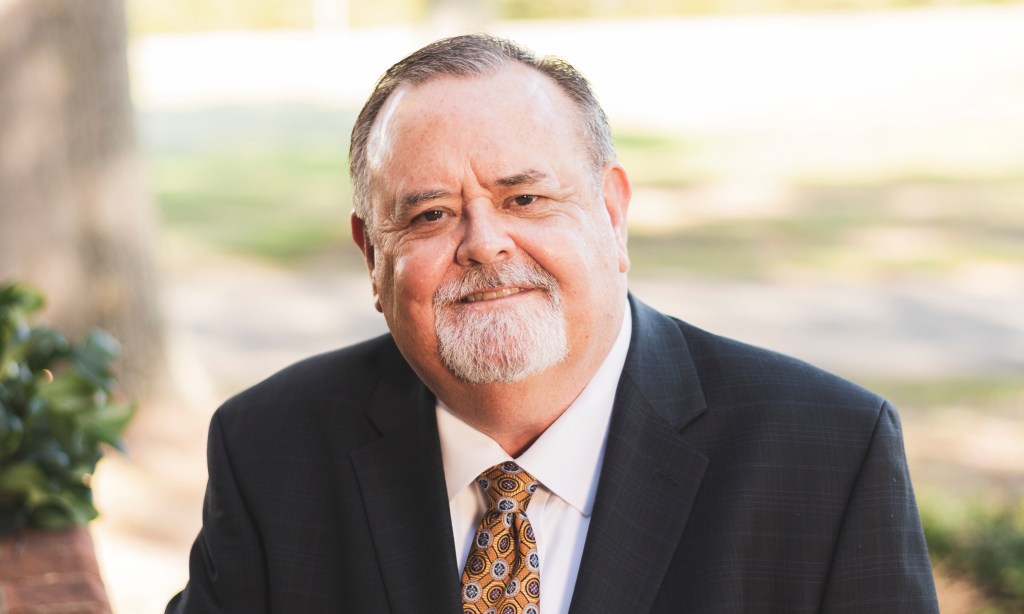
One of the most rewarding opportunities at Virginia Farm Bureau Federation, both for students and our staff, is the summer internship program. Past interns have gone on to work in fields such as advocacy, association management, research, state government, and yes even working in our department today. Both Stefanie Taillon and Martha Moore were interns in the Governmental Relations Department. Typically, we have openings for interns in odd years coinciding with state elections in Virginia. This year we have two interns working with staff. Both have been doing a wonderful job and I wanted each to share a little about themselves as they near the end of their time with us.
Samantha Owens
I was born and raised in Upstate New York in a small town called New Hartford, New York. I grew up on my family farm and that is an experience that I cherish. My great-grandfather started the farm after immigrating from Wales in the 1920s and the farm has been in the family ever since. Although it started as a dairy farm, the operation of the farm has changed with pretty much every generation. My grandfather raised veal and hogs for years with the help of my dad and his brothers. My uncle now runs the farm and raises sheep, highland cattle, and, most recently, four piglets. My parents both have careers outside of farming now, but my mom actually worked as a field advisor with the New York State Farm Bureau when she was in her 20s. Needless to say, she is absolutely thrilled that I am working with the Virginia Farm Bureau this summer.
I just graduated from the University of Virginia this past May, where I majored in government and minored in public policy and leadership. During my time at UVA, I fell completely in love with Virginia and all that it has to offer, so much so that I decided to stick around. This fall I will be starting my first year at the University of Richmond School of Law. Although I am not entirely sure of the type of law I would like to practice in the future, I am interested in environmental law.
This summer I am helping the Governmental Relations team with the AgPAC. As a New Yorker, this internship has been a great immersion into Virginia State Politics. I love that this internship provides me with an opportunity to work with the Governmental Relations team, Field Service Directors, candidates running for office, and some of our farmers.

Newlin Humphrey
I grew up in Fluvanna County and my interest in agriculture began when I joined FFA at Fluvanna County High School. Although I did not grow up in production agriculture, my passion and connection to the agricultural industry deepened as continued through FFA and began riding horses competitively. From 2018-2019, I served a Virginia FFA State Officer alongside 7 other individuals and had the opportunity to see the incredible impact that agriculture and agricultural education has on people throughout the Commonwealth and beyond.
My love of agriculture is continuing at Oklahoma State University (Go Pokes!) where I am a current junior and studying Agricultural Leadership with a concentration in International Affairs and Policy. Through National FFA, I had the opportunity to travel to South Africa and see agriculture on a global scale which sparked my interest. I plan to pursue a master’s degree in international agriculture or immediately being working in the industry.
This summer at Farm Bureau I have had the opportunity to work with Governmental Relations, Young Farmers, and Membership and Field Services. Through my projects I have been able to advocate for Virginia agriculture, and work with members to ensure that Farm Bureau is able to offer unique programs and facilitate an environment where agriculture can progress and thrive.
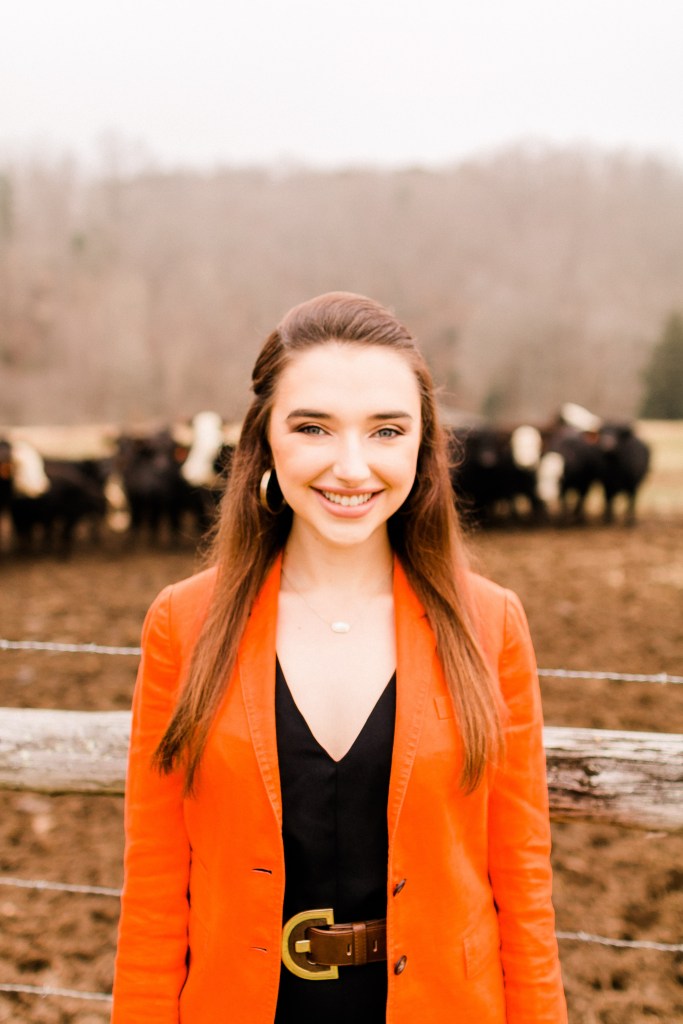
We know these two will do remarkable things and we are happy they wanted to spend this summer working at Virginia Farm Bureau to learn more what we do!
USDA to Provide Pandemic Assistance to Livestock Producers for Animal Losses

Livestock and poultry producers who suffered losses during the pandemic due to insufficient access to processing can apply for assistance for those losses and the cost of depopulation and disposal of the animals. The announcement is part of USDA’s Pandemic Assistance for Producers initiative. Livestock and poultry producers can apply for assistance through USDA’s Farm Service Agency (FSA) July 20 through Sept. 17, 2021.
The Consolidated Appropriations Act, 2021, authorized payments to producers for losses of livestock or poultry depopulated from March 1, 2020 through December 26, 2020, due to insufficient processing access as a result of the pandemic. PLIP payments will be based on 80% of the fair market value of the livestock and poultry and for the cost of depopulation and disposal of the animal. Eligible livestock and poultry include swine, chickens and turkeys.
PLIP Program Details
Eligible livestock must have been depopulated from March 1, 2020, through December 26, 2020, due to insufficient processing access as a result of the pandemic. Livestock must have been physically located in the U.S. or a territory of the U.S. at the time of depopulation.
Eligible livestock owners include persons or legal entities who, as of the day the eligible livestock was depopulated, had legal ownership of the livestock. Packers, live poultry dealers and contract growers are not eligible for PLIP.
PLIP payments compensate participants for 80% of both the loss of the eligible livestock or poultry and for the cost of depopulation and disposal based on a single payment rate per head. PLIP payments will be calculated by multiplying the number of head of eligible livestock or poultry by the payment rate per head, and then subtracting the amount of any payments the eligible livestock or poultry owner has received for disposal of the livestock or poultry under the Natural Resources Conservation Service (NRCS) Environmental Quality Incentives Program (EQIP) or a state program. The payments will also be reduced by any Coronavirus Food Assistance Program (CFAP 1 and 2) payments paid on the same inventory of swine that were depopulated.
There is no per person or legal entity payment limitation on PLIP payments. To be eligible for payments, a person or legal entity must have an average adjusted gross income (AGI) of less than $900,000 for tax years 2016, 2017 and 2018.
Applying for Assistance
Eligible livestock and poultry producers can apply for PLIP starting July 20, 2021, by completing the FSA-620, Pandemic Livestock Indemnity Program application, and submitting it to any FSA county office. Additional documentation may be required. Visit farmers.gov/plip for a copy of the Notice of Funding Availability and more information on how to apply.
Applications can be submitted to the FSA office at any USDA Service Center nationwide by mail, fax, hand delivery or via electronic means. To find your local FSA office, visit farmers.gov/service-locator. Livestock and poultry producers can also call 877-508-8364 to speak directly with a USDA employee ready to offer assistance.
Beware of traffic behind you

Make sure you have your SMV sign on your equipment when on the road
Like many of you that live in rural areas I get behind Slow Moving Vehicles often, especially this time of year. Tractors and other farm machinery are busy getting to and from the fields to plant or harvest. We all get in a hurry, but let’s be safe and make sure we all get to our destination safe.
When I returned to the farm decades ago, I heard a story of a local farmer having a school bus behind him as he was moving a piece of tillage equipment down the road. He slowed down and waved the bus by, unfortunately the school bus hung the piece of farm equipment. I was “preached” a very good lesson to remember at the time. Always be courteous when on the road with farm equipment. Always get over when you can and keep tabs of the traffic behind you. When you have folks behind you, get as far off the road as you can to allow them to pass. If they pass it’s their decision, don’t take on the responsibility of waving them by, there is a question of liability.
In the situation described above the Code of Virginia § 46.2-842. Driver to give way to overtaking vehicle. states, “… Any over-width, or slow-moving vehicle as defined by § 46.2-1081 (read Slow Moving Vehicles) shall be removed from the roadway at the nearest suitable location when necessary to allow traffic to pass.”
A few years ago, during the General Assembly I was approached about whether or not we wanted traffic to be able to pass farm machinery on a double line. At first it sounds like a good idea until you think about who is in the better position to decide when it is safe to pass. If the piece of machinery was the size of a passenger vehicle it might be possible for the driver wishing to pass to make the call and pass when they feel it is safe. But most of our farm equipment is much larger than a car these days, those behind a combine or load of hay cannot see around it to make that call. Considering the size of farm equipment today, the operator of the farm machinery is in the “driver’s seat” to better decide when it is safe to pull off the road to allow traffic to pass. Just to be clear, it is still against the law to pass a Slow Moving Vehicle on a double line.
This might be a good time to remind everyone to have that orange triangle Slow Moving Vehicle sign on the back of the equipment. To view the complete law on that in Virginia you can look at Virginia Code § 46.2-1081. Slow-moving vehicle emblems.It may be a small thing, but it has a big impact and can save lives, including yours. Don’t forget those flashing lights too!
Bottomline, be careful out there when you are driving farm machinery on the roadways. We are all sharing the road, farmers are driving very expensive, very large equipment in most cases, we are also very vulnerable. Remember to let folks pass when you are able to get over far enough to allow traffic to pass. Get over and let them decide if they wish to take the opportunity.
Dana Fisher, Chair of Virginia Farm Bureau Safety Committee has placed a lot of resources on farm safety on our website. You can check those out at www.vafb.com/Safety. Remember you can also check out other useful resources on our Virginia Farm Bureau Resources page at www.vafb.com/membership-at-work/farmers-in-action/resources. If there is something you still have questions about, reach out to me at the Virginia Farm Bureau headquarters or via your County Farm Bureau.
 Plows and Politics