Rep. Goodlatte receives ‘Golden Plow’ Award at Valley Farm Bill Forum


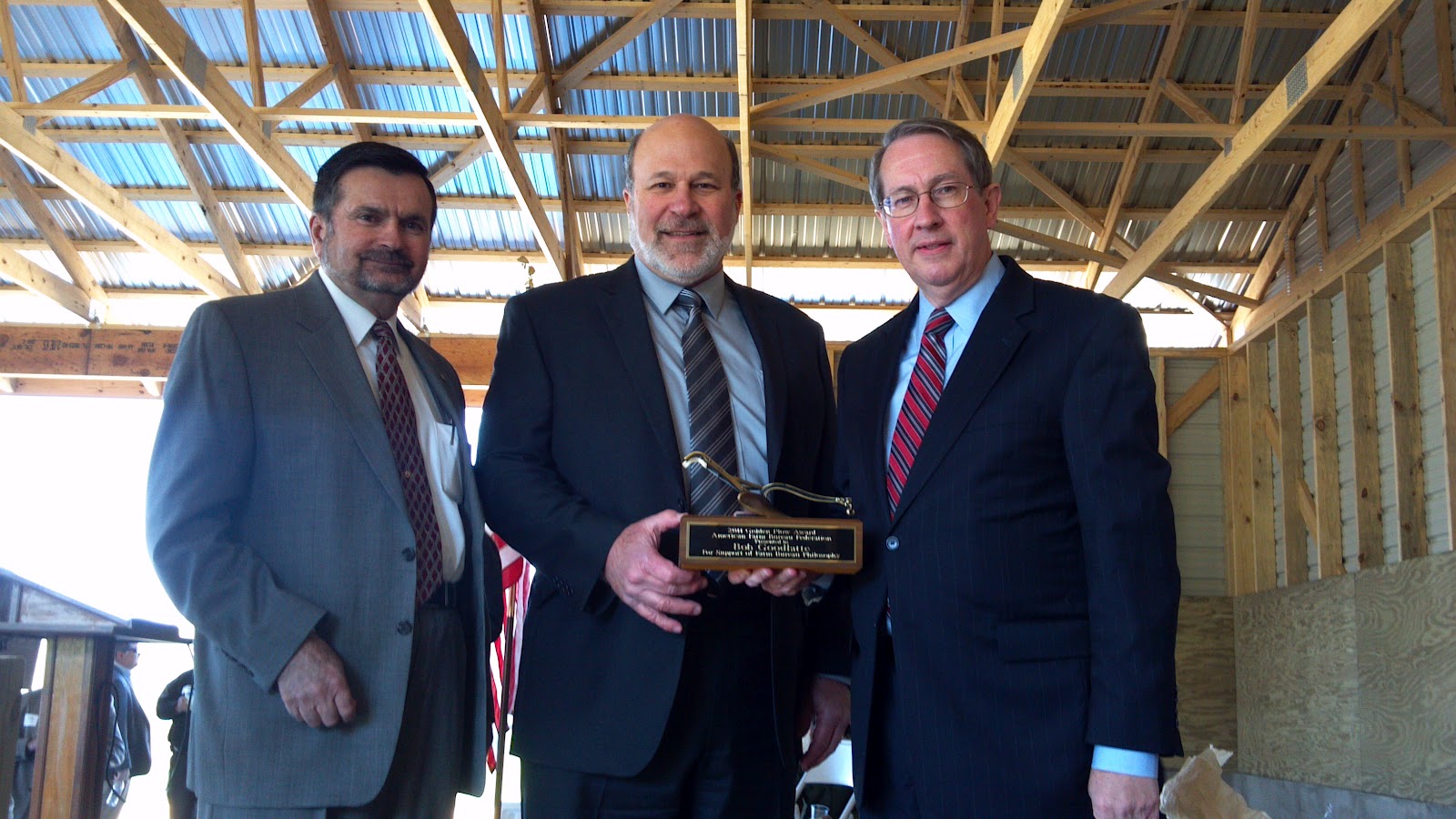
Virginia Farm Bureau Federation President Wayne Pryor and American
Farm Bureau President Bob Stallman presented Rep. Bob Goodlatte (R-Va.)
with the AFBF Golden Plow Award last week.

Last week, Congressman Bob Goodlatte received the Golden Plow award for his continued support of America’s farmers and ranchers. The Golden Plow award is the highest honor bestowed on Members of Congress by the American Farm Bureau Federation (AFBF). Goodlatte was presented the award by Virginia Farm Bureau Federation President Wayne Pryor and AFBF President Bob Stallman during a forum on the 2012 Farm Bil Conservation Programl in the Shenandoah Valley.

“Congressman Goodlatte is a vigorous defender of private property rights, both real and intellectual, and he continues to lead the fight against regulatory overreach. He is a champion for private forestry and has worked tirelessly to ensure farmers of all sizes have access to the conservation programs that assist them in maximizing their farms’ economic returns while contributing measurable results toward enhancing the environment.”

The Virginia Farm Bureau nominated Goodlatte for the award. According to Stallman, since Goodlatte was first elected in 1992 to represent Virginia’s 6th Congressional District, he has “applied his common sense, expertise and determination to finding solutions to the challenges facing American agriculture.”

Goodlatte and Stallman also discussed the development of the next Farm Bill and the future of programs to help area farmers address water quality.

Many of the federal conservation programs that farmers across the Commonwealth use to implement a variety of environmental protection practices will expire on October 1, 2012. Practices include stream fencing, rotational grazing, buffers, cover crops, nutrient management, and many others.  These are critical for the management of our farms and the ability to comply with governmental mandates regarding water quality. The deadlines associated with the Chesapeake Bay Total Maximum Daily Load (TMDL) will not allow any delay or missed steps in implementation of such practices. 

“There are huge cuts compared to what was available when the last bill was written,” Goodlatte said. “It’ll be very difficult to write a farm bill in this environment.”

The event was held in a new winter feeding facility at Bob Threewitts’ Twin Oaks Farm in Keezletown. Installing the building was a voluntary conservation practice, which allows cattle manure to be contained in one area, Threewitts said.

Uranium: Read the Reports

Photo by Michael Brcak

Few things have generated the headlines more than the possibility of lifting the moratorium on uranium in Virginia. The 30-year moratorium has been in place since the issue was last looked at in the 1980s. The renewed interest in nuclear energy has reignited interest by investors to attempt to gain permits to mine the largest deposit known in Virginia on the Coles Hill property in Pittsylvania County.

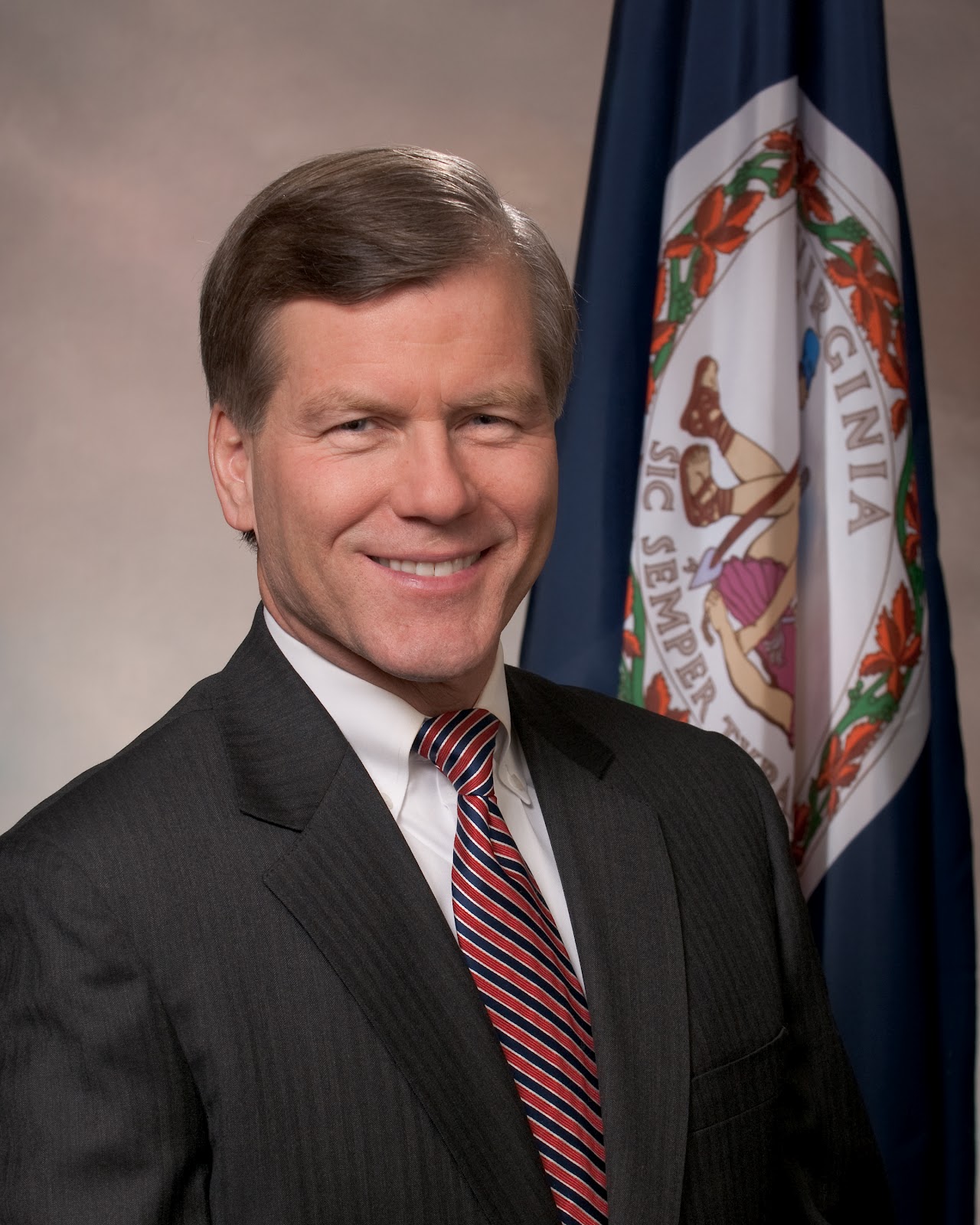
Virginia Farm Bureau has had a policy to have any study of the mining of uranium be conducted by the unbiased party such as the National Academy of Sciences, and then the latest policy to keep the moratorium in place until all studies are thoroughly evaluated. Governor Bob McDonnell called for just that on January 19, 2011, in a directive to state agencies to delve into the issue to gain more site-specific information.

The Uranium Working Group is a multi-agency cooperation to pull together more information to aid the General Assembly to make a more informed decision when considering lifting the moratorium. We encourage all of our members to read the reports and follow the progress of the work group. The public is also asked to participate in public forums, submit questions, and comments. Virginia Farm Bureau will be submitting questions and comments and encouraging members to do so as well.

You can monitor the work group and read the state sponsored reports that have been completed to date at the Uranium Working Groups website at http://www.uwg.vi.virginia.gov/index.shtml

Extension article: Direct Marketers and the Virginia Sales Tax


By USDA

Spring has sprung, and soon farmers markets across the state will be buzzing with farmers selling their Virginia-grown products.

Virginia Cooperative Extension put out an excellent article in 2008 for farmers who direct market their products on collecting Virginia sales tax. We thought it would be helpful to post it here for those of you selling directly to consumers.

We’d like to note one update that has occurred since the article was published. During the 2011 Virginia General Assembly, legislation passed that states individuals who raise and sell agricultural products at local farmers markets and roadside stands do not have to collect sales tax if their annual income from their sales does not exceed $1,000. The seller is also exempt from collecting the litter tax if his annual income from such sales does not exceed $1,000, and that any container he provides to hold purchased items has been previously used.

Direct Marketers and the Virginia Sales Tax

Farm Business Management Update, April 2008 – May 2008
Bill Whittle (wwhittle@vt.edu), Extension Agent, Farm Business Management, Northwest District

Historically, farmers have not paid sales tax on many purchases used in agriculture production, nor have they been concerned with collecting sales tax because they have sold a commodity product to a wholesaler or middleman. Many Virginia farmers have entered into the realm of “Direct Marketing” by selling produce, meats, further processed foods, feed for pleasure animals, etc., directly to the consumer. When they sell retail or to the “end-user” they must collect sales tax on gross receipts from all retail sales. See Figure 1 for a flow-chart defining when sales tax must be collected.

Farmers are obligated to collect and remit the sales tax on all retail sales to each customer. Retail sales can be thought of as the sale to the end user as opposed to a wholesaler. There are no exceptions or special circumstances allowed for farmers selling their own production. The tax must be separately stated and added to the sales price or charge. The Virginia Department of Taxation is the state agency responsible for insuring that this occurs.

Individuals, partnerships, corporations, etc. must file for a Certificate of Registration if starting a business in Virginia or desiring to conduct business as a dealer by selling directly to the consumer. The farmer must register with the state by filing State Form R1, Combined Registration Application Form (http://www.tax.virginia.gov/taxforms/Business/Registration/R-1.pdf ), and must collect and pay the tax due on retail sales. Once registered, the farmer will be assigned a Virginia tax identification number that will be used when conducting business with the state. If your application indicates that you will be collecting sales tax, the department will send you a Virginia Certificate of Registration for sales tax. This certificate permits sales tax collection, and allows the farmer to issue and receive exemption certificates. The Virginia Certificate of Registration must be displayed at your place of business. The farmer should also apply for a Federal Tax Identification Number (FEIN) by going directly to the IRS (http://www.irs.gov/businesses/small/article/0,,id=98350,00.html).

Sales tax rates fall into two basic categories that farmers selling retail need to be aware of. These are food and non-food categories. The basic sales tax for non-food items is 5% of gross sales and is comprised of 4% for the state and 1% for the locality. Food sales are taxed at a total rate of 2.5% of gross sales, which is comprised of 1.5% for the state and 1% for the locality. Department of Taxation Bulletin 5-78 discusses the sale of eligible food items subject to the reduced state tax rate of 1.5% as are deemed eligible under the federal food stamp definition.

Many direct marketers also have the opportunity to sell to a wholesaler or further-processor in addition to their retail customers. The only way a farmer does not have to collect sale tax from someone purchasing product for resale is if that person provides the appropriate Certificate of Exemption.

The sales tax applies to regular or recurring sales of farm products by farmers or peddlers at public markets, roadside stands, farms, etc. There is a provision for the occasional sale where you do not collect sales tax, but this is intended for the truly occasional sale, defined as three or fewer separate transactions within one calendar year, providing the activity does not require a Certificate of Registration. Because sales at fairs, flea markets, etc. generally involve multiple individual sales they are not considered occasional sales.

The laws governing Sales and Use Tax are generally straightforward, i.e. “If you are selling retail, then you must collect sales tax.” However, an individual farmer often has unique questions specific to his operation. To address specific questions, the Department of Taxation suggests that you write the Tax Commissioner for a ruling. Complete information on Virginia Sales and Use Tax can be obtained at the Virginia Department of Taxation website: http://www.tax.virginia.gov/ and use the Business Link to reach the Sales and Use Tax.

AFBF President responds to Reps. Hurt and Altmire’s "Preserving Rural Resources Act"

AFBF President
 Bob Stallman

Last week, American Farm Bureau Federation President Bob Stallman released a statement in support of Reps. Robert Hurt (R-Va.) and Jason Altmire (D-Pa.) H.R. 4278, the Preserving Rural Resources Act.

“H.R. 4278, the Preserving Rural Resources Act, introduced in the House of Representatives, addresses a critical issue,” Stallman said. “The legislation reinforces agricultural exemptions granted to farmers and ranchers by Congress in Section 404 of the Clean Water Act.

Farmers, ranchers and the forestry community are facing increased federal regulatory and compliance costs, as well as constraints on land used for the production of food, fiber and fuel. We’ve seen a concerted effort by regulators to narrow the scope and usefulness of the Clean Water Act exemption Congress explicitly intended for agriculture.” This legislation is intended to reaffirm the following exemptions:
• Normal farming, silviculture and ranching activities;

• Maintenance and emergency reconstruction of dikes, dams, levees, riprap, breakwaters, causeways and bridge abutments;

• Construction or maintenance of farm or stock ponds and irrigation ditches, and maintenance of drainage ditches;

• Construction of temporary sedimentation basins;

• Construction and maintenance of farm and forest roads or temporary roads for moving mining equipment; and

• Any activity with respect to a state approved programs
The Hurt (R-VA) and Altmire (D-Pa) amendment simply clarify that these exemptions apply to activities described listed above. AFBF is seeking bipartisan cosponsors to introduce this legislation in the Senate. 

AFBF Backs Senate and House Bills Reforming Estate Tax; Tell VFB your story in the comments!

The American Farm Bureau Federation has endorsed Senate legislation that would help protect America’s farm and ranch families from potentially crippling blows of the federal estate tax following a farm owner’s death.

The Senate bill, the Death Tax Repeal Permanency Act of 2012 (S. 2242), was introduced by Sen. John Thune (R-S.D.). The bill is similar to another Farm Bureau-supported, H.R. 1259, introduced in the House by Rep. Kevin Brady (R-Texas). The House bill now has more than 200 co-sponsors.

 In a letter to Thune and other sponsors, AFBF President Bob Stallman stated that estate taxes continue to be a problem for the nation’s farmers and ranchers. Individuals, family partnerships and family corporations own 98 percent of the nation’s 2 million agricultural operations. When estate taxes on an agricultural business exceed cash and other liquid assets, the tax can cripple a family-owned farm or ranch and hurt the rural communities and businesses that agriculture supports, according to AFBF.

The Unemployment Insurance Reauthorization and Job Creation Act of 2010 set the estate tax exemption at $5 million per person, with a top tax rate of 35 percent for 2011 and 2012. That legislation also put in place a new provision for 2011 and 2012 that allows the unused portion of a spouse’s exemption to be used by a surviving spouse, and it permanently reinstates stepped-up basis in regard to tax treatment. Legislation is necessary because without congressional action, in 2013, the estate tax exemption will shrink to $1 million per person with no spousal transfer and the top rate will increase to 55 percent.

“This will strike a blow to farm and ranch operations trying to transition from one generation to the next,” Stallman said. “A $1 million exemption is not high enough to protect a typical farm or ranch able to support a family and, when coupled with a top rate of 55 percent, can be especially difficult for farm and ranch businesses.”

 Stallman said the “on again, off again” nature of estate tax law makes it difficult, if not impossible, for farmers and ranchers to engage in planning for the transfer of a family business from one generation to the next. “It becomes a barrier to entry for new and beginning farmers” Stallman added

“While estate tax planning may be able to protect some family farms and ranches from the devastation of estate taxes, planning tools are costly and take money needed to operate and expand businesses,” Stallman said. “Even with planning, changing asset values and family situations make it impossible to guarantee that a well-thought-out estate plan will protect a family business from estate taxes.”

Virginia Farm Bureau wants to hear your concerns with the estate tax! Tell us your story in the comments. Please answer the following questions:

  1. How important is your farm to your family, kids and grandkids?
  2.  Have you thoughts about how a high estate tax bill could affect the future of your farm? Please share some of your concerns.
  3. Has your family been affected by the estate tax in the past? How?

Don’t forget to leave your name and county!

VFB Women’s Committe makes nearly 2,300 legislative contacts

VFBF President Wayne Pryor matched Women’s Committee
Chair Janice Burton’s $500 contribution to Agriculture in the
Classroom on behalf of the Southwest District, winners of the
legislative contacts challenge.

Last fall Virginia Farm Bureau Women’s Committee Chair Janice Burton issued a challenge to each women’s committee district to increase their activity during the 2012 General Assembly.

For the district that made the most legislative contacts, Janice would donate $500 to Agriculture in the Classroom. President Wayne Pryor offered to match Janice’s contribution for a grand total of $1,000.

President Pryor and Janice made good on their promise at the 2012 VFB Women’s Conference held last weekend at the Homestead.

Overall, members of the state women’s committee made 2,292 legislative contacts this session. The Southwest District, which includes Smyth, Lee, Russell, Tazewell, Wythe, Washington, Bland and Wise-Dickinson counties, made the most contacts with 1,361. Great job, ladies! And thanks to Janice and President Pryor for their generous incentives!

We here in Governmental Relations can’t stress enough the importance of contacting your legislators about bills or issues affecting Virginia agriculture, especially at crucial voting times. If you are a producer member and would like to receive our Action Alerts, please email kelly.pruitt@vafb.com.

Bills Blocking DOL Child Labor Regulations Introduced

By NIOSH

Update on Child Labor from AFBF:

U.S. Senators John Thune (R-S.D.) and Jerry Moran (R-Kan.) introduced common sense legislation last week, the Preserving America’s Family Farm Act, to prevent the Department of Labor (DOL) from enacting its controversial proposed restrictions on youth working on family farms. Both of Oklahoma’s Senators- Jim Inhofe and Tom Coburn, have signed on as co-sponsors.

The Department of Labor has proposed 85 pages of unreasonable and overreaching rules that would unnecessarily restrict the participation of young people in agriculture related activities,” said Thune. “Family farms and farming communities teach young people responsible work ethics and these proposed rules would change that by severely limiting the commonplace activities in which young people can learn about agriculture. This is another example of the Obama administration initiating unsolicited regulations that would prohibit normal practices that have been carried out in rural areas for generations—not to mention limiting a desperately needed workforce to replace the current generation of farmers whose average age is nearing 60 years old.”

“There is no better example of the vast overreach of government into the everyday lives of Americans than the Department of Labor’s proposed rule to regulate young people working on farms and ranches,” Sen. Moran said. “For generations, the contributions of young people have helped family farm and ranch operations survive and prosper. If this proposal goes into effect, not only will the shrinking rural workforce be further reduced, and our nation’s youth be deprived of valuable career training opportunities, but a way of life will begin to disappear. This proposal should alarm more than just rural America. If the federal government can regulate the relationship between parents and their children on their own family’s farm, there is virtually nothing off limits when it comes to government intrusion into our lives.”

In December of last year, Thune and Moran and 28 of their Senate colleagues sent a letter to Secretary Solis requesting that the proposed rule be withdrawn and outlined numerous concerns.

Legislation creates opportunities for more health care professionals in rural areas

Update on rural health by Trey Davis, Assistant Director of Governmental Relations

Farmers, like any other business owner, are constantly looking for new ways to maximize their profits while controlling expenses. In rural Virginia, the cost of health care has risen dramatically for farmers, their families, and their employees. Combined with a severe lack of access to hospitals and physicians in rural areas, health care is a growing problem that needs innovative solutions at both the state and federal level.

Allowing more people in rural areas that will diagnose conditions and provide treatment can go a long way towards controlling the “out-of-pocket” cost for farmers. HB 346, sponsored by Delegate John O’ Bannon (R-Richmond), is an opportunity to have more health care professionals in these underserved parts of the Commonwealth. The legislation will allow nurse practitioners to practice as part of “patient care teams” where a physician licensed to practice medicine in the Commonwealth provides management and leadership. It also streamlines requirements for written or electronic practice agreements for nurse practitioners, and provides that physicians practicing as part of a patient care team have the option of requiring nurse practitioners be covered by professional malpractice insurance.

HB346, a compromise between the Medical Society of Virginia (MSV) and the Virginia Council on Nurse Practitioners (VCNP), will increase the number of patients seen in rural areas by enabling physicians to manage more nurse practitioners. It also provides some new language that will allow more flexibility for NPs to treat patients in nursing homes and free clinics. As the bill awaits the Governor’s Signature, I hope farmers will be optimistic about having more medically licensed caregivers nearby. The less you have to travel to find quality care, than the lower your cost. The more nurse practitioners nearby, the greater your accessibility.

Health care costs and health care accessibility have been at the forefront of the public policy debate ever since the passage of the Patient Protection and Affordable Care Act (PPACA) by Congress in 2010. While the constitutionality of that law is set to be debated by the Supreme Court next week, the Virginia General Assembly is taking steps to provide greater access in rural areas.

We at Virginia Farm Bureau are thankful that the medical community is looking for legislative solutions that will provide farmers the quality health care they need at a business cost they can afford.

Farm Bureau has 34 successes at General Assembly

Martha Moore
Vice President, Governmental Relations

As the General Assembly concluded without a budget, Farm Bureau policy positions prevailed on 34 out of 40 issues. This number will change once we know the outcome on the state budget.

A big thank you goes out to those of you who made legislative contacts when we asked you as well as those of you who participated in Legislative Day. We can’t emphasize enough how crucial it is for legislators to hear the issues and how they affect agriculture straight from Virginia farmers like you. Your contacts made all the difference this year, and we can attribute our success to you.

If you are a producer member and would like to receive our action alerts, please email Kelly.Pruitt@vafb.com.

Below are some highlights from this year’s session:

Animal Care

• Successful in defeating all legislation that place arbitrary and unscientific animal husbandry practice restrictions on farmers and prevented giving human rights to animals

Game Laws

• Made coyotes and feral hogs nuisance species so that this would allow some permanency beyond regulations for an open season on these nuisance species

• Defeated all bills that would have allowed Sunday hunting

Property Rights

• Passed a resolution placing a proposed constitutional amendment on the ballot in November 2012 to permanently protect property owners from eminent domain takings for private benefit

• Ensured that landowners are fairly compensated for factors that impact the fair market value as “lost profits” and “lost access”

Please stay tuned on this issue as we are working on developing a statewide campaign on getting the ballot initiative passed. Look for more information on how your county Farm Bureau can help ensure that are successful in a major final piece of achieving our policy position on protecting your property rights from eminent domain abuse.

Virginia Cooperative Extension/ Agriculture Experiment Station

• Passed a commending resolution on the Agriculture Experiment Station’s 125th Anniversary to highlight the programs that have helped support farm profitability

Va. agricultural exports reached record high in 2011


A view of the Port of Norfolk
By USDA


Gov. Bob McDonnell announced on March 13 that the commonwealth exported a record $2.35 billion in agricultural products in 2011, an increase of more than 6 percent from 2010 and more than 2 percent from 2009.
McDonnell spoke during the opening lunch at the Governor’s Conference on Agricultural Trade.
“Agriculture and forestry are vitally important to economic growth in Virginia,” he said. “With more than one-quarter of farm cash receipts attributable to export sales, continuing to grow Virginia’s agribusiness exports is a priority for my administration. … Exports are key factors in keeping our economy moving forward, and they support jobs, from our farms to our outstanding air, land and sea ports.”
Virginia’s strong position in the global marketplace is due in part to its diversified portfolio of products and export markets. Top export products in 2011 included soybeans; poultry; wheat; pork; lumber and wood products; corn; animal feed; leaf tobacco; fats and oils; cotton; marine and aquaculture products; fresh vegetables; raw peanuts; hides and skins; processed foods and beverages, including wine.

Virginia’s top three ag export markets in 2011 were Morocco, with exports totaling more than $360 million in 2011; China, which saw its exports from Virginia grow to $304 million; and Canada, with exports of $220 million.

Todd P. Haymore, Virginia Secretary of Agriculture, said in a Op/Ed piece in the Richmond Times-Dispatch for every $1 of agricultural products exported, another $1.40 is generated by in-state activities, such as processing, packaging and shipping. Importantly, exports generated nearly 30 percent of annual farm cash receipts last year.

“Virginians have no doubt as to the superiority of our agricultural and forestry products. Now, with the help of an aggressive global marketing strategy implemented by McDonnell, more countries around the world are discovering what Virginia has to offer,” Haymore said.
 
There is concern, on the national level, about the Obama administration’s approach to a major Asian-Pacific free trade deal currently in the advanced stages of negotiations. The Trans-Pacific Partnership Agreement (TPPA) aims to ease American exporters’ access to major Asian-Pacific markets, including Australia, New Zealand, Singapore, Vietnam, Japan and Taiwan.

However, the administration is considering carving out tobacco leaf and tobacco products from the agreement, a move that would shut out Virginia tobacco farmers from countries that account for 40 percent of global trade and 75 percent of Virginia’s agricultural exports.

Virginia farming and business communities have joined the Farm Bureau and Commissioner Lohr in urging the Obama administration to negotiate a trade agreement that benefits all of Virginia’s farmers. This is something we are monitoring and will continue to keep you posted.