
Robert Harper with Virginia Farm Bureau’s grain division provides this week’s market updates.
#merchandiserminute #grainfuture #virginiafarmbureau
Robert Harper with Virginia Farm Bureau’s grain division provides this week’s market updates.
#merchandiserminute #grainfuture #virginiafarmbureau
The Virginia Department of Housing and Community Development’s (DHCD) Office of Broadband is excited to announce the launch of a statewide survey to gather data that will inform the Virginia Digital Opportunity Plan. The Office of Broadband is currently in the process of developing the comprehensive Virginia Digital Opportunity Plan, the required output of Virginia’s Digital Equity Act Planning Grant from the National Telecommunications and Information Administration (NTIA). The Digital Opportunity Plan will enable the Commonwealth apply for Federal broadband funding from the Digital Equity Act Capacity Grant program, as well as for eligible entities to apply for funds from the Digital Equity Act Competitive Grant program. These grants will be used to improve the affordability of internet services in the Commonwealth, increase digital literacy programming and resources aimed at increasing digital adoption, and fund unique programs that address the digital divide beyond just access to physical broadband infrastructure.
We strongly encourage all Virginia residents to complete this quick, 10-minute survey to help our office better understand your digital needs. Together, we can foster digital opportunity in the Commonwealth by ensuring that residents have access to affordable, reliable, and high-speed internet, and have the skills necessary to use the internet to its full potential.
The Digital Opportunity Survey is currently available in English, Spanish, Arabic, Russian and Ukrainian. Paper copies of the survey are available in the resources tab.
If distributing paper surveys, please ensure that you collect them from participants once they are done. Completed surveys can be mailed or faxed to SIR Research. If possible, we recommend collecting the paper surveys and mailing them in one batch directly to SIR. If you find that you are receiving a significant amount (20+) of paper surveys each week, we recommend you send a weekly collection to SIR. If you would prefer to email or fax completed surveys in, please retain the hard copies to be returned at a later date for quality assurance.
Mailing Address
SIR 2601 Floyd Avenue Richmond, VA 23220
Scan and Email Address: Becky.Chipman@sirhq.com
Fax: 804-342-1790
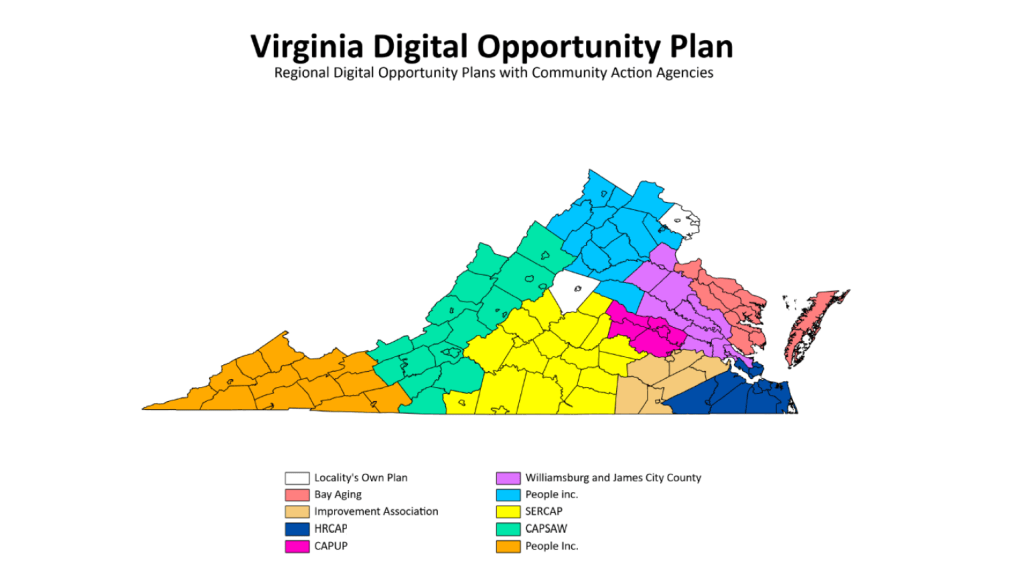
DHCD is partnering with the Department of Social Services, the Virginia Community Action Partnership, and Community Action Agencies to develop Regional Digital Opportunity Plans. Across nine regions, Community Action Agencies are assessing the digital divide through stakeholder engagement, survey distribution and data analysis and community input sessions to develop regional plans that address identified community needs related to the digital divide. The nine regions, as well as the lead Community Action Agency for each regional plan, are listed in the map.
The intent of this program is to bring organizations working to close the digital divide into the state’s planning process. The objective of this grant opportunity is to identify best practices of initiatives/efforts that are addressing the digital divide in communities throughout Virginia. DHCD will provide grant funding to the organizations operating these programs, with the deliverable of a case study highlighting key findings, which DHCD will incorporate into the Commonwealth Digital Opportunity Plan.
Visit here for more information.
Applications will be accepted and evaluated by DHCD on a rolling basis, until all available funds are committed. Interested organizations are encouraged to apply as soon as possible to begin development of their case study if selected.
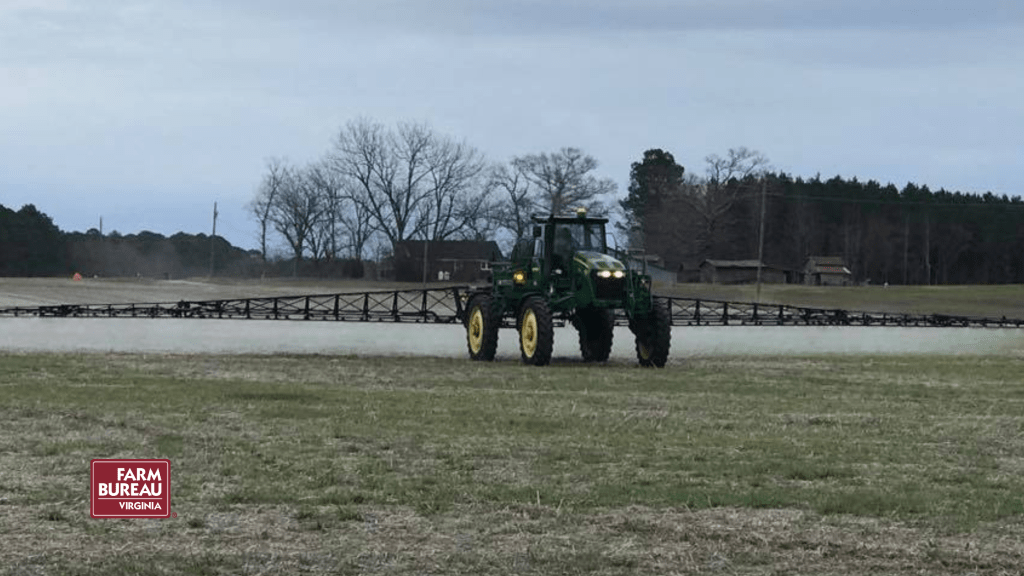
Farmers, pesticide dealers, pest control firms, certified applicators, homeowners and golf course operators are encouraged to participate in the 2023 Virginia Pesticide Collection Program. The program collects unwanted, outdated or banned pesticides, at no cost to eligible participants, and disposes of them in a safe manner.
The Virginia Department of Agriculture and Consumer Services (VDACS) Office of Pesticide Services, with participation from Virginia Cooperative Extension and the Division of Consolidated Laboratory Services, oversee the program, which has collected and destroyed more than 1.8 million pounds of outdated and unwanted pesticides since its inception. The program is funded through pesticide product registration fees collected by VDACS.
The following is a list of the 2023 collection sites and schedule. All locations are open from 9 a.m. to 1 p.m.
In administering the Pesticide Collection Program, VDACS divides Virginia into five regions. Each year, the department conducts a collection in a different region. Once all five regions have been served, the program starts another cycle. Click here for the list of future collection localities.
Participants must transport their unwanted pesticides to the collection sites. If participants cannot safely containerize the unwanted pesticides for transport, VDACS may arrange assistance on a case-by-case basis. Only pesticides will be accepted. Pesticide contaminated material (for example, pesticide contaminated fertilizer) will not be accepted as part of the collection program. In addition, the program does NOT accept motor oil, paint, fuel, fertilizer or other chemicals.
Participants need to complete a pesticide collection registration form prior to the scheduled collection date and return the completed form to marlene.larios@vdacs.virginia.gov or mail to Office of Pesticide Services, VDACS, P.O. Box 1163, Richmond Virginia 23218. The form is available at www.vdacs.virginia.gov/pdf/disposalregistration.pdf or by contacting the program at 804.371.6561.
Participants should direct questions to their local Virginia Cooperative Extension agent or to the VDACS Office of Pesticide Services at marlene.larios@vdacs.virginia.gov.
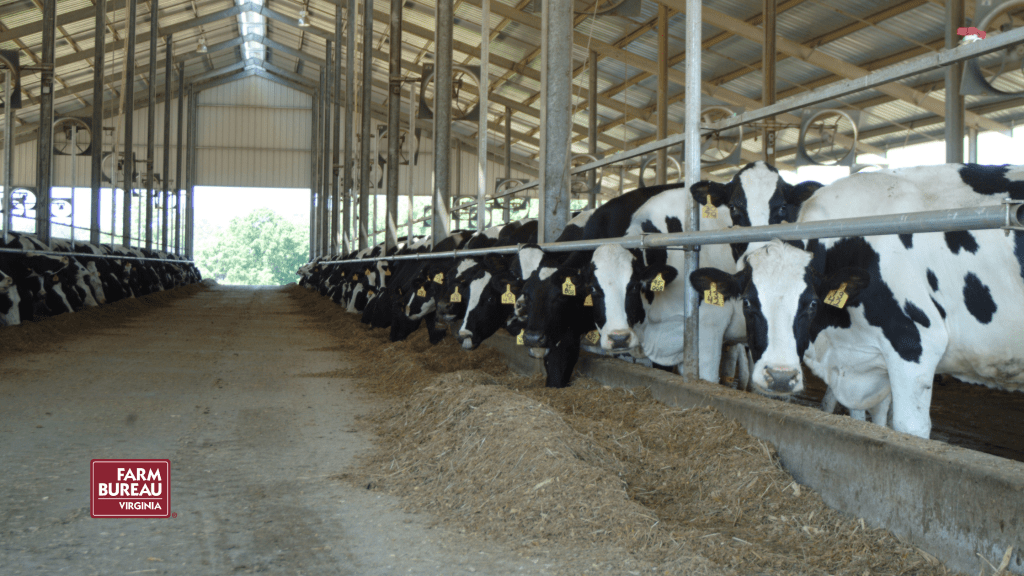
USDA has made available Milk Loss Program (MLP) assistance for eligible dairy operations for milk that was dumped or removed, without compensation, from the commercial milk market due to qualifying weather events and the consequences of those weather events that inhibited delivery or storage of milk (e.g., power outages, impassable roads, infrastructure losses, etc.) during calendar years 2020, 2021 and 2022. Administered by the Farm Service Agency (FSA), signup for MLP opened September 11 and runs through October 16, 2023.
Background
On December 29, 2022, President Biden signed into law the Extending Government Funding and Delivering Emergency Assistance Act (P.L. 117-43), providing $10 billion for crop losses, including milk losses due to qualifying disaster events that occurred in calendar years 2020 and 2021. Additionally, the Disaster Relief Supplemental Appropriations Act, 2023 (Pub. L. 117-328) provides approximately $3 billion for disaster assistance for similar losses that occurred in calendar year 2022.
Eligibility
MLP compensates dairy operations for milk dumped or removed without compensation from the commercial milk market due to qualifying disaster events, including droughts, wildfires, hurricanes, floods, derechos, excessive heat, winter storms, freeze (including a polar vortex) and smoke exposure that occurred in the 2020, 2021 and 2022 calendar years. Tornadoes are considered a qualifying disaster event for calendar year 2022 only.
The milk loss claim period is each calendar month that milk was dumped or removed from the commercial market. Each MLP application covers the loss in a single calendar month. Milk loss that occurs in more than one calendar month due to the same qualifying weather event requires a separate application for each month.
The days that are eligible for assistance begin on the date the milk was removed or dumped and for concurrent days milk was removed or dumped. Once the dairy operation restarts milk marketing, the dairy operation is ineligible for assistance unless after restarting commercial milk marketing, additional milk is dumped due to the same qualifying disaster event. The duration of yearly claims is limited to 30 days per year for 2020, 2021 and 2022.
How to Apply
To apply for MLP, producers must submit:
If not previously filed with FSA, applicants must also submit all the following items within 60 days of the MLP application deadline:
Most producers, especially those who have previously participated in FSA programs, will likely have these required forms already on file. However, those who are uncertain or want to confirm the status of their forms can contact their local FSA county office.
MLP Payment Calculation
The final MLP payment is determined by factoring the MLP payment calculation by the applicable MLP payment percentage.
The calculation for determining MLP payment is:
For MLP payment calculations, the milk loss base period is the first full month of production before the dumping or removal occurred.
The MLP payment percentage will be 90% for underserved producers, including socially disadvantaged, beginning, limited resource, and veteran farmers and ranchers and 75% for all other producers.
To qualify for the higher payment percentage, eligible producers must have a CCC-860, Socially Disadvantaged, Limited Resource, Beginning and Veteran Farmer or Rancher Certification, form on file with FSA for the 2022 program year.
Adjusted Gross Income (AGI) limitations do not apply to MLP, however the payment limitation for MLP is determined by the person’s or legal entity’s average adjusted gross farm income (income derived from farming, ranching and forestry operations). Specifically, a person or legal entity, other than a joint venture or general partnership, cannot receive, directly or indirectly, more than $125,000 in payments under MLP if their average adjusted gross farm income is less than 75% of their average AGI or more than $250,000 if their adjusted gross farm income is at least 75% of their average AGI.
More Dairy Information
In other FSA dairy safety-net support, Dairy Margin Coverage (DMC) program payments have triggered every month, January through July, for producers who obtained coverage for the 2023 program year. July 2023’s income over feed margin of $3.52 per hundredweight (cwt.) is the lowest margin since DMC program benefits to dairy producers started in 2019. To date, FSA has paid more than $1 billion in DMC benefits to covered dairy producers for the 2023 program year.
Additionally, FSA closed the Organic Dairy Marketing Assistance Program (ODMAP) application period on August 11.
On farmers.gov, the Disaster Assistance Discovery Tool, Disaster Assistance-at-a-Glance fact sheet and Loan Assistance Tool can help producers and landowners determine program or loan options. For assistance with a crop insurance claim, producers and landowners should contact their crop insurance agent. For FSA and NRCS programs, they should contact their local USDA Service Center.
Robert Harper with Virginia Farm Bureau’s grain division provides this week’s market updates.
#merchandiserminute #grainfuture #virginiafarmbureau
Gov. Glenn Youngkin announced today the latest awards from the Governor’s Agriculture and Forestry Industries Development (AFID) Fund Infrastructure Grant program. Three projects will receive $127,500 in competitively awarded, matching grants for new community infrastructure development projects that support local food production and sustainable agriculture.
Created by the General Assembly in 2021, AFID infrastructure grants are awarded to support locally identified investments that aid small-scale farmers and food producers in growing their operations. This round of grant awards will support the construction of a new farmers market in Craig County, the expansion of an existing farmers market in Henrico County, and the improvement of an on-farm market in the city of Virginia Beach.
“This round of grant awards helps to strengthen the local agricultural infrastructure in these communities by improving the connection between producers and consumers,” said Youngkin. “This funding will enhance and expand opportunities for both farmers and consumers, and we are helping support food access and family health throughout the Commonwealth.”
“As a farmer myself, I understand the challenges many farming families face trying to get their goods in the hands of consumers and this funding helps bridge the gap,” said Secretary of Agriculture and Forestry Matt Lohr. “In addition to improving revenue opportunities for local producers, these grants aid in reducing food insecurity by increasing access to fresh local foods in several communities.”
The following projects are receiving funding in this round of the AFID Infrastructure Grant program:
Craig County is receiving funding to support the construction of a farmers market with public restrooms in the town of New Castle. A rural area with a population of 5,200, Craig County and the town of New Castle have only one small grocery store and residents must travel a minimum of 20 miles to access the nearest farmers market. The new farmers market will have a positive impact on the agricultural community by providing another avenue for locally grown produce to be sold within the surrounding community. The application is a joint effort between Craig County, Craig County Economic Development Authority, and the town of New Castle.
Henrico County is receiving funding to support the expansion of the Dorey Park Farmers Market which will provide expanded shelter for consumers, an educational programming space, and a separate office and storage area for the market managers. Established in 2018, the Dorey Park Farmers Market has quickly grown to more than 40 vendors. The market was established around an existing, small shelter which has become undersized for the number of vendors and consumers it serves. The project benefits the community with an improved market facility that provides access to locally grown produce as well as an improved retail outlet for local farmers to sell their products – both of which are essential for continued growth and success.
The city of Virginia Beach is receiving funding to support Cullipher Farm in the installation of a new 10 by 20-foot freezer and additional irrigation equipment for its orchards and vineyards. Cullipher Farm is a multi-generational family-owned business that produces a variety of traditional vegetable and fruit crops for sale in its on-farm market as well as canned goods, baked goods, ice cream and beef. In addition to a robust “you-pick” operation and on-farm experiences, the business grows and processes various types of fruits for juice and has recently expanded into beef cattle. Currently limited in on-site freezer space, the installation of a new freezer will enable the company to be more efficient in its juice pressing with larger production runs and store more frozen products on-site. It will also enable the company to be more efficient in its beef processing, with larger production runs and less trips to the processor which is located 100 miles away. The additional irrigation equipment will increase productivity of farm crops as well as potentially help minimize losses due to freezes.
Administered by the Virginia Department of Agriculture and Consumer Services, the AFID Infrastructure Grant program, in partnership with local governments, awards grants to develop community infrastructure in support of local food production and sustainable agriculture. Applications for the next round of this grant program will be accepted in the spring of 2024. Additional information about the program is available here.
Robert Harper with Virginia Farm Bureau’s grain division provides this week’s market updates.
#merchandiserminute #grainfuture #virginiafarmbureau
Robert Harper with Virginia Farm Bureau’s grain division provides this week’s market updates.
#merchandiserminute #grainfuture #virginiafarmbureau

Virginia Farm Bureau Federation AgPAC, Farm Bureau’s political action committee, recently announced its endorsement of 32 candidates for the Virginia Senate and 69 candidates for the Virginia House of Delegates. Though the committee did not endorse a candidate in each district’s race, Farm Bureau values many candidates’ open-door policies, and anticipates building strong working relationships with them.
The endorsements are based on recommendations of local committees of farmers.
“Candidates are evaluated through a grassroots process that assesses their understanding of the needs and challenges that we as farmers face in today’s times,” said Wayne F. Pryor, VFBF president and chairman of the VFBF AgPAC board of trustees. “Those who have received the AgPAC endorsement have a history of supporting issues important to agriculture or have demonstrated their commitment through their participation in the evaluation process.”
Throughout the year, the VFBF Women’s Leadership and Young Farmers committees facilitate relationships between agriculturalists and legislators from both rural and urban districts—building partnerships that ensure a sustainable future for the state’s largest industry. Speaking directly with representatives of the General Assembly at farmer-focused summits, in-person visits and legislative roundtables statewide resulted in more opportunities for members to become a voice for agriculture and serve as resources for lawmakers.
Candidates are neither endorsed nor denied endorsements based on policy stances unrelated to farming or forestry.
“We believe these candidates will help protect the agriculture and forestry industries and ensure that they remain the No. 1 industries in the commonwealth,” Pryor continued.
Friendly incumbents have a track record of working with farmers at the local level, said Martha Moore, senior vice president of VFBF governmental relations.
“The newcomers our farmers endorsed for the House and Senate have demonstrated a willingness to listen, seeking to understand the nuances of agricultural issues specific to Virginia’s farmers and foresters,” she added.
The non-partisan VFBF AgPAC was created in 1999 and employs in-kind contributions and endorsements to support candidates who can best support agriculture and Farm Bureau issues.
The following candidates were endorsed (* indicates incumbent candidates):
| Senate District | Candidate |
|---|---|
| SD1 | Timmy French (R) |
| SD2 | Mark Obenshain* (R) |
| SD3 | Christopher Head (R) |
| SD4 | Dave Suetterlein* (R) |
| SD5 | Travis Hackworth* (R) |
| SD6 | Todd Pillion* (R) |
| SD7 | Bill Stanley* (R) |
| SD8 | Mark Peake* (R) |
| SD9 | Frank Ruff* (R) |
| SD10 | John McGuire (R) |
| SD11 | Creigh Deeds* (D) |
| SD12 | Glen Sturtevant (R) |
| SD13 | Lashrecse Aird (D) |
| SD15 | Ghazala Hashmi* (D) |
| SD16 | Siobhan Dunnavant* (R) |
| SD17 | Emily Brewer (R) |
| SD18 | Louise Lucas* (D) |
| SD19 | Christie New Craig (R) |
| SD20 | Bill DeSteph* (R) |
| SD21 | Angelia Williams Graves (D) |
| SD23 | Mamie Locke* (D) |
| SD24 | Monty Mason* (D) |
| SD25 | Richard Stuart* (R) |
| SD26 | Ryan McDougle* (R) |
| SD27 | Tara Durant (R) |
| SD28 | Bryce Reeves* (R) |
| SD29 | Jeremy McPike* (D) |
| SD34 | Scott Surovell* (D) |
| SD35 | Dave Marsden* (D) |
| SD38 | Jennifer Boysko* (D) |
| SD39 | Adam Ebbin* (D) |
| SD40 | Barbara Favola* (D) |
| House District | Candidate |
|---|---|
| HD1 | Patrick Hope* (D) |
| HD3 | Alfonso Lopez* (D) |
| HD4 | Charniele Herring* (D) |
| HD5 | Elizabeth Bennett-Parker* (D) |
| HD6 | Rip Sullivan* (D) |
| HD8 | Irene Shin* (D) |
| HD9 | Karrie Delaney* (D) |
| HD10 | Dan Helmer* (D) |
| HD11 | David Bulova* (D) |
| HD12 | Holly Seibold* (D) |
| HD14 | Vivian Watts* (D) |
| HD16 | Paul Krizek* (D) |
| HD17 | Mark Sickles* (D) |
| HD18 | Kathy Tran* (D) |
| HD20 | Michelle Maldonado* (D) |
| HD25 | Briana Sewell* (D) |
| HD26 | Kannan Srinivasan (D) |
| HD27 | Atoosa Reaser (D) |
| HD28 | David Reid* (D) |
| HD31 | Delores Oates (R) |
| HD32 | Bill Wiley* (R) |
| HD33 | Todd Gilbert* (R) |
| HD34 | Tony Wilt* (R) |
| HD35 | Chris Runion* (R) |
| HD36 | Ellen Campbell* (R) |
| HD37 | Terry Austin* (R) |
| HD38 | Sam Rasoul* (D) |
| HD39 | Will Davis (R) |
| HD40 | Joe McNamara* (R) |
| HD42 | Jason Ballard* (R) |
| HD43 | Will Morefield* (R) |
| HD44 | Israel O’Quinn* (R) |
| HD45 | Terry Kilgore* (R) |
| HD46 | Jed Arnold (R) |
| HD47 | Wren Williams* (R) |
| HD48 | Les Adams* (R) |
| HD49 | Danny Marshall* (R) |
| HD50 | Tommy Wright* (R) |
| HD52 | Wendell Walker* (R) |
| HD53 | Tim Griffin (R) |
| HD56 | Tom Garrett (R) |
| HD59 | Buddy Fowler* (R) |
| HD60 | Scott Wyatt* (R) |
| HD61 | Michael Webert* (R) |
| HD62 | Nick Freitas* (R) |
| HD63 | Phillip Scott* (R) |
| HD64 | Paul Milde (R) |
| HD66 | Bobby Orrock* (R) |
| HD67 | Hillary Pugh Kent (R) |
| HD68 | Keith Hodges* (R) |
| HD69 | Chad Green (R) |
| HD70 | Shelly Simonds* (D) |
| HD71 | Amanda Batten* (R) |
| HD72 | Lee Ware* (R) |
| HD73 | Mark Earley Jr. (R) |
| HD74 | Mike Cherry* (R) |
| HD75 | Carrie Coyner* (R) |
| HD78 | Betsy Carr* (D) |
| HD81 | Delores McQuinn* (D) |
| HD82 | Kim Taylor* (R) |
| HD83 | Otto Wachsmann* (R) |
| HD86 | A.C. Cordoza* (R) |
| HD88 | Don Scott* (D) |
| HD90 | Jay Leftwich* (R) |
| HD91 | Cliff Hayes* (D) |
| HD97 | Karen Greenhalgh* (R) |
| HD98 | Barry Knight* (R) |
| HD99 | Anne Ferrell Tata* (R) |
| HD100 | Rob Bloxom Jr.* (R) |

A Virginia grant program for backyard beekeepers will surely get a lot of buzz. Interested beekeepers or those wanting to expand, are eligible to receive up to three hive units at no cost through a lottery system from qualified applications submitted to the Virginia Department of Agriculture and Consumer Services (VDACS).
Applications for the Beehive Distribution Program will be accepted August 28, 2023, through September 12, 2023. When the application period opens on August 28, a link to the online application will be made available on this page: VDACS Beehive Distribution Program. Additionally, a PDF of the application for submission by mail will be made available during the application period. Applications received online or postmarked during the application period will be accepted for consideration.
Recipients of beehive units will be selected at random from qualifying applications. Individuals are encouraged to provide a valid email address with their application since notifications regarding the status of an application will be sent by email. Applications from individuals who were not selected to receive beehive units last year, will not be carried forward to this year’s program.
The program provides equipment directly to eligible individuals for the construction of new beehives. Virginia residents who are 18 years of age or older at the time an application is submitted are eligible to receive up to three beehive units per year. Individuals in the same household are not be eligible to receive beehive units in consecutive years until all applications from individuals that did not receive units in the previous year are processed. No more than three beehive units may be distributed per household. Individuals who submit an application for a beehive unit through the program will be registered as a beekeeper with the VDACS. Beehive equipment received through the program must be assembled and occupied with a colony of honey bees within one year of receiving the equipment. Honey bees and equipment to manage beehives, such as personal safety equipment and honey processing equipment, are not provided through the program. Individuals interested in applying to receive beehive units through the program should review the guidelines and requirements which provides application instructions.
Individuals receiving beehive units are encouraged to enter their apiary location in the BeeCheck mapping system.
For more information, visit the VDACS Beehive Distribution Program.
 Plows and Politics