Click here for this week’s Commodity Comments, a weekly newsletter designed to provide agricultural producers with an analysis of current market trends by Farm Bureau Market Analyst Jonah Bowles.
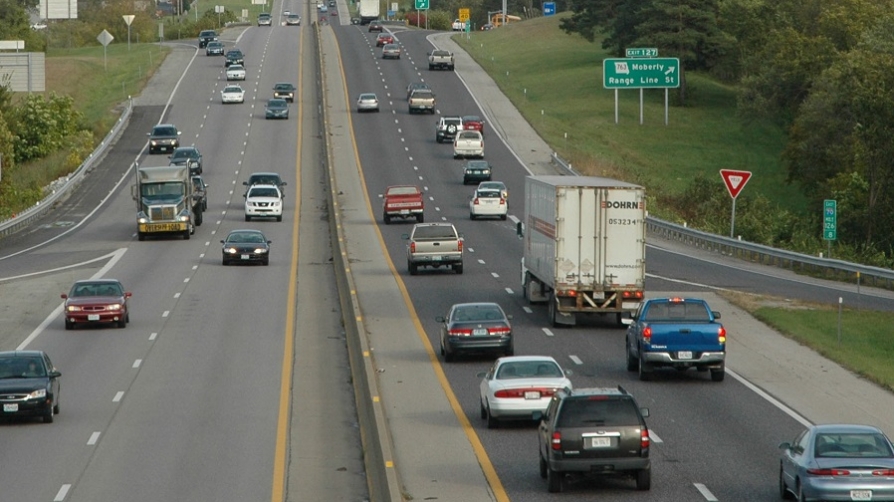
Authored by Dr. Frank Mitloehner, professor and air-quality specialist at the University of California-Davis, the paper identifies energy production and cars, not cows, as the largest U.S. contributors of greenhouse gases that are believed to drive climate change.
Mitloehner’s paper is a response to claims that livestock production is to blame for the lion’s share of U.S. contributions to total GHG emissions. The paper reveals that the U.S. livestock sector contributes 4 percent of greenhouse gas emissions, compared to 27 percent from the transportation sector and 31 percent from the energy sector.
Mitloehner does not underestimate the need to control livestock emissions, but he does point out that, in the past six decades, “the U.S. livestock sector has shown considerable progress to continually reduce its environmental footprint.”
In fact, since the 1950s the carbon footprint of the U.S. beef and dairy sector has continued to shrink as production increased or stayed the same.
A progress report comparing beef production from 1977 to 2007 found that industry’s carbon footprint was reduced by 16 percent over the past 30 years.
“The U.S. livestock farms have the lowest carbon footprint per unit of livestock product produced compared to livestock farms in other countries,” Banks said. “U.S. livestock farms employ technology and improved genetics and management that improve the production efficiency; in turn that reduces environmental impacts for air, soil and water.”
It is time, Mitloehner wrote, “to end the rhetoric and separate facts from fiction around the numerous sectors that contribute emissions and to identify solutions for the global food supply.”
The full white paper is available at afia.org/rc_files/801/livestocks_contribution_to_climate_change_facts_and_fiction.pdf.
Strategies for creating and sustaining small farmers and ranchers for enhanced farm income and improved quality of life will be discussed. Successes in small farm activities will be shared as well as innovative ideas in research, extension and outreach to strengthen collaboration and partnership among state specialists who work to ensure that small farmers and ranchers not only survive, but thrive in today’s economy. This Conference will also serve as a forum to discuss the results of research geared towards addressing challenges facing small farmers and ranchers. Strengthening partnerships created at the six previous National Small Farm Conferences will continue to be a priority for the Virginia Beach meeting.
This conference will consist of short courses, oral presentations, exhibits, poster paper presentations, success stories, and educational tours within the Virginia Beach region, the Chesapeake Bay region and North Carolina.
For more information, click here.

The Virginia Farm Bureau Federation has been representing the state’s farmers since 1926, and it marked the beginning of its 90th year at the 2015 annual convention last fall.
Last year it also observed the 65th anniversary of the Virginia Farm Bureau Mutual Insurance Co. and the 50th year of the organization’s lobbying arm.
“Fighting for Farm Bureau policy positions kept us busy throughout 2015,” said VFBF President Wayne F. Pryor. “It was a pivotal year for representing our members. Whether they were opposing the EPA’s ‘Waters of the U.S.’ regulatory over-reach or promoting common-sense immigration reform, Farm Bureau members spoke out loud and clear.”
The Virginia Farm Bureau was originally formed as a cooperative to provide discounted farm supplies for its members. It quickly branched out into providing legislative support for farmers who lacked representation at the General Assembly.
Today, Farm Bureau provides legislative representation as well as membership benefits for non-farmers, including a wide variety of insurance coverage. It also strives to keep its members informed through its membership magazines, Cultivate and Virginia Farm Bureau News.
And this February, Virginia Farm Bureau News, the organization’s publication of record, marked 75 years in print. The current magazine originally was a tabloid newspaper, first published Feb. 15, 1941.
Issues published between February 1941 and January 2000 are available online through a partnership with the Library of Virginia. To browse archived issues, go to digitalvirginianewspapers.com. Under “Browse the Collection,” click on the link to “Browse by Title,” and choose Virginia Farm Bureau News from the list of newspaper titles.
Other milestones marked over the past year include the Farm Bureau Young Farmers Program hosting a decade of summer expos. And this year was the seventh consecutive year Virginia Young Farmers received national recognition at the American Farm Bureau Federation’s annual convention.
2015 was the second year VFBF’s Agriculture in the Classroom Program honored Virginia teachers who successfully incorporate agriculture into their core lessons. It also was the second year Virginia’s AITC Teacher of the Year earned a national AITC Excellence in Teaching award
Click here for this week’s Commodity Comments, a weekly newsletter designed to provide agricultural producers with an analysis of current market trends by Farm Bureau Market Analyst Jonah Bowles.
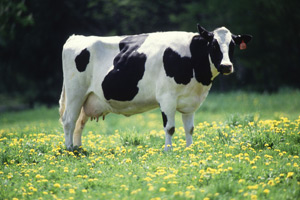
The voluntary program, established by the 2014 Farm Bill, protects participating dairy producers when the margin—the difference between the price of milk and feed costs—falls below levels of protection selected by each participant.
The U.S. Department of Agriculture’s Farm Service Agency published a final rule making the change effective April 13. Any dairy operation already enrolled in the MPP that had an intergenerational transfer occur will have an opportunity to increase the dairy operation’s production history during the 2017 registration and annual coverage election period. The next election period begins July 1 and ends Sept. 30. For intergenerational transfers occurring on or after July 1, notification must be made to the FSA within 60 days of purchasing the additional cows.
Each participating dairy operation is authorized one intergenerational transfer at any time of its choosing until 2018.
For more information, visit fsa.usda.gov/dairy or a local FSA office.
 Plows and Politics