Dairy Revenue Protection Now Available for Purchase

Tony

Tony Banks, Sr. Assistant Director, Agriculture, Development & Innovation

The loss of dairy farms in Virginia and the United States is the result of a variety of economic factors affecting the dairy industry. The factors include, but are not limited to, continued milk production increases despite extended low farm milk prices, increased milk production per cow, changing consumer preferences as well as demand for fluid milk and dairy products, an increasing reliance on dairy exports, lack of effective tools for managing milk price and margin risks, shifts in farm to retail market chains, and others.

VFBF is working to identify and develop options that will help dairy farms remain in business.

The VFBF Dairy Advisory Committee and staff have worked with AFBF over the past two years to help develop Dairy Revenue Protection (DRP), a new crop insurance product designed to help dairymen manage price risk. Coverage is based on farm and market conditions within a given state, like Virginia, as opposed to national averages. DRP approval was fast-tracked by USDA and is available for purchase. DRP, which manages price risk, was developed as an alternative to the Margin Protection Program (MPP), which manages margin risk. Farm Bureau also worked with USDA and Congress to make improvements to the MPP in order that the program becomes more functional and affordable. Farm Bureau has worked similarly with USDA to include dairy as an eligible commodity under the new Market Facilitation Program, designed to provide some financial relief for producers affected by foreign retaliatory tariffs. The recent United States – Mexico – Canada Agreement includes provisions that will aid US dairy exports to Canada and Mexico.

VFBF staff continues to work with Virginia dairy farmers pursuing dairy product manufacture and retail sales as alternatives to marketing bulk milk. While these alternatives for marketing a portion or all of one’s milk may not fit with most dairy farms, staff has assisted several farms that now manufacture and sell fluid milk, cheeses, yogurt, and other consumer-ready dairy products.
Proposed Changes to the Conservation Easement Tax Deduction

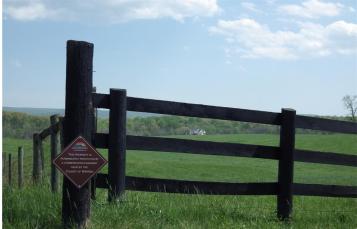
Acetullo-FarmsThe IRS is proposing changes to IRS code section 170 that would reduce the amount of the federal charitable tax deduction for a donated conservation easement by the amount of a state tax credit received.

The proposed regulation can be viewed here.

American Farm Bureau Federation has filed comments that call for the continuation of a charitable tax deduction for the full and fair value of a donated conservation easement. AFBF’s letter can be viewed here.

Virginia Farm Bureau Federation will also be submitting comments on the proposed regulation. Producers who wish to submit individual comments must do so before the October 11th deadline.


Farm Bureau Hay Bale Contest Accepting Entries

Hay baleEntries are being accepted through Nov. 1 for the annual Hay Bale Decorating Contest sponsored by Virginia Farm Bureau Federation’s Women’s Committee.

Originally created to encourage promotional displays among county Farm Bureaus, the contest has been expanded. In addition to county Farm Bureaus, it is open to businesses and organizations such as feed and supply retailers, equipment dealers, farmers’ markets, FFA chapters, 4-H clubs, and local government agencies. Past entries have featured hay bales painted and decorated to resemble tractors and farm animals.

Participants may use round or square bales and will display their entries in public. Contest applications and photos of each entry are due Nov. 1.

Trophies will be awarded to winners in four categories: Best Promotional Display; Most Creative Display; Best Agricultural Theme; and Best Agribusiness, FFA, 4-H or School Display. Winners will be recognized Nov. 27 at the VFBF Annual Convention in Hot Springs.

An online application and contest details are available at vafb.com/membership-at-work/farmers-in-action/womens-program. For more information, contact Angela Haskovec, VFBF senior program coordinator, at angela.haskovec@vafb.com or 804-290-1031.

Talks, Trucks, and Trade: An Update from Washington

Ben final

Ben Rowe, National Affairs Coordinator

As you are aware, September 30th was an important deadline for federal agriculture policy: it marked the expiration of the 2014 farm bill and the date by which Canadian, Mexican, and U.S. trade negotiators must come to an agreement on NAFTA reforms. We entered October with mixed results on those two goals.

Let’s start with the good news. Canada, Mexico, and the United States have agreed to a new trilateral trade agreement to replace NAFTA. After several years of low commodity prices and a nearly unprecedented level of trade uncertainty over the past year, U.S. farmers needed some good news on the trade front, and this new “USMCA” agreement with our North American trade partners is very good news. This USMCA trade agreement not only locks in the market opportunities previously developed with our North American neighbors, but it also builds on those trade relationships in several key areas: Continue reading →

It’s Harvest Season, Time for a Farm Vehicle Refresher!

Andrew 2

Andrew Smith Associate Director, Governmental Relations

It’s harvest season and many of you will be on the road in your farm trucks, whether between your fields and farm or to the market. I thought it an appropriate time to remind folks of some of the basics concerning farm vehicle laws.

Most in Virginia operate farm trucks as a registered farm vehicle (F-tag from DMV) or use the exemption from registration and run as a “Farm Use” vehicle.

Those operating “Farm Use” for the proper activities can travel up to 75 miles. The current law also requires operators to be prepared to supply the location of their farm or farms to law enforcement officials. Any officer may request the address of the lands used by a vehicle’s owner for agricultural purposes or, if the address is not known, the real property parcel identification number of the land.

Continue reading →

Va. Agriculture in the Classroom Receives National Grant

Ag in the ClassVirginia Agriculture in the Classroom is one of six programs that recently received a grant from the National Agriculture in the Classroom Organization.

NAITCO, a nonprofit organization representing AITC programs in most of the 50 states, selected six state AITC projects for funding as part of a competitive grant program called ‘Fire-Up Grants’ to support the growth of agricultural literacy in kindergarten through 12th grade.

Continue reading →

Produce Farmers Can Schedule Free On-farm Review to Determine Readiness for Produce Safety Rule

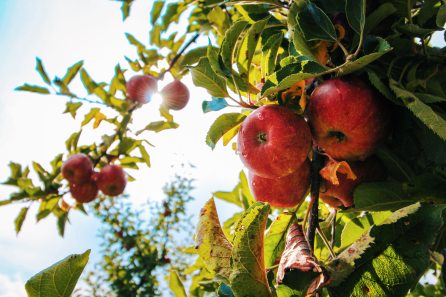
apple-apple-tree-apples-574919Changes are coming in the way farmers grow, pack, hold and distribute ready-to-eat produce, and the Virginia Department of Agriculture and Consumer Services is offering producers the opportunity for a free, on-farm readiness review.

Farmers who sell more than $25,000 in applicable produce per year may be subject to the new federal Produce Safety Rule. Regulatory inspections are expected to begin in mid-2019, but growers can find out now if they are ready for the changes, with time to make any necessary adjustments.

VDACS’ Produce Safety Program is partnering with Virginia Cooperative Extension to conduct the reviews, which are confidential. A VDACS produce safety specialist and an Extension agent will meet with farm management to walk through the operation. A review typically takes two hours and is designed to help answer farmers’ questions about the Produce Safety Rule.

To schedule a review, visit vdacs.virginia.gov/food-produce-safety.shtml or call 804-786-4003. To learn more about the Produce Safety Rule, visit fda.gov.