
Robert Harper with Virginia Farm Bureau’s grain division provides this week’s market updates.
#merchandiserminute #grainfuture #virginiafarmbureau
Robert Harper with Virginia Farm Bureau’s grain division provides this week’s market updates.
#merchandiserminute #grainfuture #virginiafarmbureau
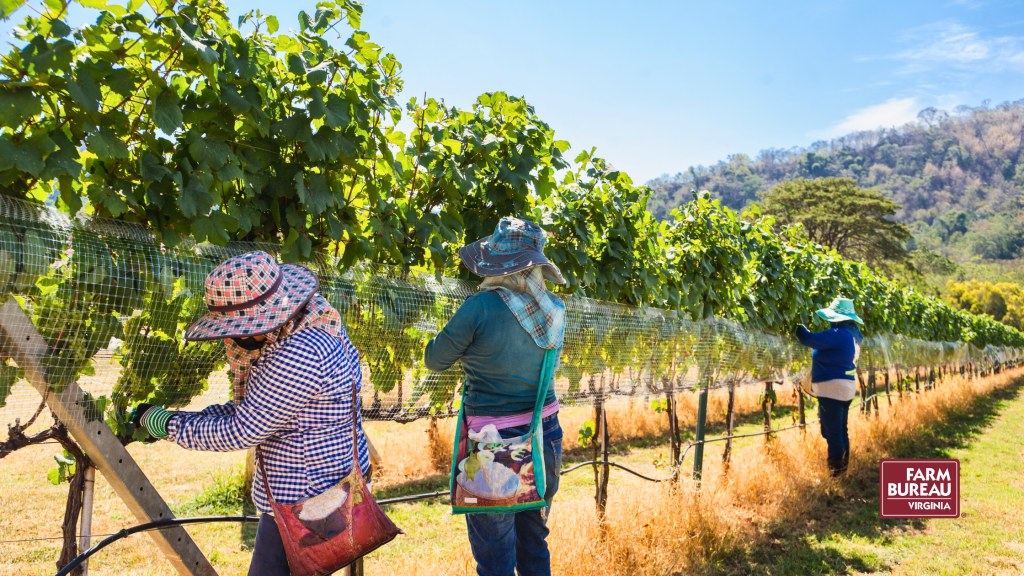
There have been recent reports of increased U.S. Immigration and Customs Enforcement (ICE) and Customs and Border Patrol activity across the country and in Virginia. Agricultural employers are encouraged to act immediately to ensure your farm and employees are as prepared as possible for any immigration enforcement.
Employers who fail to comply with U.S. immigration laws and regulations may face fines, including I-9 violations up to $2,789 per form and undocumented worker violations up to $27,894 per worker. Employers could also face criminal charges and, if convicted, up to 10 years in prison and fines up to $250,000 for actions considered “harboring” or concealing undocumented workers
As you prepare, please consider the following resources:
The National Employment Law Project is an employee-centric organization that has also published guidance for employers and employees in “Employer Guide: What to Do If Immigration Comes to Your Workplace,” available in multiple languages.
Please take time to review the resources above and speak with your legal counsel to ensure you are complying with immigration and labor laws, appropriately train employees, and have a response plan in the event of an ICE audit or raid.
Robert Harper with Virginia Farm Bureau’s grain division provides this week’s market updates.
#merchandiserminute #grainfuture #virginiafarmbureau
Robert Harper with Virginia Farm Bureau’s grain division provides this week’s market updates.
#merchandiserminute #grainfuture #virginiafarmbureau
Robert Harper with Virginia Farm Bureau’s grain division provides this week’s market updates.
#merchandiserminute #grainfuture #virginiafarmbureau

Last update on December 27, 2024:
On December 26, the merits panel of the United States Court of Appeals for the Fifth Circuit vacated the stay on the injunction that it had issued on December 23, 2024, when a motions panel granted the government’s request to reinstate the BOI filing deadline.
Based on the court’s latest action, there is no longer a filing deadline for the submission of Beneficial Ownership Information to the FinCEN (either the 12/31 original deadline or the 1/13/25 extended deadline offered by FinCEN after the original appellate decision.)
Given the last-minute back and forth of the legal rulings affecting the deadline, business owners subject to the filing deadline should continue to gather the necessary information and be prepared to file. However, for now, the original decision by the federal district court to place an injunction on the filing deadline has been reinstated, and there is no current requirement to file BOI by a date certain on the books. The appeal of the district court decision remains expedited, and the appeals court could reverse itself again in the coming days pending the outcomes of the arguments in the case.
If you are a small business owner who needs to file, head to the link below, follow the instructions on e-filing, and be patient. The portal will likely be overwhelmed with millions of businesses now trying to file in the final week of the year.
In light of a December 23, 2024, federal Court of Appeals decision, reporting companies, except as indicated below, are once again required to file beneficial ownership information with FinCEN. However, because the Department of the Treasury recognizes that reporting companies may need additional time to comply given the period when the preliminary injunction had been in effect, they have extended the reporting deadline as follows:
Robert Harper with Virginia Farm Bureau’s grain division provides this week’s market updates.
#merchandiserminute #grainfuture #virginiafarmbureau

Today, the USDA announced a National Milk Testing Strategy for HPAI in dairy cattle, including a federal order calling for mandatory testing of silos at milk plants and, as necessary, of farm milk samples. This supplements the existing order requiring testing for interstate movements of dairy cattle, voluntary testing programs and dairy loss indemnity payments implemented at the urging of AFBF.
USDA’s Animal & Plant Health Inspection Service (APHIS) five-stage National Milk Testing Strategy for eradicating HPAI in dairy cattle and the federal order at the heart of the strategy will require sharing of raw milk samples from milk plants, haulers, transfer stations and farm bulk tanks, as needed, but starting with milk plant silos. This authority will supplement state authorities and will allow states to implement appropriate state-specific testing programs in cooperation with USDA.
This strategy also encompasses existing efforts, including voluntary testing programs, the requirement that all private and public labs report positive tests to USDA, funding and other support for voluntary animal health interventions on farm, and the addition of milk loss payments to the Emergency Assistance for Livestock, Honeybees, and Farm-raised Fish Program (ELAP).
Highly Pathogenic Avian Influenza (HPAI) variant H5N1, which has severely impacted U.S. poultry and egg production in recent years, has impacted dairy cows and dairy farmers in 2024, apparently through limited crossover infections followed by undetected spread among dairy herds. It went undetected for some time due to its significant, but limited impact on dairy cow health and productivity, and the dairy industry is working with states and the federal government towards its eradication from the dairy herd.
Through December 6, 2024, USDA has reported confirmed cases of HPAI in 720 dairy herds in 15 states. USDA’s Animal & Plant Health Inspection Service (APHIS) updates these numbers weekly. (See link below.)
USDA announced its five-stage National Milk Testing Strategy for eradicating HPAI in dairy cattle. The federal order at the heart of the strategy will require sharing of raw milk samples from milk plants, haulers, transfer stations and farm bulk tanks, but starting with milk plant silos. This authority will supplement state authorities and will allow states to implement appropriate state-specific testing programs in cooperation with USDA.
States will have substantial flexibility in deciding how to act on positive tests from milk plant silo samples, including decisions about how to obtain bulk tank samples and how to engage with affected producers. Existing milk sampling procedures allow for broad access to plant, load and farm raw milk samples through the plants; this will allow authorities to move from positive silo tests to identification of affected herds relatively quickly. USDA intends to maintain confidentiality with respect to affected herds.
Note that substantial financial and technical support is available to farmers, both for their testing and animal health efforts and for their milk losses. This should support efforts to encourage state regulators to adopt a carrot-before-stick approach to affected herds.
The new USDA strategy encompasses existing efforts, including voluntary testing programs, the requirement that all private and public labs report positive tests to USDA, funding and other support for voluntary animal health interventions on farm, and the addition of milk loss payments to the Emergency Assistance for Livestock, Honey Bees and Farm-raised Fish Program (ELAP). The ELAP payments, which are critical to both supporting affected dairy farmers and to encouraging their engagement in animal health programs, was proposed by AFBF President Zippy Duvall to U.S. Secretary of Agriculture Tom Vilsack in their first conversation about the issue of HPAI in dairy cattle.
The program will begin in six states that have already engaged substantially with USDA in voluntary efforts and in the development of this strategy. These are California, Colorado, Michigan, Mississippi, Oregon and Pennsylvania.
USDA Announces New Federal Order, Begins National Milk Testing Strategy to Address H5N1 in Dairy Herds
USDA Builds on Actions to Protect Livestock and Public Health from H5N1 Avian Influenza
The USDA, FDA, CDC and State officials are working together to protect from avian influenza.
HPAI Confirmed Cases in Livestock
USDA to Begin Accepting Applications for Expanded Emergency Livestock Assistance Program to Help Dairy Producers Offset Milk Loss Due to H5N1
Robert Harper with Virginia Farm Bureau’s grain division provides this week’s market updates.
#merchandiserminute #grainfuture #virginiafarmbureau

The Virginia Department of Wildlife Resources (DWR) has launched its biennial regulation review process, offering citizens an opportunity to shape the Commonwealth’s wildlife management policies for 2025-2026. The department is specifically seeking public input on potential modifications to hunting, trapping and broader wildlife regulations.
This comprehensive review process follows a structured timeline: After collecting public suggestions, DWR staff will carefully evaluate all submissions and develop evidence-based recommendations. These recommendations will be presented to the DWR Board in Spring 2025, followed by an additional public comment period before final adoption.
Of particular interest, the Virginia Farm Bureau Federation’s Governmental Relations team will submit formal comments addressing wildlife depredation and governance issues, aligned with currently adopted organizational policies.
Stakeholders interested in submitting comments that support Virginia Farm Bureau Federation positions on wildlife management have until December 6 to participate in this important regulatory process.
 Plows and Politics