Uncategorized
Farm Bureau Celebrates Virginia Agriculture Week and Ag Literacy Week
![]() |
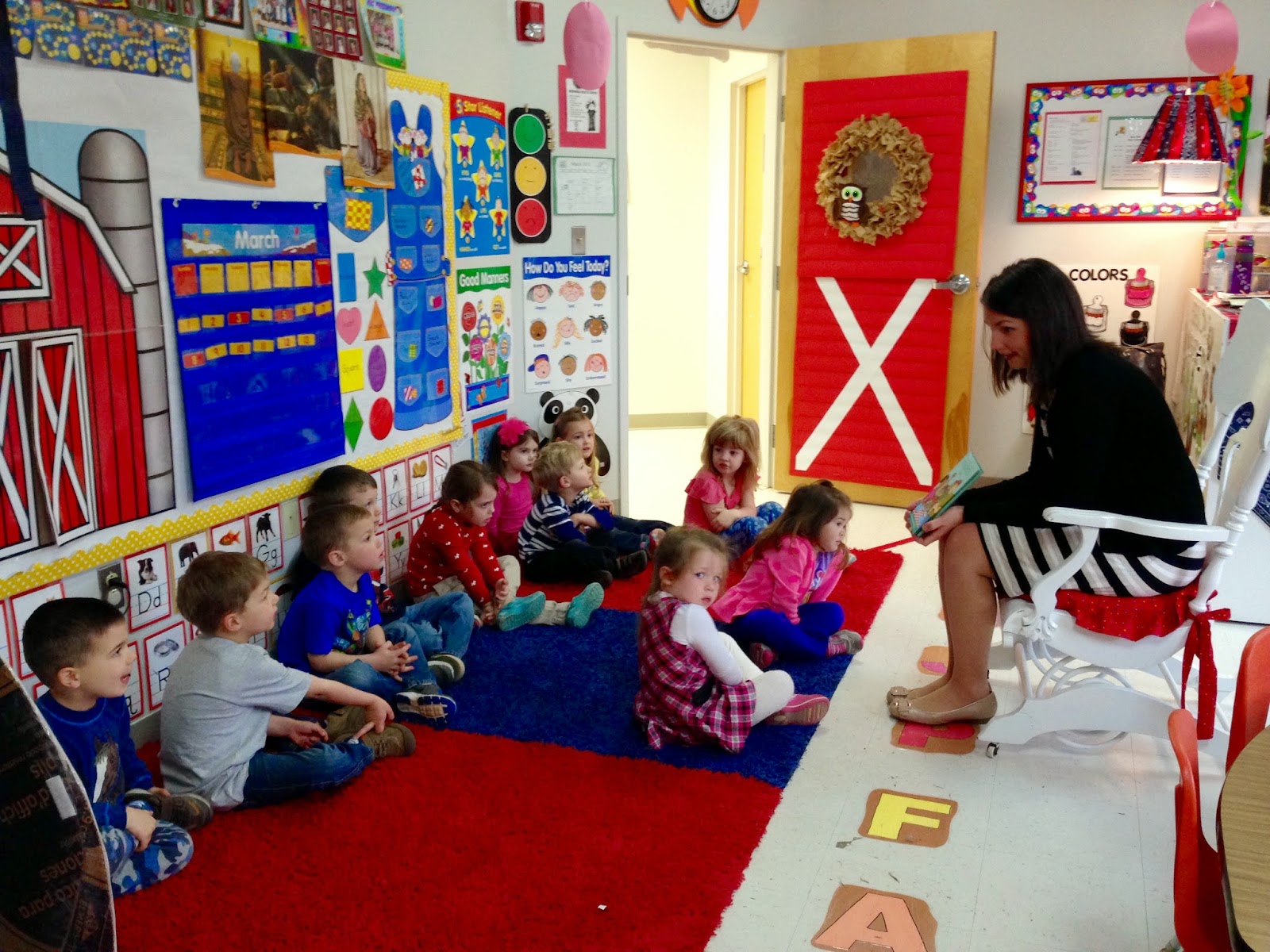
| Lindsay Reames, assistant director of Governmental Relations, reads to ABC Preschool for Ag Literacy Week |
- for persevering despite drought and flood, freezing temperatures, parching sun, fluctuating prices and constantly changing markets;
- for seeking better ways to do their jobs – using new techniques and advances in technology to simplify tasks, increase yields and lower prices;
- for feeding the world – in the 1960s, one farmer supplied food for about 25 people in the U.S. and abroad; today, the number has increased to 155 people;
- for their spirit of innovation – always looking for new products and changes that increase the quality and add value to the products they produce;
- for valuing our land and water resources and for making their preservation and enhancement top priorities;
- for adapting to change – expanding to meet the demands of a global marketplace while still satisfying consumers’ shifting tastes and desire for low fat, high nutrition products at home and abroad, in 2014, exports from Virginia set a record of more than $3 billion;
- for supplying Americans with an abundant and safe food supply at a low price, enabling U.S. consumers to spend less than 7 percent of their income on food compared with more than 9 percent in Canada, 25 percent in Brazil, 28 percent in Russia and 45 percent in Kenya*;
- for providing the basis for numerous products including medicines, cosmetics, printing supplies, fuel, lubricants, lumber, paints and sports equipment;
- for enduring; on March 1 this year, 1,312 Virginia farms have been recognized as Virginia Century Farms, which means they have been owned by the same families for one hundred years or more.
To mark the occasion, employees at Virginia Farm Bureau’s home office collected food all week to mark National Ag Week. The food will go to the Food Bank of Wise County. The food bank’s roof collapsed in late February after a snow storm. More than $30,000 worth of food was inside, and none of it was salvageable. Employees from county Farm Bureau offices and Farm Bureau volunteers also donated to their local food banks.
Volunteers from county Farm Bureaus, the Virginia Department of Agriculture and Consumer Services, Farm Credit of the Virginias, Colonial Farm Credit, Southern States, Tyson Foods, James River Equipment and several 4-H and FFA chapters, along with AITC board members and staff and Virginia Farm Bureau Federation board members and staff, will mark the week by reading books about agriculture to children across the state. Each year more than 50,000 children learn about agriculture, food and where their basic needs come from through the Agriculture Literacy Week initiative.
Many volunteers read the 2015 Virginia AITC Book of the Year, My Virginia Plate, written by Tammy Maxey and illustrated by Greg Cravens and Kevin Pitts, and donated copies to school and classroom libraries. My Virginia Plate is a story of students learning about nutrition through preparing a Virginia-grown meal as part of a classroom assignment.
The children’s book was written to teach readers about nutrition and show how Virginia farmers produce a wide variety of foods that are a part of a healthy diet.
AFBF Says WOTUS Rule Would Disregard Exemptions
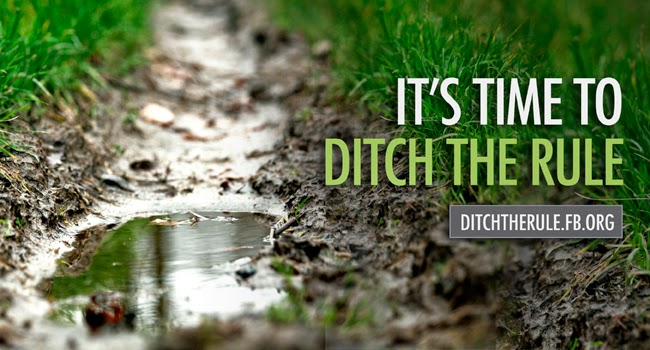
In testimony today, AFBF General Counsel Ellen Steen told a House Agriculture subcommittee that the WOTUS rule will create enormous uncertainty and vulnerability for farmers and ranchers nationwide.
“It is impossible to know how many farmers, ranchers and forest landowners will be visited by [EPA] enforcement staff or will be sued by citizen plaintiffs’ lawyers—and it is impossible to know when those inspections and lawsuits will happen,” Steen said. “But what is certain is that a vast number of common, responsible farming, ranching and forestry practices that occur today without the need for a federal permit would be highly vulnerable to Clean Water Act enforcement under this rule.”
“Much of the remaining benefit of those exemptions would be eliminated by an expansive interpretation of ‘waters of the United States’ to cover ditches and drainage paths that run across and nearby farm and pasture lands,” Steen testified. “The result would be wide-scale litigation risk and potential Clean Water Act liability for innumerable routine farming and ranching activities that occur today without the need for cumbersome and costly Clean Water Act permits.”
Steen explained that because ditches and ephemeral drainages are ubiquitous on farm and ranch lands—running alongside and even within farm fields and pastures—“the proposed rule will make it impossible for many farmers to apply fertilizer or crop protection products to those fields without triggering Clean Water Act ‘pollutant’ discharge liability and permit requirements.”
“A Clean Water Act pollutant discharge to waters of the U.S. arguably would occur each time even a molecule of fertilizer or pesticide falls into a jurisdictional ditch, ephemeral drainage or low spot — even if the feature is dry at the time of the purported ‘discharge,’” Steen told the subcommittee. For this reason, farmers’ options under the rule are limited.
According to Steen, “they can either continue farming, but under a cloud of uncertainty and risk, they can take on the complexity, cost and equal uncertainty of Clean Water Act permitting or they can try to avoid doing anything near ditches, small wetlands, or stormwater drainage paths on their lands. It’s a no-win situation for farmers and ranchers.”
Virginia Observing Strict Biosecurity In Light Of Avian Influenza Outbreaks Elsewhere
This Week’s Commodity Comments: March 11, 2015
Virginia Agricultural and Forestry Exports Reach New All-Time High
Agricultural exports, which also include forestry products, from Virginia reached a new all-time high of more than $3.35 billion in 2014, eclipsing the previous record set in 2013 by more than 14 percent. Virginia also became the second largest agricultural exporter on the East Coast, surpassing North Carolina and gaining ground on GeorgiaUSDA Provides One-Time Extension of Deadline to Update Base Acres or Yield History for ARC/PLC Programs
This Week’s Commodity Comments: February 25, 2015
"Living in a Food Desert" to Premier at Richmond International Film Festival
The premier will be held at 5:00 p.m. on March 1, 2015, at the historic Byrd Theatre. Immediately following the premier, patrons and community partners invite you to participate in a lively panel discussion to be hosted by Daphne Maxwell Reid, renowned actress and co-founder and principal partner of New Millennium Studios.
Event Only – General Admission ($10)
Event Only – Senior and Student ($7)
One Day Screening Pass ($35)
Project History: In 2013, as a result of Delegate Delores McQuinn’s unwavering passion and commitment to citizens who live in food desert areas, the Speaker of the Virginia House of Delegates commissioned the dean of the College of Agriculture and Life Sciences at Virginia Tech and the dean of the College of Agriculture at Virginia State University to conduct a study of food deserts in the Commonwealth of Virginia. The deans led a broad-based Task Force that conducted the study and presented their findings to the Speaker of the House of Delegates in 2014. In 2014, Virginia State University created a documentary to bring additional focus and light upon this important topic and begin discussion on ways to address the issue of food deserts. We are honored and delighted to premier this important documentary during the 2015 Richmond International Film Festival.
For more information, call Cheryl Crawford at the College of Agriculture at (804) 524-5961.
USDA Specialty Crop Block Grants Announces $565,000 Available for Virginia Agricultural Interests
- Increasing child and adult nutrition knowledge and consumption of specialty crops;
- Improving efficiency and reducing costs of distribution systems;
- Assisting all entities in the specialty crop distribution chain in developing Good Agricultural Practices, Good Handling Practices, and Good Manufacturing Practices;
- Investing in specialty crop research, including organic research to focus on conservation and environmental outcomes;
- Enhancing food safety;
- Developing new and improved seed varieties and specialty crops, pest and disease control;
- Developing organic and sustainable production practices;
- Developing local and regional food systems; and
- Improving food access in underserved communities.