Multi-Legged Stool Best Approach for Farm Bill

American Farm Bureau Federation President Bob Stallman testified Wednesday before the House Agriculture Committee’s Subcommittee on General Farm Commodities and Risk Management to reiterate AFBF’s priorities for the 2012 farm bill and suggest enhancements to the current farm bill and the Senate Agriculture Committee-passed farm bill.

Stallman’s testimony was based on the premise that the House Agriculture Committee will draft farm legislation that reduces spending by $23 billion over the next 10 years, with proportional cuts of $15 billion in commodity program reductions, $4 billion in conservation program reductions and $4 billion in nutrition program reductions. Stallman called for a Supplemental Coverage Option whereby row crop and specialty crop producers could purchase a county-level, revenue-protection policy on top of their individual crop insurance coverage to cover all or part of the farmer’s deductible. Also, restoring non-program crop disaster programs such as the Livestock Indemnity Program, Livestock Forage Program and Tree Assistance Program would help those producers deal with catastrophic losses.

“Continuation of a multi-legged stool remains the best approach for providing a fair and effective safety net, which should consist of a strong crop insurance program, continuation of the current marketing loan provisions and a catastrophic revenue loss program,” said Stallman. The purpose of the hearing was to review commodity programs and crop insurance options for 2012 farm bill.” said Stallman

In its farm bill proposal, AFBF has prioritized (1) protecting and strengthening federal crop insurance funding and not reducing funding for that program; (2) developing a commodity title that encourages producers to follow market signals rather than making planting decisions in anticipation of government payments; and (3) refraining from basing any program on cost of production.

“These deep loss events that would endanger the financial survivability of the farm are typically beyond any producer’s control, and, in the past, have prompted enactment of ad hoc disaster programs,” Stallman said. “Our plan focuses on protecting farmers from these situations and brings program benefits into play only when they are needed, rather than being considered a supplemental source of annual income.”

The letter stated, “The renegotiation of the Standard Reinsurance Agreement resulted in a $6 billion reduction to the program, with $4 billion in savings applied to deficit reduction. We believe additional reductions would seriously affect producer access to crop insurance coverage and threaten efficient private-sector delivery following disasters.”

Earlier this week, Farm Bureau signed on to a letter urging the House to support the crop insurance program with most of the other commodity groups and farm organizations, including the American Soybean Association, American Sugarbeet Growers Association, National Association of Wheat Growers, National Barley Growers Association, National Corn Growers Association, National Cotton Council, National Farmers Union, National Sorghum Producers, National Sunflower Association, U.S. Canola Association and USA Dry Pea & Lentil Council.

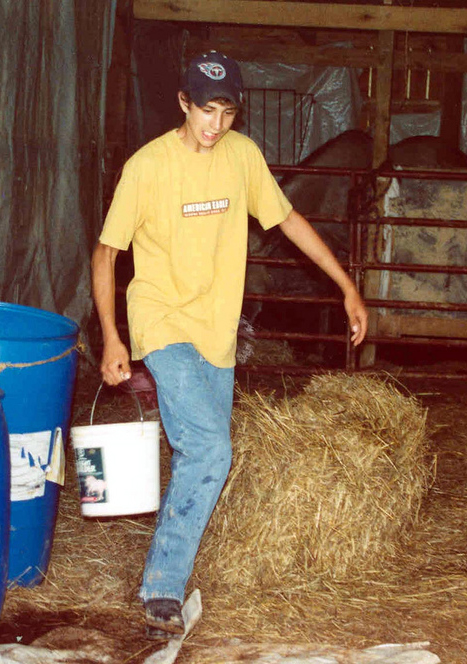
Child Labor Update: Know the Facts

Wilmer Stoneman, Associate Director
VFB Govermental Relations

With the introduction of legislation designed to block implementation of the Department of Labor’s (DOL) proposed child labor regulations, press coverage of the issue – both positive and negative – has increased.  Some articles critical of the effort to block the DOL proposal contain inaccuracies and misstatements.  One recent instance occurred  in which Sen. Lamar Alexander (R-Tenn.) was criticized for supporting AFBF’s position.

It’s important to remember the facts when you come across one of these articles.

America’s farm and ranch families place a high priority on assuring that everyone who works on our farms and ranches, especially young people, are protected by appropriate safety measures. There is no doubt that the Department of Labor’s proposed rules regarding child labor will have a direct negative impact on our families and our farms and ranches.

Clearly, Congress intended there to be a parental exemption regarding the jobs they ask their children to carry out on the farm. It is clear that DOL has the authority to draft regulations relating to agricultural child labor that restrict youth 16 and under from performing tasks that are “particularly hazardous.” These regulations, known as hazardous occupation (HO) orders, are issued under the Fair Labor Standards Act and stipulate what tasks a youth may not perform on a farm. The law, however, also clearly states that a youth working for a parent or person standing in the place of the parent may perform any task.

The parental exemption has been violated. DOL has traditionally interpreted this parental exemption to include all farms substantially owned by the parent or guardian. Last September, however, DOL proposed to change that traditional interpretation, limiting the parental exemption only to farms “wholly-owned” by a parent or person standing in the place of a parent. This proposed interpretation meant that a brother and sister who jointly owned a farm themselves through a partnership or limited liability corporation would no longer be allowed to hire their nieces, nephews or grandchildren to help work on the farm. Such a proposed interpretation significantly restricted the statutory exemption. It was only after an outpouring of critical comments – numbering nearly 10,000 – from interested individuals and members of Congress that DOL announced it would re-propose the parental exemption portion of the rule; however, it is unclear what the new proposal will include or when it will be announced.

 There is no question that a number of simple everyday tasks would be prohibited by the DOL proposal. For example, there has been extensive discussion about the rule’s prohibition on the use of power-driven equipment and whether it would prohibit youth under the age of 16 from operating simple tools like a battery operated screwdriver. There is no question that it would. Taken directly from DOL’s proposed regulation, Ag. HO #2 prohibits a youth under age 16 from “any activity involving physical contact” with “all machines, equipment, implements…operated by any power source other than human hand or foot power,” and DOL has explicitly stated that this includes “batteries.” It appears quite explicit and clear in the rule that the department proposes to outlaw the use of battery-powered implements like screwdrivers. Moreover, expert comments submitted to the department support this reading of the DOL proposal. The National Institute on Occupational Safety and Health (NIOSH) referred to the proposed Ag. HO #2 and specifically noted that the “the proposed definition also exceeds the recommendations made by NIOSH [2002] and would prohibit the use of small handheld battery-powered equipment (e.g., a flashlight) that is not prohibited by any nonagricultural HO.”

 Farm Bureau members are well aware of the risks involved in agriculture and support appropriate regulatory safeguards. We are joined in our efforts by virtually every agricultural organization, including FFA and the National Association of State Departments of Agriculture.

The number of injuries to youths on farms has decreased drastically even without the DOL proposal. An Agricultural Safety Survey, published on April 5, 2012 by the USDA National Agricultural Statistics Service, shows that agriculture-related injuries to youth under 20 years of age decreased 54 percent from 2001 to 2009. Moreover, work-related injuries only contributed to a quarter of youth injuries occurring on farm operations.

Farmers and ranchers will continue to be committed to the safety when it comes to the younger members of our families making valuable contributions to our family businesses. Ensuring the safety of our children is our priority. The DOL proposal, however, extends caution beyond recognition, to the point of having severe negative effects on farm families. The proposal really does strip away the ability of youth to work in agriculture, and it nullifies the desires and goals of parents to pass on to our children the traditions and values that farm work provides. There is concern that the DOL simply does not understand the societal structure of the farming community, how farms are organized and how farm families help one another. While we support appropriate federal regulations in this area, those regulations should be based on reliable data and real risks.

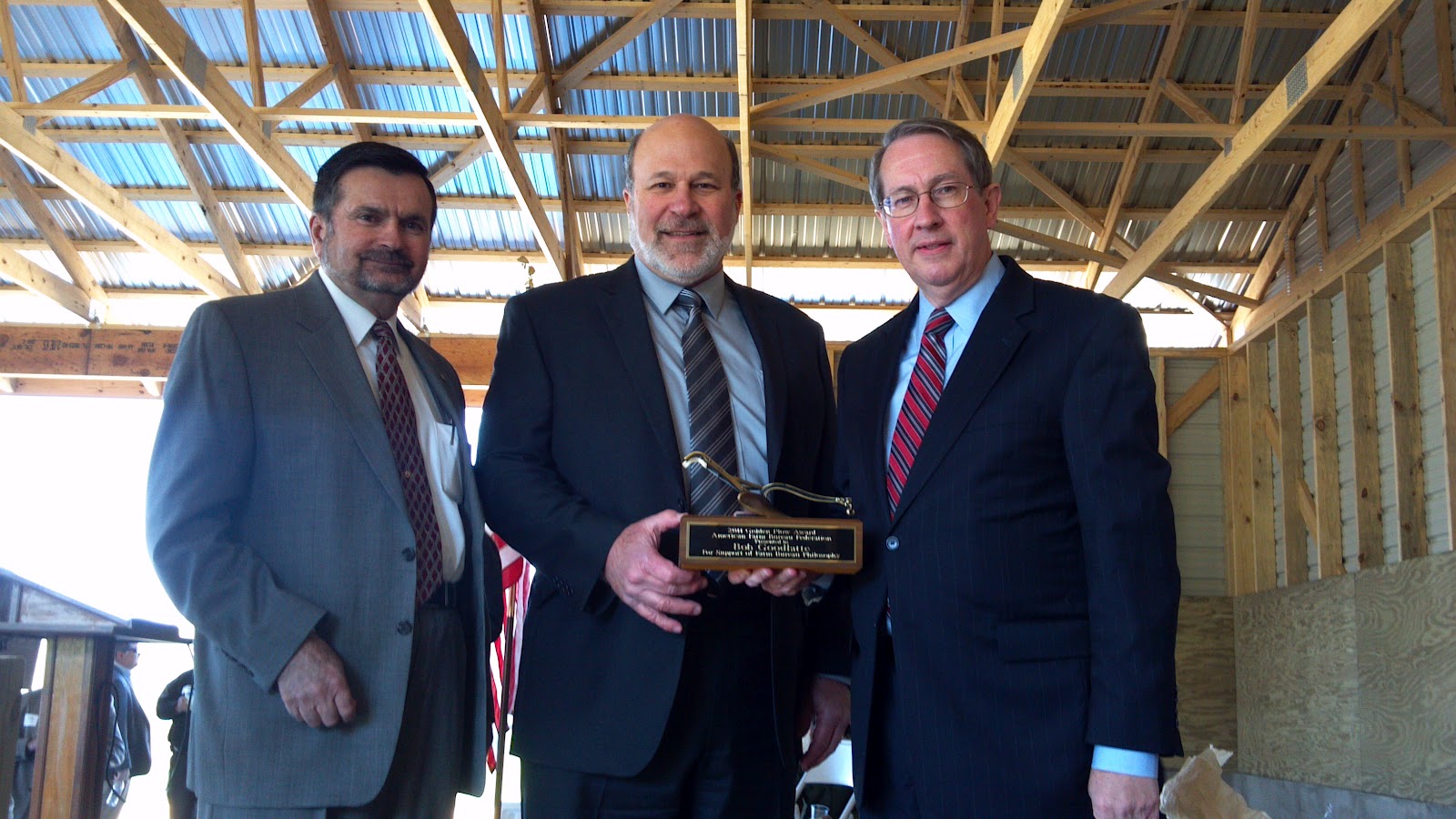
Rep. Goodlatte receives ‘Golden Plow’ Award at Valley Farm Bill Forum


Virginia Farm Bureau Federation President Wayne Pryor and American
Farm Bureau President Bob Stallman presented Rep. Bob Goodlatte (R-Va.)
with the AFBF Golden Plow Award last week.

Last week, Congressman Bob Goodlatte received the Golden Plow award for his continued support of America’s farmers and ranchers. The Golden Plow award is the highest honor bestowed on Members of Congress by the American Farm Bureau Federation (AFBF). Goodlatte was presented the award by Virginia Farm Bureau Federation President Wayne Pryor and AFBF President Bob Stallman during a forum on the 2012 Farm Bil Conservation Programl in the Shenandoah Valley.

“Congressman Goodlatte is a vigorous defender of private property rights, both real and intellectual, and he continues to lead the fight against regulatory overreach. He is a champion for private forestry and has worked tirelessly to ensure farmers of all sizes have access to the conservation programs that assist them in maximizing their farms’ economic returns while contributing measurable results toward enhancing the environment.”

The Virginia Farm Bureau nominated Goodlatte for the award. According to Stallman, since Goodlatte was first elected in 1992 to represent Virginia’s 6th Congressional District, he has “applied his common sense, expertise and determination to finding solutions to the challenges facing American agriculture.”

Goodlatte and Stallman also discussed the development of the next Farm Bill and the future of programs to help area farmers address water quality.

Many of the federal conservation programs that farmers across the Commonwealth use to implement a variety of environmental protection practices will expire on October 1, 2012. Practices include stream fencing, rotational grazing, buffers, cover crops, nutrient management, and many others.  These are critical for the management of our farms and the ability to comply with governmental mandates regarding water quality. The deadlines associated with the Chesapeake Bay Total Maximum Daily Load (TMDL) will not allow any delay or missed steps in implementation of such practices. 

“There are huge cuts compared to what was available when the last bill was written,” Goodlatte said. “It’ll be very difficult to write a farm bill in this environment.”

The event was held in a new winter feeding facility at Bob Threewitts’ Twin Oaks Farm in Keezletown. Installing the building was a voluntary conservation practice, which allows cattle manure to be contained in one area, Threewitts said.

AFBF Backs Senate and House Bills Reforming Estate Tax; Tell VFB your story in the comments!

The American Farm Bureau Federation has endorsed Senate legislation that would help protect America’s farm and ranch families from potentially crippling blows of the federal estate tax following a farm owner’s death.

The Senate bill, the Death Tax Repeal Permanency Act of 2012 (S. 2242), was introduced by Sen. John Thune (R-S.D.). The bill is similar to another Farm Bureau-supported, H.R. 1259, introduced in the House by Rep. Kevin Brady (R-Texas). The House bill now has more than 200 co-sponsors.

 In a letter to Thune and other sponsors, AFBF President Bob Stallman stated that estate taxes continue to be a problem for the nation’s farmers and ranchers. Individuals, family partnerships and family corporations own 98 percent of the nation’s 2 million agricultural operations. When estate taxes on an agricultural business exceed cash and other liquid assets, the tax can cripple a family-owned farm or ranch and hurt the rural communities and businesses that agriculture supports, according to AFBF.

The Unemployment Insurance Reauthorization and Job Creation Act of 2010 set the estate tax exemption at $5 million per person, with a top tax rate of 35 percent for 2011 and 2012. That legislation also put in place a new provision for 2011 and 2012 that allows the unused portion of a spouse’s exemption to be used by a surviving spouse, and it permanently reinstates stepped-up basis in regard to tax treatment. Legislation is necessary because without congressional action, in 2013, the estate tax exemption will shrink to $1 million per person with no spousal transfer and the top rate will increase to 55 percent.

“This will strike a blow to farm and ranch operations trying to transition from one generation to the next,” Stallman said. “A $1 million exemption is not high enough to protect a typical farm or ranch able to support a family and, when coupled with a top rate of 55 percent, can be especially difficult for farm and ranch businesses.”

 Stallman said the “on again, off again” nature of estate tax law makes it difficult, if not impossible, for farmers and ranchers to engage in planning for the transfer of a family business from one generation to the next. “It becomes a barrier to entry for new and beginning farmers” Stallman added

“While estate tax planning may be able to protect some family farms and ranches from the devastation of estate taxes, planning tools are costly and take money needed to operate and expand businesses,” Stallman said. “Even with planning, changing asset values and family situations make it impossible to guarantee that a well-thought-out estate plan will protect a family business from estate taxes.”

Virginia Farm Bureau wants to hear your concerns with the estate tax! Tell us your story in the comments. Please answer the following questions:

  1. How important is your farm to your family, kids and grandkids?
  2.  Have you thoughts about how a high estate tax bill could affect the future of your farm? Please share some of your concerns.
  3. Has your family been affected by the estate tax in the past? How?

Don’t forget to leave your name and county!

Bills Blocking DOL Child Labor Regulations Introduced

By NIOSH

Update on Child Labor from AFBF:

U.S. Senators John Thune (R-S.D.) and Jerry Moran (R-Kan.) introduced common sense legislation last week, the Preserving America’s Family Farm Act, to prevent the Department of Labor (DOL) from enacting its controversial proposed restrictions on youth working on family farms. Both of Oklahoma’s Senators- Jim Inhofe and Tom Coburn, have signed on as co-sponsors.

The Department of Labor has proposed 85 pages of unreasonable and overreaching rules that would unnecessarily restrict the participation of young people in agriculture related activities,” said Thune. “Family farms and farming communities teach young people responsible work ethics and these proposed rules would change that by severely limiting the commonplace activities in which young people can learn about agriculture. This is another example of the Obama administration initiating unsolicited regulations that would prohibit normal practices that have been carried out in rural areas for generations—not to mention limiting a desperately needed workforce to replace the current generation of farmers whose average age is nearing 60 years old.”

“There is no better example of the vast overreach of government into the everyday lives of Americans than the Department of Labor’s proposed rule to regulate young people working on farms and ranches,” Sen. Moran said. “For generations, the contributions of young people have helped family farm and ranch operations survive and prosper. If this proposal goes into effect, not only will the shrinking rural workforce be further reduced, and our nation’s youth be deprived of valuable career training opportunities, but a way of life will begin to disappear. This proposal should alarm more than just rural America. If the federal government can regulate the relationship between parents and their children on their own family’s farm, there is virtually nothing off limits when it comes to government intrusion into our lives.”

In December of last year, Thune and Moran and 28 of their Senate colleagues sent a letter to Secretary Solis requesting that the proposed rule be withdrawn and outlined numerous concerns.

AFBF Supports Farm Truck Measures in Transportation Bill

AFBF President
Bob Stallman

The American Farm Bureau Federation is supporting measures to make certain farm vehicles exempt from federal motor vehicle regulations that are appropriately aimed at the long-haul trucking industry. AFBF is urging senators to support two amendments to the pending transportation bill (S. 1813).

The first amendment, introduced by Sen. Jeff Merkley (D-Ore.), would provide an exemption for farm trucks. That measure is co-sponsored by Sens. Patrick Toomey (R-Pa.) and Roy Blunt (R-Mo.). If based solely on weight limits, even a one-ton pickup truck pulling a trailer could be subject to the long-haul regulations.

“The amendment is important because some states exempt farm vehicles while others do not,” said AFBF President Bob Stallman. “Under the current situation, merely the act of crossing state lines can trigger conflicting requirements for some farmers who are doing nothing more than hauling their own crop. These regulations can be particularly burdensome for farmers and ranchers living in counties bordering another state where their best market might be just across the state line.”

The second Farm Bureau-supported amendment to S. 1813 would exempt certain farm truck drivers from regulations on maximum driving and on-duty times during harvest and planting seasons. It is sponsored by Sens. Amy Klobuchar (D-Minn.) and Pat Roberts (R-Kan.).

“This measure is particularly crucial during the two busiest times of a farmer’s year,” Stallman said.

The amendment would apply to drivers transporting agricultural commodities within 100 miles of the farm that produced them, or those carrying farm supplies for agricultural purposes within 100 miles of the wholesale or retail distribution point. Each state would determine its own planting and harvest periods.

American Farm Bureau Federal Issue Update: Child Labor

AFBF President
Bob Stallman

On Sept. 2, 2011, the Department of Labor (DOL) released a notice of proposed rulemaking (NPRM) that would affect the employment of youth in agriculture. The Fair Labor Standards Act (FLSA) permits youth under the age of 16 to work in agriculture, but also authorizes the secretary of labor to designate certain activities or occupations that may be “particularly hazardous” and to prohibit youth from being employed in such jobs. Such restrictions do not apply to youths employed on farms owned or operated by their parents or individuals standing in place of their parents.  DOL proposal would greatly restrict permissible jobs for youths under 16, in addition to narrowing the parental exemption; DOL also appears to be soliciting comments on expanded restrictions, including prohibiting youth in some circumstances from working in extreme temperatures and being paid piece rates.

Farm Bureau and more than 70 other agricultural organizations filed extensive comments with DOL objecting to the proposals. These agricultural organizations represent the breadth of nearly every commodity and region.

Last week, DOL decided to re-propose the ‘parental exemption’ rule, which which prohibits youth from doing various farm activities on farms at which they don’t reside. American Farm Bureau President Bob Stallman released the following statement regarding the issue.

“The decision today by the Labor Department to re-propose the ‘parental exemption’ in the child labor rule is a positive step, but much more work is needed. We will continue to work with the administration to address our concerns with the rule. Any final regulation must make sense, not infringe on the traditional rights of family farms and not unnecessarily restrict the ability of young people to work in agriculture. As DOL’s proposed rule stands currently, that is not the case.

“Farm work has always played a significant role in the lives of rural youth across the country, whether they are milking cows on their grandparents’ farm or harvesting apples as a summer job. DOL’s rule would have a detrimental effect on family farms and would create an even tighter supply of farm labor when it’s already in short supply.

“Farm and ranch families are more interested than anyone else in assuring the safety of farming operations. We have no desire at all to have young teenagers working in jobs that are inappropriate or entail too much risk. But, laws and regulations need to be sensible and within reason—not prohibiting teenagers from performing simple everyday farm functions like operating a battery-powered screwdriver.

“We appreciate Agriculture Secretary Tom Vilsack’s diligent work on the issue and look forward to working with USDA and DOL further on establishing a rule that respects the importance of youth farm work in rural America and the importance it plays in our system of family-based agriculture.”