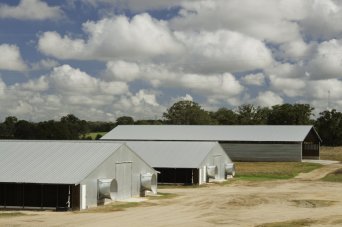
A recent environmental study in Accomack County indicates strict new poultry farming regulations approved by county supervisors are doing their job, local farmers say.
In February 2016 the Accomack County Board of Supervisors approved local zoning regulations for new poultry houses. Two years later a series of tests by the Virginia Institute of Marine Science found little evidence of nutrient contamination in waterways near new poultry farms.
“We required a lot with buffer strips and drainage requirements and designs,” said Lynn Gayle, president of Accomack County Farm Bureau and a member of the county planning commission. The commission spent 18 months developing the new standards, he noted. “We feel this is the best that technology has to offer for preventing contamination away from the houses, and the study substantiated this. They were sampling in areas with large poultry operations and determined there were no water quality issues relative to chicken houses.”
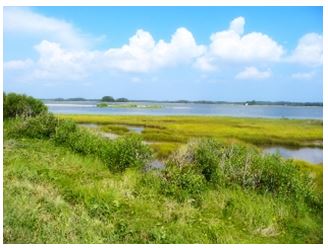 The Chesapeake Bay Program announced March 26 that water quality in the bay met its highest level since monitoring began in 1985, besting its previous record reported in 2017.
 If you have been following our federal outreach and advocacy related to livestock hauler Hours of Service and Electronic Logging Devices, you know this is a priority issue for Farm Bureau and our members. The ability to safely and efficiently haul livestock is critical not only for animal welfare, but for the viability of Virginia’s livestock operations. Farm Bureau recognizes that livestock haulers need flexibility in the hours they are permitted to be on the road so they can address the unique challenges of hauling livestock. Farm Bureau has been working towards hours of service reform in recent years and continues to push for reasonable and workable reforms.
 The American Farm Bureau Women’s Leadership Program has launched “Women in Ag,” an online survey that aims to gauge the goals, aspirations, achievements and needs of women in American agriculture in a variety of areas.
 The Board of Game and Inland Fisheries passed the Virginia Elk Management Plan 2019-2028 at their meeting on March 21, 2019. This 10-year plan will guide the Department of Game and Inland Fisheries’ management of the elk population in Virginia through 2028. The goals set forth by the plan were developed by a 17-member stakeholder advisory committee, representing a variety of interests, including farmers, hunters, homeowners, forest landowners, animal and ecological health interests, business and tourism industries, motorists, and government agencies.
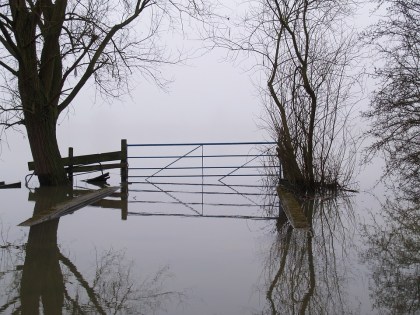 Record flooding devastates Nebraska, ag damage could top $1 billion

