Virginia Farm Bureau Federation AgPAC endorses 85 candidates for House seats

Virginia Farm Bureau Federation AgPAC, Farm Bureau’s political action committee, has announced its endorsement of 85 candidates for seats in the Virginia House of Delegates. Endorsements are based on recommendations by local farmer committees and approved by the AgPAC board.

“The mission of the Virginia Farm Bureau Federation AgPAC is to support candidates who recognize the vital role agriculture and forestry play in Virginia’s economy and communities,” said Scott Sink, VFBF president and chair of the VFBF AgPAC Board of Trustees. “We evaluate their understanding through their voting records in the General Assembly and their willingness to engage directly with farmers to grasp the real-world impact of these industries.”

Throughout the year, VFBF members actively connect with legislators from both urban and rural areas. These efforts foster collaborative relationships that support the long-term viability of Virginia’s leading industry. By engaging directly with members of the General Assembly through farm tours, legislative roundtables and in-person meetings, members have gained more opportunities to advocate for agriculture and offer valuable insights to policymakers.

Endorsement decisions are based solely on candidates’ positions related to agriculture and forestry, without consideration of unrelated policy views.

“We look forward to working with these candidates to help protect the agriculture and forestry industries and ensure that they remain the No. 1 industries in the commonwealth,” Sink continued.

Martha Moore, senior vice president of VFBF governmental relations, noted that friendly incumbents have a track record of working with farmers in their districts.

“The new candidates endorsed for the House have demonstrated an understanding about specific challenges facing Virginia’s farmers and foresters,” she explained.

The nonpartisan VFBF AgPAC was created in 1999 and employs in-kind contributions and endorsements to back candidates who can best support agriculture and Farm Bureau issues.

Although not formally endorsed, additional candidates were recognized as open-door candidates. VFBF will continue to engage with these individuals, fostering relationships and sharing key agricultural policy priorities.

The following candidates were endorsed (* indicates incumbent candidates):

Endorsed for Virginia House of Delegates

House DistrictCandidate
HD1Patrick Hope* (D)
HD3 Alfonso Lopez* (D)
HD4 Charniele Herring* (D)
HD5 Elizabeth Bennett-Parker* (D)
HD6 Rip Sullivan* (D)
HD8 Irene Shin* (D)
HD9 Karrie Delaney* (D)
HD10 Dan Helmer* (D)
HD11 David Bulova* (D)
HD12 Holly Seibold* (D)
HD14 Vivian Watts* (D)
HD16 Paul Krizek* (D)
HD17 Mark Sickles* (D)
HD18 Kathy Tran* (D)
HD20 Michelle Maldonado* (D)
HD21Josh Thomas* (D)
HD22Ian Lovejoy* (R)
HD24Luke Torian*, (D)
HD25 Briana Sewell* (D)
HD27 Atoosa Reaser* (D)
HD28 David Reid* (D)
HD29Fernando Martinez* (D)
HD31 Delores Oates (R)
HD32 Bill Wiley* (R)
HD33 Justin Pence, (R)
HD34 Tony Wilt* (R)
HD35 Chris Runion* (R)
HD36 Ellen Campbell* (R)
HD37 Terry Austin* (R)
HD38 Sam Rasoul* (D)
HD39 Will Davis (R)
HD40 Joe McNamara* (R)
HD41Chris Obenshain* (R)
HD42 Jason Ballard* (R)
HD43 Will Morefield* (R)
HD44 Israel O’Quinn* (R)
HD45 Terry Kilgore* (R)
HD46 Mitchell Cornett (R)
HD47 Wren Williams* (R)
HD48 Eric Phillips* (R)
HD49 Madison Whittle (R)
HD50 Tommy Wright* (R)
HD51Eric Zehr* (R)
HD52 Wendell Walker* (R)
HD53 Tim Griffin (R)
HD54Katrina Callsen* (D)
HD55Amy Laufer* (D)
HD56 Tom Garrett* (R)
HD57David Owen* (R)
HD58Rodney Willett* (D)
HD59 Buddy Fowler* (R)
HD60 Scott Wyatt* (R)
HD61 Michael Webert* (R)
HD63 Phillip Scott* (R)
HD64 Paul Milde* (R)
HD66 Bobby Orrock* (R)
HD67 Hillary Pugh Kent* (R)
HD68 Keith Hodges* (R)
HD69 Chad Green* (R)
HD70 Shelly Simonds* (D)
HD71 Amanda Batten* (R)
HD72 Lee Ware* (R)
HD73 Mark Earley Jr.* (R)
HD74 Mike Cherry* (R)
HD75 Carrie Coyner* (R)
HD78 Betsy Carr* (D)
HD79Rae Cousins* (D)
HD80Destiny Bolling* (D)
HD81 Delores McQuinn* (D)
HD82 Kim Taylor* (R)
HD83 Otto Wachsmann* (R)
HD86 A.C. Cordoza* (R)
HD88 Don Scott* (D)
HD89Mike Lamonea (R)
HD90 Jay Leftwich* (R)
HD91 Cliff Hayes* (D)
HD92Bonita Anthony* (D)
HD93Jackie Glass* (D)
HD94Phil Hernandez* (D)
HD95Alex Askew* (D)
HD98 Barry Knight* (R)
HD99 Anne Ferrell Tata* (R)
HD100 Rob Bloxom Jr.* (R)

Cattle Pulse: Cattle Counts and Market Moves

CattlePulse is a monthly update from Virginia Farm Bureau on the Virginia feeder cattle markets, the national trends that affect them and stories of cattle producers across the commonwealth.

In this month’s episode of CattlePulse, host Elijah Griles sits down with Dr. Josh Maples from Mississippi State University to unpack the July Cattle Inventory report and explore what it means for producers. With feeder cattle futures hitting all-time highs, Elijah and Dr. Maples discuss actionable strategies cow-calf producers can consider to manage price risk.

Want to get in touch? Contact Elijah at 804-290-1713 or elijah.griles@vafb.com.

Listen to the latest episode

'Tis the Season for Seasonal Trends? CattlePulse

In this month’s episode of CattlePulse, host Elijah Griles unpacks the implications of the late arriving Cattle on Feed report and the effects of Tyson's packing plant closure announcement. He also explores how Virginia cash markets follow seasonal trends.We want to hear from you!Have a question or a topic you'd like us to cover in a future episode? Email Elijah at elijah.griles@vafb.com.
  1. 'Tis the Season for Seasonal Trends?
  2. Beef Imports & Market Mayhem
  3. Demand vs. Dollars
  4. Where Are The Calves Coming From?
  5. Cattle Counts & Market Moves: Insights from Dr. Josh Maples

Virginia Hurricane Helene Recovery Program for Farms and Forests

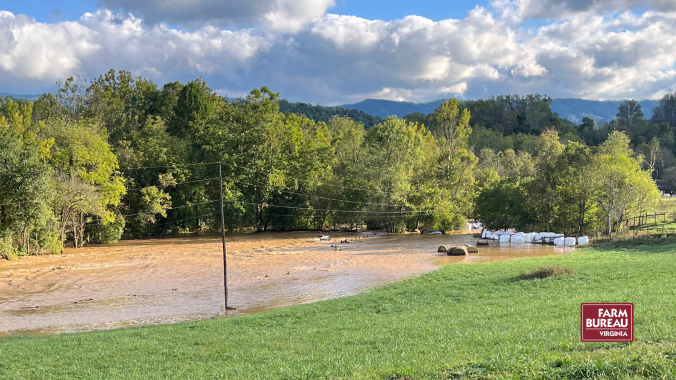
Governor Glenn Youngkin has announced the launch of the Virginia Farm Recovery Block Grant Program, a new federal partnership designed to help agricultural and forestry operations recover from Hurricane Helene’s devastation in September 2024.

Program Overview

The program, funded through a USDA block grant authorized by the American Relief Act 2025, targets farmers and forestland owners who sustained damage not covered by other federal disaster assistance programs. The Virginia Department of Agriculture & Consumer Services (VDACS) will administer direct payments once federal funding is allocated and the state workplan receives USDA approval.

Eligible Areas

The program covers 27 designated localities in Southwest and Southside Virginia, including:

Counties: Bedford, Bland, Buchanan, Carroll, Craig, Dickenson, Floyd, Giles, Grayson, Lee, Montgomery, Patrick, Pittsylvania, Pulaski, Russell, Scott, Smyth, Tazewell, Washington, Wise, and Wythe

Independent Cities: Bristol, Covington, Danville, Galax, Norton, and Radford

Required Documentation

Farmers and forestland owners should begin gathering these documents now:

Basic Information:

  • W-9 Form
  • Federal Tax ID information for all owners/shareholders
  • Tax Parcel ID and Parcel Map
  • FSA Farm Number and FSA 578 Form
  • Schedule F tax documentation showing farming income

Damage Documentation:

  • Photos of damaged farm infrastructure (greenhouses, barns, silos, packing houses)
  • Photos of damaged commercial aquaculture infrastructure
  • Photos of damaged farm roads, bridges, or culverts providing crop/livestock access
  • Evidence of destroyed harvested crops or unharvested crops due to market loss
  • Documentation of timberland ownership (minimum 10 contiguous acres) with storm damage

Financial Records:

  • Insurance adjustment reports and proof of payments
  • Invoices for replacement costs or repair estimates
  • Documentation of other USDA program applications or payments
  • Records of salvage payments or tax deductions from agricultural damage

Important Requirements

Producers receiving funding for market loss, economic loss, plasticulture, and aquaculture claims must maintain USDA Risk Management coverage for two crop years.

Application Process

VDACS is developing an online application portal at https://www.vdacs.virginia.gov/about-farm-recovery-block-grant.shtml. The registration and application periods will be announced once the USDA workplan is approved.

Virginia Cooperative Extension agents and Department of Forestry representatives will provide technical assistance and help publicize the program. For those without computer access, local VCE offices will be available during the application window.

Next Steps

Eligible producers should begin collecting required documentation now. VDACS will launch a promotional campaign announcing specific registration and application dates once federal approval is received.

For updates and program details, visit the VDACS website at the link above.

Cattle Pulse: Virginia Verified Beef Goes Live

CattlePulse is a monthly update from Virginia Farm Bureau on the Virginia feeder cattle markets, the national trends that affect them and stories of cattle producers across the commonwealth.

In this month’s episode, host Elijah Griles unpacks the factors fueling the feeder cattle futures rally. He also shares positive developments in the battle against the New World Screwworm fly. Plus, Franklin County cattle producer and meat processor Chase Scott shares his motivation to use the new Virginia Verified Beef label.

Want to get in touch? Contact Elijah at 804-290-1713 or elijah.griles@vafb.com.

Listen to the latest episode

'Tis the Season for Seasonal Trends? CattlePulse

In this month’s episode of CattlePulse, host Elijah Griles unpacks the implications of the late arriving Cattle on Feed report and the effects of Tyson's packing plant closure announcement. He also explores how Virginia cash markets follow seasonal trends.We want to hear from you!Have a question or a topic you'd like us to cover in a future episode? Email Elijah at elijah.griles@vafb.com.
  1. 'Tis the Season for Seasonal Trends?
  2. Beef Imports & Market Mayhem
  3. Demand vs. Dollars
  4. Where Are The Calves Coming From?
  5. Cattle Counts & Market Moves: Insights from Dr. Josh Maples

Free Pesticide Disposal Available This Summer in Southeastern Virginia

The Virginia Department of Agriculture and Consumer Services (VDACS) is hosting its 2025 Pesticide Collection Program in Southeastern Virginia, offering farmers, dealers, and homeowners a free and safe way to dispose of unwanted pesticides.

Who Can Participate

The program is open to:

  • Farmers and pesticide dealers
  • Pest control firms and certified applicators
  • Homeowners and golf course operators
  • Anyone with unwanted, outdated, or banned pesticides

Collection Dates and Locations

All collection sites operate from 9 a.m. to 1 p.m.:

August 2025:

  • Aug. 5 – Chesapeake Mosquito Control Commission, 332 Saint Bride’s Rd. E., Chesapeake
  • Aug. 6 – Prince George County Extension, 6380 Scott Memorial Park Rd., Prince George
  • Aug. 7 – Courthouse Convenience Center, 7232 Courtland Farm Rd., Hanover
  • Aug. 19 – Nutrien Ag Solutions, 18432 Wachapreague Rd., Melfa
  • Aug. 20 – Indika Farms Buying Station, 12249 Shiloh Dr., Windsor
  • Aug. 21 – SVCC Truck Driving School, 1112 Courtland Rd., Emporia

September 2025:

  • Sept. 10 – Southampton County Fairgrounds, 25374 New Market Rd., Courtland

What’s Accepted

The program accepts pesticides only. Items NOT accepted include:

  • Motor oil, paint, or fuel
  • Fertilizer (including pesticide-contaminated fertilizer)
  • Other chemicals

How to Participate

Participants must transport their own pesticides to collection sites. For those unable to safely containerize pesticides for transport, VDACS may provide assistance on a case-by-case basis.

Pre-registration recommended: Complete the pesticide collection registration form available at http://www.vdacs.virginia.gov/pdf/pesticide-disposal-registration.pdf and email to marlene.larios@vdacs.virginia.gov or mail to Office of Pesticide Services, VDACS, P.O. Box 1163, Richmond, Virginia 23218.

Program Impact

Since 1997, Virginia’s Pesticide Collection Program has safely collected and destroyed more than 1.9 million pounds of outdated and unwanted pesticides. The program rotates through Virginia’s five regions annually and is funded through pesticide fees collected by VDACS.

Questions?

Contact your local Virginia Cooperative Extension agent or the VDACS Office of Pesticide Services at marlene.larios@vdacs.virginia.gov or 804.371.6561.

For more information, visit www.vdacs.virginia.gov/pesticide-collection.shtml.

$16 Billion in Disaster Relief Now Available for Farmers

The USDA Farm Service Agency (FSA) is offering the Supplemental Disaster Relief Program (SDRP), providing $16 billion in assistance to agricultural producers who suffered crop losses from natural disasters in 2023 and 2024.

Who Can Apply

Farmers with eligible crop, tree and vine losses caused by natural disasters including wildfires, hurricanes, floods, tornadoes, winter storms, drought and excessive heat can now apply for Stage One assistance. To qualify, producers must have received payments through crop insurance or the Noninsured Crop Disaster Assistance Program (NAP) during the disaster years.

How to Apply

Applications opened July 10, 2025, at FSA county offices. The USDA has streamlined the process by mailing pre-filled applications to eligible producers on July 9. Farmers need to submit Form FSA-526 along with other required FSA documentation.

Payment Details

Stage One payments are calculated based on coverage levels and existing insurance payouts, with a 35% payment factor applied. Total SDRP payments cannot exceed 90% of losses. If funds remain available, FSA may issue second payments.

Future Requirements

Producers receiving SDRP payments must purchase federal crop insurance or NAP coverage at 60% coverage level or higher for the next two crop years. Failure to maintain coverage requires repayment of SDRP funds plus interest.

What’s Next

Stage Two applications for uncovered losses, including shallow losses and quality losses, will open in early fall. This program is part of $30 billion in total disaster assistance being distributed this year.

The USDA has already distributed over $7.8 billion through the Emergency Commodity Assistance Program and more than $1 billion through the Emergency Livestock Relief Program.

For more information and to access the Disaster Assistance Discovery Tool, visit farmers.gov or contact your local USDA Service Center.