
Robert Harper with Virginia Farm Bureau’s grain division provides this week’s market updates.
#merchandiserminute #grainfuture #virginiafarmbureau
Robert Harper with Virginia Farm Bureau’s grain division provides this week’s market updates.
#merchandiserminute #grainfuture #virginiafarmbureau
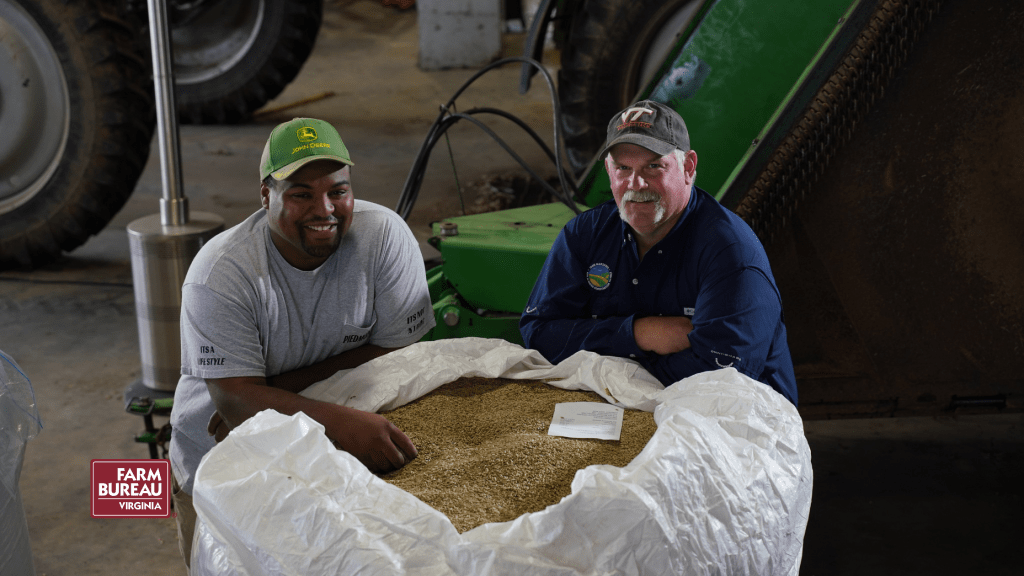
Owners and operators of small farms throughout the state can discover ways to improve soil and animal health and gain information on major funding opportunities at four field days this month.
The field days will take place in May on privately-owned small farms in Fauquier, Louisa, Franklin and Surry counties. These free events are sponsored by the Virginia State University Small Farm Outreach Program.
Attendees will participate in farmer-led tours and demonstrations highlighting conservation best management practices such as nutrient management, cover crops, grazing-land management, continuous no-till and split nitrogen applications. These practices help reduce the cost of inputs and improve farm productivity while also safeguarding Virginia’s stream and river water quality.
Specialists from the Virginia Department of Conservation and Recreation and Soil and Water Conservation Districts will be on hand to share information about programs that offer farmers free technical assistance and up to $300,000 per year in cost-share to implement best management practices on their farms. They will also highlight programs and resources available only to small farms.
Farmers may register for one or more of the following at https://www.ext.vsu.edu/sfop-events:

On April 25, the Bureau of Labor Statistics released the results of the May 2022 Occupational Employment and Wage Estimates (OEWS). This is important because under the new Adverse Effect Wage Rate (AEWR) final rule that went into effect on March 30, the OEWS data is now the basis for the single-Standard Occupational Classification (SOC) H-2A AEWRs, which are the wage rates paid to H2-A visa holders with specific jobs outside the primary farm occupations, unless the six SOC code AEWR is higher and then it must be paid. In accordance with the final rule, the single-SOC AEWRs based on the newly released OEWS data will be announced in a Federal Register notice and become effective on or about July 1. The single-SOC OEWS-based AEWRs will apply from July 1, 2023, through June 30, 2024.
Robert Harper with Virginia Farm Bureau’s grain division provides this week’s market updates.
#merchandiserminute #grainfuture #virginiafarmbureau
Robert Harper with Virginia Farm Bureau’s grain division provides this week’s market updates.
#merchandiserminute #grainfuture #virginiafarmbureau

A new, free digital tool can give local leaders access to the information they need to make wise decisions regarding land use and development throughout Virginia.
The Virginia Land & Energy Navigator incorporates layers of geographic information data related to farmland, forests, utility infrastructure, conservation easements, disturbed lands and more, to support land use planning and decision making at the local level. The tool is now live, allowing users to see the precise locations of various resources and infrastructure through an intuitive interface.
The Virginia General Assembly recognized the need for data resources to help localities make informed land use planning decisions. Section 3 of HB 894 required a report detailing the cost and potential location for a map or repository of prime farmland, intended to further assist in siting determinations for projects like solar energy collection. An HB 894 work group exceeded that directive by creating VaLEN—a functional resource.
There is concern among the agricultural community that large-scale solar buildouts may permanently hinder future use of prime farmlands and forever alter Virginia’s rural landscape. VaLEN could help local leaders make the best siting decisions for those utility-scale solar projects.
“This project will increase every locality’s ability to make complex land use decisions with access to some groundbreaking information all under one source that has been practically impossible to compare before the impressive work done by Virginia Cooperative Extension and stakeholders,” said HB 894 work group member Zach Jacobs, a legislative specialist for Virginia Farm Bureau Federation.
Led by Extension and funded by Dominion Energy, VaLEN represents a collaborative effort of state and federal agencies, nonprofit organizations and local government and industry working to balance renewable energy goals in the context of broader conservation and economic development interests.
“I personally find that interdisciplinary, collaborative teams bring different perspectives and result in higher-quality, more holistic solutions to complex issues,” said Dan Goerlich, Extension associate director of economy, communities and food. “This resource can support local decision making based on local needs and goals, rather than prescribe outcomes per se. The work group members also felt like providing access to the highest quality information available, in a manner that is easy to access and understand, would lead to enhanced decision making and associated outcomes.”
For example, he added, local leadership could use VaLEN to confirm the location of their highest-quality farm and forest land, so those areas are more likely to remain in food and fiber production.
“Down the road, our hope is that VaLEN helps contribute to that balance between economic development and natural resource conservation that we all seek,” Goerlich said.
Visit valen.ext.vt.edu to use the tool and learn more.
Robert Harper with Virginia Farm Bureau’s grain division provides this week’s market updates.
#merchandiserminute #grainfuture #virginiafarmbureau
Here is the recipe that the U.S. Department of Labor used to create the Adverse Effect Wage Rate (AEWR) Methodology for the Temporary Employment of H-2A Nonimmigrants in Non-Range Occupations in the United States final rule. Step one: Copy the proposed rule of the same name released on Dec. 1, 2021. Step two: Paste. Step three: Sprinkle in some references to having received comments from a range of stakeholders from the public, private and nonprofit sectors, but fail to incorporate any of the suggestions. Step four: Add a dash of “it’s not our job” in response to some of the comments received. Step five: Publish the final rule, which “is adopting the methodology proposed in the 2021 AEWR NPRM without change,” in the Federal Register on Feb. 28, 2023. Barring any last-minute change of heart or legal action, this new wage regime goes into effect today, Thursday, March 30. (Credit: Veronica Nigh, Senior Economist, American Farm Bureau / Click the button below to read the full story.)
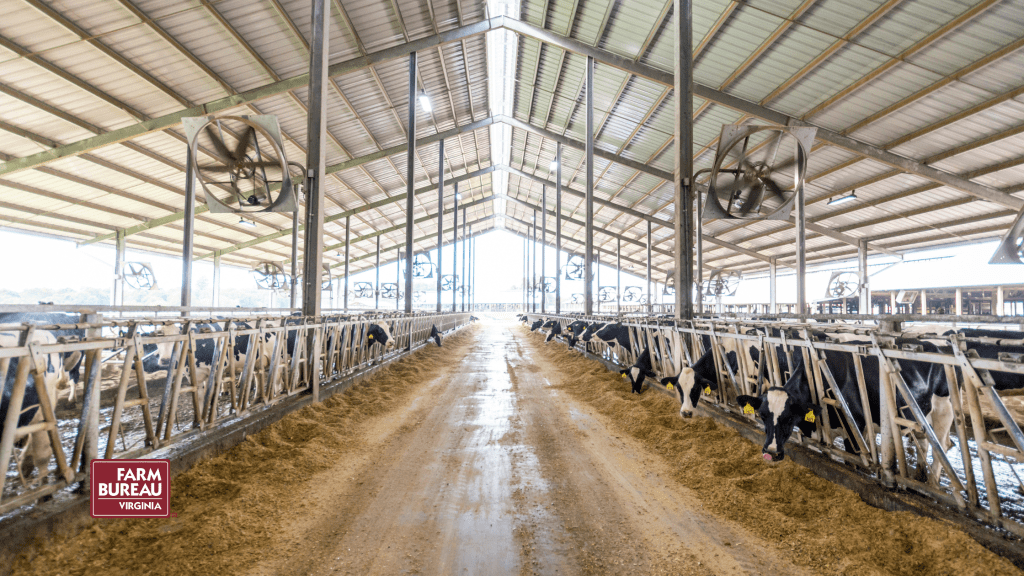
As part of legislative action by the Virginia General Assembly, funds from the federal American Rescue Plan Act of 2021 (ARPA), State and Local Fiscal Recovery Fund, were appropriated to the Virginia Department of Agriculture and consumer Services (VDACS) to assist Virginia Grade A dairies. The General Assembly approved $2 million for VDACS to establish a program to provide direct financial assistance to Grade A dairies that experience financial losses in the spring of 2020, compared with the same period in 2019.
All Virginia Grade A dairies that were in operation in the spring of 2020 are eligible to apply by completing the form similar to the sample form below. The completed form should be specific to your farm and contain a calculation demonstrating the estimated financial losses and the calculated direct payment for which you are applying. Please note that the maximum possible payment per farm will not exceed $5,500, and final payment amounts will not be determined until after the May 1, 2023, application deadline. Farms whose calculated dairy margin coverage payments are less than the maximum VDACS payment will receive the calculated dairy margin coverage estimated amount.
For more information, please contact the Milk Commission at 804-786-2013 or milk@vdacs.virginia.gov. You may be asked to submit documentation to support your claim. Signed applications and signed and completed COV Substitute W-9 forms should be mailed to the address below and postmarked no later than MAY 1, 2023. Failure to include both documents could exclude the farm from participation in the program.
Robert Harper with Virginia Farm Bureau’s grain division provides this week’s market updates.
#merchandiserminute #grainfuture #virginiafarmbureau
 Plows and Politics