
Robert Harper with Virginia Farm Bureau’s grain division provides this week’s market updates.
#merchandiserminute #grainfuture #virginiafarmbureau
Robert Harper with Virginia Farm Bureau’s grain division provides this week’s market updates.
#merchandiserminute #grainfuture #virginiafarmbureau

Virginia Farm Bureau Federation AgPAC, Farm Bureau’s political action committee, recently announced its endorsement of 32 candidates for the Virginia Senate and 69 candidates for the Virginia House of Delegates. Though the committee did not endorse a candidate in each district’s race, Farm Bureau values many candidates’ open-door policies, and anticipates building strong working relationships with them.
The endorsements are based on recommendations of local committees of farmers.
“Candidates are evaluated through a grassroots process that assesses their understanding of the needs and challenges that we as farmers face in today’s times,” said Wayne F. Pryor, VFBF president and chairman of the VFBF AgPAC board of trustees. “Those who have received the AgPAC endorsement have a history of supporting issues important to agriculture or have demonstrated their commitment through their participation in the evaluation process.”
Throughout the year, the VFBF Women’s Leadership and Young Farmers committees facilitate relationships between agriculturalists and legislators from both rural and urban districts—building partnerships that ensure a sustainable future for the state’s largest industry. Speaking directly with representatives of the General Assembly at farmer-focused summits, in-person visits and legislative roundtables statewide resulted in more opportunities for members to become a voice for agriculture and serve as resources for lawmakers.
Candidates are neither endorsed nor denied endorsements based on policy stances unrelated to farming or forestry.
“We believe these candidates will help protect the agriculture and forestry industries and ensure that they remain the No. 1 industries in the commonwealth,” Pryor continued.
Friendly incumbents have a track record of working with farmers at the local level, said Martha Moore, senior vice president of VFBF governmental relations.
“The newcomers our farmers endorsed for the House and Senate have demonstrated a willingness to listen, seeking to understand the nuances of agricultural issues specific to Virginia’s farmers and foresters,” she added.
The non-partisan VFBF AgPAC was created in 1999 and employs in-kind contributions and endorsements to support candidates who can best support agriculture and Farm Bureau issues.
The following candidates were endorsed (* indicates incumbent candidates):
| Senate District | Candidate |
|---|---|
| SD1 | Timmy French (R) |
| SD2 | Mark Obenshain* (R) |
| SD3 | Christopher Head (R) |
| SD4 | Dave Suetterlein* (R) |
| SD5 | Travis Hackworth* (R) |
| SD6 | Todd Pillion* (R) |
| SD7 | Bill Stanley* (R) |
| SD8 | Mark Peake* (R) |
| SD9 | Frank Ruff* (R) |
| SD10 | John McGuire (R) |
| SD11 | Creigh Deeds* (D) |
| SD12 | Glen Sturtevant (R) |
| SD13 | Lashrecse Aird (D) |
| SD15 | Ghazala Hashmi* (D) |
| SD16 | Siobhan Dunnavant* (R) |
| SD17 | Emily Brewer (R) |
| SD18 | Louise Lucas* (D) |
| SD19 | Christie New Craig (R) |
| SD20 | Bill DeSteph* (R) |
| SD21 | Angelia Williams Graves (D) |
| SD23 | Mamie Locke* (D) |
| SD24 | Monty Mason* (D) |
| SD25 | Richard Stuart* (R) |
| SD26 | Ryan McDougle* (R) |
| SD27 | Tara Durant (R) |
| SD28 | Bryce Reeves* (R) |
| SD29 | Jeremy McPike* (D) |
| SD34 | Scott Surovell* (D) |
| SD35 | Dave Marsden* (D) |
| SD38 | Jennifer Boysko* (D) |
| SD39 | Adam Ebbin* (D) |
| SD40 | Barbara Favola* (D) |
| House District | Candidate |
|---|---|
| HD1 | Patrick Hope* (D) |
| HD3 | Alfonso Lopez* (D) |
| HD4 | Charniele Herring* (D) |
| HD5 | Elizabeth Bennett-Parker* (D) |
| HD6 | Rip Sullivan* (D) |
| HD8 | Irene Shin* (D) |
| HD9 | Karrie Delaney* (D) |
| HD10 | Dan Helmer* (D) |
| HD11 | David Bulova* (D) |
| HD12 | Holly Seibold* (D) |
| HD14 | Vivian Watts* (D) |
| HD16 | Paul Krizek* (D) |
| HD17 | Mark Sickles* (D) |
| HD18 | Kathy Tran* (D) |
| HD20 | Michelle Maldonado* (D) |
| HD25 | Briana Sewell* (D) |
| HD26 | Kannan Srinivasan (D) |
| HD27 | Atoosa Reaser (D) |
| HD28 | David Reid* (D) |
| HD31 | Delores Oates (R) |
| HD32 | Bill Wiley* (R) |
| HD33 | Todd Gilbert* (R) |
| HD34 | Tony Wilt* (R) |
| HD35 | Chris Runion* (R) |
| HD36 | Ellen Campbell* (R) |
| HD37 | Terry Austin* (R) |
| HD38 | Sam Rasoul* (D) |
| HD39 | Will Davis (R) |
| HD40 | Joe McNamara* (R) |
| HD42 | Jason Ballard* (R) |
| HD43 | Will Morefield* (R) |
| HD44 | Israel O’Quinn* (R) |
| HD45 | Terry Kilgore* (R) |
| HD46 | Jed Arnold (R) |
| HD47 | Wren Williams* (R) |
| HD48 | Les Adams* (R) |
| HD49 | Danny Marshall* (R) |
| HD50 | Tommy Wright* (R) |
| HD52 | Wendell Walker* (R) |
| HD53 | Tim Griffin (R) |
| HD56 | Tom Garrett (R) |
| HD59 | Buddy Fowler* (R) |
| HD60 | Scott Wyatt* (R) |
| HD61 | Michael Webert* (R) |
| HD62 | Nick Freitas* (R) |
| HD63 | Phillip Scott* (R) |
| HD64 | Paul Milde (R) |
| HD66 | Bobby Orrock* (R) |
| HD67 | Hillary Pugh Kent (R) |
| HD68 | Keith Hodges* (R) |
| HD69 | Chad Green (R) |
| HD70 | Shelly Simonds* (D) |
| HD71 | Amanda Batten* (R) |
| HD72 | Lee Ware* (R) |
| HD73 | Mark Earley Jr. (R) |
| HD74 | Mike Cherry* (R) |
| HD75 | Carrie Coyner* (R) |
| HD78 | Betsy Carr* (D) |
| HD81 | Delores McQuinn* (D) |
| HD82 | Kim Taylor* (R) |
| HD83 | Otto Wachsmann* (R) |
| HD86 | A.C. Cordoza* (R) |
| HD88 | Don Scott* (D) |
| HD90 | Jay Leftwich* (R) |
| HD91 | Cliff Hayes* (D) |
| HD97 | Karen Greenhalgh* (R) |
| HD98 | Barry Knight* (R) |
| HD99 | Anne Ferrell Tata* (R) |
| HD100 | Rob Bloxom Jr.* (R) |

A Virginia grant program for backyard beekeepers will surely get a lot of buzz. Interested beekeepers or those wanting to expand, are eligible to receive up to three hive units at no cost through a lottery system from qualified applications submitted to the Virginia Department of Agriculture and Consumer Services (VDACS).
Applications for the Beehive Distribution Program will be accepted August 28, 2023, through September 12, 2023. When the application period opens on August 28, a link to the online application will be made available on this page: VDACS Beehive Distribution Program. Additionally, a PDF of the application for submission by mail will be made available during the application period. Applications received online or postmarked during the application period will be accepted for consideration.
Recipients of beehive units will be selected at random from qualifying applications. Individuals are encouraged to provide a valid email address with their application since notifications regarding the status of an application will be sent by email. Applications from individuals who were not selected to receive beehive units last year, will not be carried forward to this year’s program.
The program provides equipment directly to eligible individuals for the construction of new beehives. Virginia residents who are 18 years of age or older at the time an application is submitted are eligible to receive up to three beehive units per year. Individuals in the same household are not be eligible to receive beehive units in consecutive years until all applications from individuals that did not receive units in the previous year are processed. No more than three beehive units may be distributed per household. Individuals who submit an application for a beehive unit through the program will be registered as a beekeeper with the VDACS. Beehive equipment received through the program must be assembled and occupied with a colony of honey bees within one year of receiving the equipment. Honey bees and equipment to manage beehives, such as personal safety equipment and honey processing equipment, are not provided through the program. Individuals interested in applying to receive beehive units through the program should review the guidelines and requirements which provides application instructions.
Individuals receiving beehive units are encouraged to enter their apiary location in the BeeCheck mapping system.
For more information, visit the VDACS Beehive Distribution Program.
Robert Harper with Virginia Farm Bureau’s grain division provides this week’s market updates.
#merchandiserminute #grainfuture #virginiafarmbureau
Robert Harper with Virginia Farm Bureau’s grain division provides this week’s market updates.
#merchandiserminute #grainfuture #virginiafarmbureau
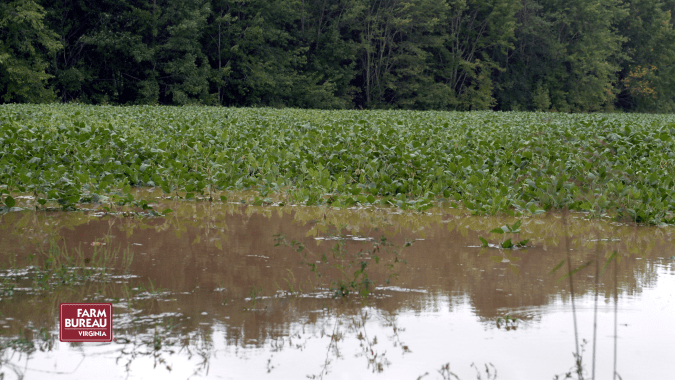
The Atlantic hurricane season extends from June 1 to November 30, with the peak occurring between mid-August and late October. The powerful winds and flooding rains of hurricanes can be disastrous for agricultural producers, and farmers can take precautions now to help protect their families, livestock and farm operations.
Tips to Protect You and Your Family
Livestock Preparedness Tips:
“Proper planning and taking precautions now could save thousands of dollars in property loss. I strongly encourage all agricultural producers to review these tips and take time now to prepare their farms and agribusinesses for hurricanes and other severe weather events,” said Joseph Guthrie, Commissioner of VDACS. “For more in-depth emergency preparation tips, please visit www.vaemergency.gov/threats/hurricanes.”
VDACS also encourages pesticide applicators, particularly those in Eastern Virginia, to secure their pesticide storage areas. Applicators in low-lying areas should attempt to elevate or move pesticides to locations that are less likely to flood. Pest control companies should consider the weather carefully when making any type of outdoor application and always read and follow the pesticide label.
Robert Harper with Virginia Farm Bureau’s grain division provides this week’s market updates.
#merchandiserminute #grainfuture #virginiafarmbureau

Below are several changes to wildlife regulations approved by the Board of Wildlife Resources that could impact Farm Bureau members. A complete list and additional details can be found here. These regulations go into effect August 1, 2023.

The General Assembly’s passage of HB 1806 and SB 1057 changed the implementation date for vehicles claiming a farm use exemption to obtain a formal placard from the Virginia Department of Motor Vehicles from July 1, 2023, to July 1, 2024. DMV has not implemented the new program yet.
The bill clarifies that the farm use exemption applies to all pickup and panel trucks, sport utility vehicles, trailers or semitrailers, and vehicles other than pickup and panel trucks, sport utility vehicles, trailers or semitrailers having a gross vehicle weight rating greater than 7,500 pounds. However, the only vehicles tasked with obtaining the placard are pickup trucks, panel trucks and sport utility vehicles. Trailers, semitrailers and vehicles over 7,500 pounds can continue operating as is under the farm use exemption without getting a new farm use placard.
Farmers are required to show they are in compliance with the law by July 1, 2024, and can obtain farm use placards from DMV, which will charge $15 for the placards. The tags will have an alphanumeric identification number, are nontransferable and must be displayed at all times.
The PDF document below for more detailed information. This page and the PDF will be updated as new information develops.

Virginia Tech’s culture of collaboration and innovation is just one of many strengths that attracted Mary Burrows, the new director of the Virginia Agricultural Experiment Station, to the university and to the position.
It also will be her focus as moves into the new role she started on July 10, she said.
“There is a culture of innovation and collaboration here at Virginia Tech that is very exciting,” said Burrows, who also serves as the associate dean for research in the College of Agriculture and Life Sciences. “My goal is to support this culture, encourage it and help it continue to thrive.”
Burrows comes to the university from Montana State University, where she spent 17 years as an Extension plant pathologist and the past three years as the associate director of Montana Agricultural Experiment Station and Research Development.
“Mary brings a wealth of research, Extension and administrative experience to Virginia Tech and the College of Agriculture and Life Sciences. We are excited to support her in her new role as the director of the Virginia Agricultural Experiment Station, our college’s research enterprise,” said Alan Grant, dean of the college.
During her time at Montana State, Burrows ran the university’s Extension Schutter Diagnostic Laboratory, a member of the National Plant Diagnostic Network, of which several Virginia Tech entities are also a member including the Plant Disease Clinic. The lab, Burrows said, had an estimated $1-3 million impact on the state each year.
As a plant virologist, one of her earliest projects was examining wheat viruses across the Great Plains. In 2006, she attended a National Plant Diagnostic conference, “and every diagnostician there was talking about wheat viruses in their state,” Burrows said.
“The survey I coordinated was the first demonstration of a newly described virus of wheat in all nine Great Plains states. The virus had only been identified in Kansas prior to the survey,” Burrows said. “Back in Montana, my expertise really came in handy as far as letting growers know how to diagnose and manage it.”
Burrows said she understands the importance of communication and collaboration among producers and other stakeholders. Building and maintaining those relationships will be one of her top priorities as director of the state’s experiment station.
“We have to make sure stakeholders know what impact we are having in their day-to-day operations,” she said. “I’m constantly beating the drum of how we are serving the needs or trying to serve the needs and getting feedback where it’s needed.”
Burrows, a native of Minnesota, earned her bachelor’s degree in biology from Minnesota State University-Morehead and her Ph.D. in plant pathology from the University Wisconsin-Madison. Her research interests include field crop diseases, wheat and pulse crops, fungi and viruses and epidemiology.
She comes to Virginia with her husband and two children, who enjoy the outdoors and regular trips to Colonial Williamsburg. She is excited about living in Virginia, “an agriculturally diverse state.”
“I’m really looking forward to meeting new people, helping out all the different organizations in Virginia, and making sure that our efforts helping to meet their needs,” Burrows said.

