The Future of our Farmland is Shaped by the Decisions We Make Today

By Katelyn Jordan, Assistant Director, Governmental Relations for the Virginia Farm Bureau

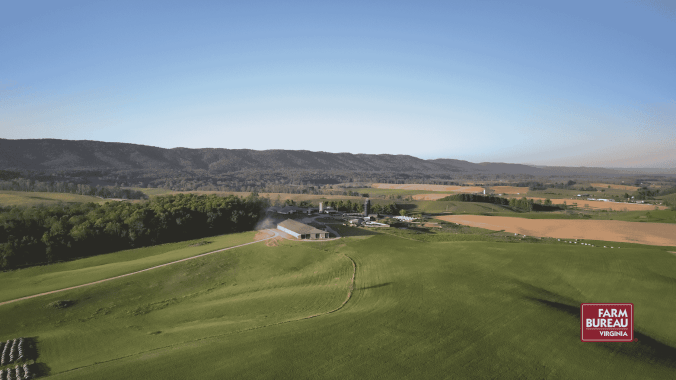
Local governments hold the key to farmland preservation. Through thoughtful land-use planning, zoning, and community engagement, our local leaders can safeguard the Commonwealth’s agricultural lands and reverse the concerning trend of rapid loss of farmland. We must empower our local leaders to act now – because protecting farmland starts at home.

The very real pressures of urban sprawl, population growth, deployment of renewable energy and development have had a direct impact on Virginia farms. Virginia’s farms are down 18% in 20 years—and over a third of a million acres of farmland have been converted due to development. If trends continue, the Commonwealth could lose another 800,000 acres by 2040.

While the forces driving this change may feel unstoppable, the reality is, we have choices.

Smart local land use planning can make all the difference. That’s why I’m proud to have contributed to the Planning for Agriculture in Virginia Toolkit, a new resource created by American Farmland Trust and partners to help counties, cities, and towns envision and prepare for a future where local farms can thrive.

Virginia Farm Bureau Federation (VFBF) is proud to partner with American Farmland Trust to ensure that the story of the backbone of Virginia’s economy is shared with local leaders. The reality is that many folks don’t know where their food comes from, or the hard work that went into getting it onto their plates. Educating community members on the importance of agriculture as well as the tools that are needed to ensure the industry’s vitality are critical.

This isn’t just about preservation. If you care about open space, food security or rural livelihoods, this matters. Virginia’s largest private industry, agriculture, is the cornerstone of the state and local economies. Among the nation’s most diverse farming sectors, it has a total economic impact of over $80 billion a year. If farmland is paved over, we don’t get it back. But with tools like use-value assessment, agricultural and forestal districts, and purchase of development rights (PDR) programs, we can chart a different course.

The Toolkit outlines these policies and shows how they’ve worked in Virginia. It’s full of fact sheets, resources and success stories, grounded in real-life applications.

We have the tools, let’s put them to work – for Virginia.

Visit the Planning for Agriculture in Virginia Toolkit here: farmlandinfo.org/planning-for-agriculture-in-virginia

IRS Provides Tax Relief for Drought-Affected Farmers and Ranchers Across 49 States

The IRS announced significant tax relief on September 22, 2025, for farmers and ranchers who were forced to sell or exchange livestock due to drought conditions. The relief extends to applicable areas across 49 states, the District of Columbia, and other regions that experienced exceptional, extreme or severe drought during the 12-month period ending August 31, 2025.

Extended Time to Replace Livestock

The new guidance, detailed in Notice 2025-52, allows eligible farmers and ranchers additional time to replace their livestock and defer tax on any gains from forced sales or exchanges. This relief recognizes the financial strain that drought conditions place on agricultural operations and provides crucial flexibility during recovery periods.

Under normal circumstances, livestock must be replaced within two years to defer capital gains. However, this relief extends that period to four years for drought-affected operations. The IRS is also authorized to further extend this replacement period if drought conditions persist.

How the Extended Replacement Period Works

The replacement period extension gives eligible farmers and ranchers until the end of their first tax year after the first drought-free year following the four-year replacement period to replace sold or exchanged livestock.

What this means in practice: If your drought-sale replacement period was scheduled to expire at the end of 2025, you will now have until the end of your next tax year to replace the livestock.

This extension applies if your region experienced exceptional, extreme or severe drought conditions during any week between September 1, 2024, and August 31, 2025, as determined by the National Drought Mitigation Center.

Who Qualifies for Relief?

The tax relief generally applies to capital gains realized from sales or exchanges of livestock held for draft, dairy or breeding purposes.

What’s Covered:

  • Draft animals
  • Dairy livestock
  • Breeding stock

What’s NOT Covered:

  • Livestock raised for slaughter
  • Livestock held for sporting purposes
  • Poultry

Eligibility Requirements

To qualify for this relief, farmers and ranchers must demonstrate:

  1. Drought prompted the sales or exchanges – The decision to sell livestock must be directly connected to drought conditions
  2. The area received federal drought designation – Your county or jurisdiction must be listed in Notice 2025-52
  3. Livestock type qualifies – Only draft, dairy, or breeding livestock are eligible

Nationwide Impact

Notice 2025-52 lists applicable areas by county or jurisdiction across an expansive geographic range, reflecting the widespread nature of recent drought conditions. The fact that 49 states qualify for this relief underscores the severity and reach of drought impacts on American agriculture.

Additional Resources

The IRS provides detailed information to help farmers and ranchers navigate this relief:

  • Notice 2006-82 – Contains details and examples of how the livestock replacement provision works (available on IRS.gov)
  • Publication 225, Farmer’s Tax Guide – Offers comprehensive information on reporting drought sales and other farm-related tax issues (available on IRS.gov)

Why This Relief Matters

Drought forces difficult decisions on farmers and ranchers. When pastures dry up and feed becomes scarce or prohibitively expensive, selling breeding stock may be the only viable option to maintain operations. However, without tax relief, the immediate tax burden from those forced sales can compound an already challenging situation.

By extending the replacement period and allowing tax deferral, the IRS acknowledges that recovering from drought takes time. Farmers and ranchers need adequate time to rebuild their herds once conditions improve, and this relief provides that critical breathing room.

Take Action

If you’re a farmer or rancher who sold livestock due to drought conditions:

  1. Review Notice 2025-52 to confirm your area qualifies
  2. Consult Publication 225 for guidance on properly reporting drought sales
  3. Work with a tax professional familiar with agricultural taxation to ensure you maximize available relief
  4. Document the connection between drought conditions and your livestock sales

This relief represents important recognition of the challenges facing America’s agricultural producers. Make sure you understand how it applies to your operation and take full advantage of the extended timeline to rebuild your herd when conditions allow.

For complete information, visit IRS.gov and search for Notice 2025-52 and Publication 225.

Farm Recovery Block Grant Program Now Open

In a historic first for the nation, Governor Glenn Youngkin announced that Virginia has launched the USDA Farm Recovery Block Grant Program, becoming the first state to deliver operational disaster recovery assistance to farmers and timber landowners impacted by Hurricane Helene. Applications opened on Monday, September 22, 2025, marking a significant milestone in state-federal collaboration for agricultural disaster relief.

A National First

Virginia’s quick action in partnering with the U.S. Department of Agriculture (USDA) has transformed what was once an agreement on paper into tangible, on-the-ground relief for farmers and timber landowners still recovering from Hurricane Helene’s devastation. Through the leadership of the Youngkin Administration and the Virginia Department of Agriculture and Consumer Services (VDACS), the Commonwealth has set a precedent for how states can rapidly deploy federal disaster assistance.

“Virginia is proud to lead the nation in delivering recovery aid to farmers and timber landowners still recovering from Hurricane Helene,” said Governor Glenn Youngkin. “The opening of this program reflects the power of state and federal collaboration, providing meaningful support to communities that provide so much to our Commonwealth and our nation.”

$60.9 Million in Direct Assistance

VDACS is administering the Virginia Farm Recovery Block Grant Program, which will provide $60.9 million in disaster assistance through direct payments to eligible applicants across 27 designated localities in Southwest and Southside Virginia. These areas serve as the backbone of agricultural and forestry commerce in the Commonwealth.

Eligible Localities

The program covers the following counties: Bedford, Bland, Buchanan, Carroll, Craig, Dickenson, Floyd, Giles, Grayson, Lee, Montgomery, Patrick, Pittsylvania, Pulaski, Russell, Scott, Smyth, Tazewell, Washington, Wise and Wythe.

The following independent cities are also included: Bristol, Covington, Danville, Galax, Norton and Radford.

What Losses Are Covered?

The block-grant funding is designed to assist with specific losses not covered by other federal disaster assistance programs, including:

  • Timber losses
  • Farm infrastructure damage (buildings, roads, and bridges used to access crop or livestock production areas)
  • Aquaculture losses
  • Market losses
  • Perennial crop losses
  • Plasticulture losses

Application Timeline and Requirements

Eligible producers can submit applications through Thursday, November 6, 2025 – a 45-day application window. The online application is accessible at www.vdacs.virginia.gov/about-farm-recovery-block-grant.shtml.

How to Apply

  1. Create an account on the online platform
  2. Wait for VDACS review and approval of your registration
  3. Submit identifying information and documentation to substantiate eligible losses

Important Note: Producers applying for certain losses—including market loss, future economic loss, plasticulture, and aquaculture claims—must agree to acquire and maintain USDA Risk Management coverage for two crop years to receive funding.

Help Is Available

Recognizing that not all producers have easy computer access, VDACS staff and Virginia Cooperative Extension agents are ready to assist:

Applicants with limited or no computer access should reach out to their local Extension office for assistance in identifying options.

Why This Matters

“Agriculture and forestry are vitally important to Virginia’s economy and serve as the backbone of commerce in the Southwest and Southside areas of the Commonwealth,” said Secretary of Agriculture and Forestry Matthew Lohr. “This grant funding provides critical, direct support to farmers and timber landowners in those areas and helps them restore their operations to be productive contributors to their communities and our state.”

Hurricane Helene’s impact on Virginia’s agricultural sector was severe, and this funding represents a crucial lifeline for producers working to rebuild their operations. By being the first state to operationalize this program, Virginia demonstrates its commitment to its agricultural communities and sets an example for responsive, effective disaster recovery.

Get Started Today

Don’t wait—the application window closes on November 6, 2025. For complete program details, eligibility criteria, required documentation, or answers to your questions:

Virginia’s AFID Infrastructure Grant Program: Fall Applications Now Open

Virginia’s small-scale farmers and local food producers have a new opportunity to strengthen their operations through the Governor’s Agriculture and Forestry Industries Development (AFID) Infrastructure Grant program. The fall application period opened on October 1 and runs through October 31, 2025, at 5 p.m.

Supporting Local Food Systems

Since its creation in 2021, the AFID Infrastructure Grant program has been a vital resource for communities looking to invest in their local agricultural infrastructure. Administered by the Virginia Department of Agriculture and Consumer Services (VDACS), the program focuses on supporting locally identified investments that help small farmers and food producers scale their businesses while benefiting the broader community.

What Projects Qualify?

To be eligible for funding, projects must directly support local food production and forestry while demonstrating clear community-wide benefits. The program prioritizes infrastructure investments in:

  • Food hubs (new and existing facilities)
  • Farmers markets
  • Commercial kitchens
  • Value-added processing facilities for meats, dairy, produce, and other Virginia-grown products
  • Packaging and processing infrastructure

Grant funds are intended primarily for capital expenditures, with a maximum award of $50,000 per project.

Who Can Apply?

Applications must come from a political subdivision of the Commonwealth, including:

  • Counties
  • Cities
  • Towns
  • Industrial and economic development authorities
  • Planning district commissions

However, localities are strongly encouraged to collaborate with small farmers, food producers, local food systems advocates, and other stakeholders interested in building robust local food and farming infrastructure. This collaborative approach ensures that funded projects truly meet the needs of the communities they serve.

Matching Requirements

This competitive grant program requires an equal cash match from the applying locality. Recognizing the challenges faced by some communities, the program offers reduced matching requirements for economically distressed localities, making the grants more accessible across Virginia.

Application Timeline

The AFID Infrastructure Grant program operates on a bi-annual cycle with two funding rounds each fiscal year:

  • Fall Round: Applications due October 31; awards announced by December 31
  • Spring Round: Awards announced by June 30

With the fall deadline rapidly approaching, interested localities should begin coordinating with local agricultural stakeholders now to develop strong applications that showcase community need and impact.

Why This Matters

Virginia’s agricultural sector continues to be a cornerstone of the state’s economy and rural communities. By investing in infrastructure that helps small producers access processing facilities, reach customers through farmers markets, and add value to their products, the AFID program strengthens the entire local food system. These investments create jobs, keep food dollars circulating in local economies, and ensure that Virginia-grown products can reach consumers more efficiently.

Get Started

For more information about the AFID Infrastructure Grant program, eligibility requirements, or the application process, contact:

Joyce Blankenship
Virginia Department of Agriculture and Consumer Services
Phone: 804.786.1906
Email: joyce.blankenship@vdacs.virginia.gov

Don’t miss this opportunity to invest in your community’s agricultural future. The October 31 deadline will be here before you know it.

Candidates for statewide races declare positions on crucial agricultural issues

Candidates for governor, lieutenant governor and attorney general have partnered with Virginia Farm Bureau Federation AgPAC, a nonpartisan political action committee, to present their stances on agricultural and forestry issues that align with Farm Bureau policy.   

While endorsements will not be issued for individual candidates for the top spots in state leadership this year, farmers serving on the AgPAC board of trustees met with all six campaigns and briefed them on important agriculture and forestry issues. Candidates were then given the opportunity to present their agriculture and forestry platforms to the full AgPAC board of trustees.   

In-kind contributions were offered to candidates who presented positions that help promote specific agriculture and forestry issues aligned with Farm Bureau policy.   

Both gubernatorial candidates, Democrat Abigail Spanberger and Republican Lt. Gov. Winsome Earle-Sears, embraced the opportunity to share their ideas on issues important to farmers.  

Spanberger’s top priorities included expanding access to markets for Virginia farmers, preserving working farm and forest lands, promoting rural economic development, ensuring farmers have access to labor, fully funding voluntary conservation programs and expanding agricultural education and support for Virginia’s land grant universities and Virginia Cooperative Extension programs.    

“I worked with Virginia’s farmers to amplify their voices when I was in Congress by moving legislation that addressed their issues,” Spanberger said. “I was proud to receive awards from Farm Bureau and Virginia Cattlemen’s Association recognizing this work. I will do the same as governor and ensure that agriculture and forestry have a seat at the decision-making table.” 

Earle-Sears emphasized her commitment to reducing taxes, supporting job creation, and preserving Virginia’s farmland and forestry through clean energy solutions like biomass. She voiced strong support for broadband expansion, and maintaining right-to-work and right-to-farm laws, while opposing increased pesticide regulations and minimum wage hikes. Earle-Sears also pledged to establish a governor’s office in Southwest Virginia to ensure accessibility and representation for rural communities. On environmental issues, she praised Virginia farmers for their efforts to protect the Chesapeake Bay, and called on neighboring states to uphold their responsibilities.   

“I want you to know that I want to invest in you, but I think more importantly, I trust our farmers,” Earle-Sears said. “I trust our farmers and foresters, and our entire commonwealth benefits because of you. I will fight for your interests in Richmond. I will continue to fight for you. As governor, that is my promise.”    

Four other statewide candidates agreed to meet with the AgPAC board—lieutenant governor candidates Democrat Sen. Ghazala Hashmi and Republican John Reid, and candidates for attorney general, Republican Attorney General Jason Miyares and Democrat Jay Jones.   

“These candidates valued the opportunity to have meaningful conversations with farmers, exploring ways they might support agriculture through their roles if elected,” said Martha Moore, senior vice president of VFBF governmental relations. “We’re excited to assist these six statewide candidates in sharing their perspectives on key agriculture and forestry topics with farmers throughout Virginia. We believe that working together will bring attention to issues that matter in rural communities and help farmers make informed decisions ahead of the Nov. 4 election.”   

Hashmi recognizes that agriculture and forestry are more than just industries; they are a way of life for many Virginians. Her vision centers on economic growth, workforce development and land stewardship, including strengthening the Virginia Agricultural Best Management program and promoting voluntary conservation practices to preserve Virginia’s working lands. She is committed to closing the broadband gap to ensure rural communities can thrive in the digital age and supports climate innovation through smart solar development on existing infrastructure. “I want to use this opportunity to elevate rural voices and build lasting support for the vital work happening in our agricultural and forestry communities,” Hashmi said.   

Reid says he is committed to sustaining family farms and securing our food supply because a stronger agricultural foundation means a stronger Virginia. He supports increased funding for BMPs, empowering farmers to meet Virginia’s water quality goals while protecting our natural resources. Reid opposes reinstating the estate tax, recognizing the burden it places on landowners and the threat it poses to farm viability. He advocates for preserving farmland through strategic solar siting, and stands strong in defending Virginia’s right to farm—ensuring agriculture remains a cornerstone of Virginia’s economy and way of life.   

Miyares reaffirmed his commitment to protecting Virginia’s right-to-work law, emphasizing its importance in attracting businesses and supporting the state’s workforce, including agribusiness. He pledged to oppose efforts that would hinder employment opportunities or burden farmers with unnecessary regulations, including those promoting animal rights. Miyares also voiced strong support for local authority in solar siting decisions, noting that wind and solar alone cannot meet Virginia’s energy needs over the next two decades. His focus remains on getting Virginia back to work and back to business—especially in vital sectors like agriculture.    

Jones says he understands the economic challenges facing agriculture today and is committed to offering predictability and stability to support farmers and small business owners across the commonwealth. He believes that regulations play a vital role in protecting the environment and ensuring food safety. However, Jones advocates for science-based policies that are flexible, cost-effective, and adaptable to local conditions—so farmers can thrive without unnecessary burdens. Jones supports simplifying regulations to foster entrepreneurship and competitiveness in both national and global markets. He is especially focused on reducing barriers for beginning farmers, helping them build sustainable businesses and contribute to Virginia’s agricultural legacy.    

The nonpartisan VFBF AgPAC was created in 1999 and employs in-kind contributions and endorsements to support candidates who can best support agriculture and Farm Bureau issues.