
Robert Harper with Virginia Farm Bureau’s grain division provides this week’s market updates.
#merchandiserminute #grainfuture #virginiafarmbureau
Robert Harper with Virginia Farm Bureau’s grain division provides this week’s market updates.
#merchandiserminute #grainfuture #virginiafarmbureau

This week, Congress passed H.R.6363, the “Further Continuing Appropriations and Other Extensions Act of 2024.” The bipartisan legislation prevents a government shutdown and includes a one-year extension of the 2018 farm bill. The House passed the bill by a vote of 336-95; the Senate passed the bill by a vote of 87-11, and President Biden has signed it into law.
The purpose of this stop-gap measure was to avoid a government shutdown, allow more time to consider individual appropriations bills, and to prevent an end-of-year omnibus. AFBF sent a letter to all members of Congress expressing support for the legislation and inclusion of a farm bill extension which ensures farmers will not experience any disruptions at the start of the new year.
Notably for farmers, H.R. 6363 funds the Agriculture, Rural Development, Food and Drug Administration, and related agencies through January 19, 2024, and funds the Interior, Environment, and Labor agencies through February 2, 2024.
Included in the bill, the House and Senate Agriculture Committee leaders brokered a deal to extend the 2018 farm bill through September 30, 2024, and fully funds the orphan programs through that same period. Funding for these programs was achieved by rescinding over $177 million from the Biorefinery, Renewable Chemical, and Biobased Product Manufacturing Assistance Program, commonly referred to as the “Section 9003 program.”
This farm bill extension gives farmers stability and certainty heading in to the 2024 crop year. However, we urge both the House and Senate to stay focused on a new, modernized farm bill that recognizes the many changes and challenges of the past five years. The current farm bill was written before the COVID pandemic, before inflation spiked, and before global unrest sent shock waves through the agricultural and input supply chain. Farm Bureau, the agriculture industry, and both agriculture committees have worked hard over the past 18 months to craft an effective farm bill. Congress must keep that momentum going.
Additional Resources:
Robert Harper with Virginia Farm Bureau’s grain division provides this week’s market updates.
#merchandiserminute #grainfuture #virginiafarmbureau

More than $550,000 in federal Specialty Crop Block Grant Program funding has been awarded to seven agricultural-related projects to help promote and enhance the competitiveness of Virginia’s specialty crops.
“This grant funding supports research and technological advancements that enhance the competitiveness of Virginia’s specialty crops while also helping to create new market opportunities for agricultural producers. I am also pleased that several of these projects will help to further position the Commonwealth as the leader in controlled environment agriculture,” said Gov. Glenn Youngkin. “These grants represent over a half-million-dollar investment in Virginia’s economy, which will boost economic development and create jobs in agriculture, Virginia’s largest private industry.”
Specialty crops are defined as fruits and vegetables, tree nuts, dried fruits, horticulture and nursery crops, including floriculture. Among this round of specialty crop grant awards are projects that advance research within controlled environment agriculture, frost damage prevention, Virginia specific disease management, evaluation of in-field water treatments and potential economic benefits of using drones for pest management.
“These grant awards are great news for Virginia producers and further Governor Youngkin’s commitment to using agriculture as a growth engine and source of jobs in rural areas. I congratulate these educational institutions and organizations for their innovative research that will not only help Virginia growers, but also add value and enhance market opportunities across the Commonwealth,” said Secretary of Agriculture and Forestry Matthew Lohr.
During this grant round, the following recipients and projects received funding:
Virginia Polytechnic Institute and State University, Dr. Laura Strawn, Blacksburg, Va.
Validating In-Field Water Treatments to Enhance Produce Safety
Virginia Tech will validate in-field water treatments to enhance produce safety for specialty crop farms. These findings will directly support Virginia specialty crop producers by generating data on the efficacy of in-field water treatments and how farms can monitor, verify and validate their use as a mitigation strategy to control contamination risks. Results will be communicated to stakeholders through extension activities at grower meetings, fact sheets/presentations, and Virginia-hosted Produce Safety Alliance Grower Trainings. Food safety programs, including Good Agricultural Practices and the Food Safety Modernization Act Produce Safety Rule, address water usage on-farm with a combination of risk assessments, standards, or metrics. Water treatment may be required at specific times or used as a mitigation when water is not safe or is not of adequate sanitary quality for intended uses. EPA chemical treatments of preharvest water will be investigated and validated for their reduction of microbial indicators (e.g., E. coli) or pathogens (e.g., Salmonella). This study will produce a generation of in-field water treatment data, which will allow growers to reduce contamination from water usage on-farm.
Virginia Polytechnic Institute and State University, Dr. Vijay Singh, Painter, Va.
Use of Drone-Spray for Weed Management in Specialty Crops
The Virginia Tech Eastern Shore Agricultural Research and Extension Center weed science team will evaluate the potential economic benefits of Unmanned Aerial Systems (UAS)/drones. Current use of UAS for pest management is mainly limited to pest mapping and classification. However, with the availability of more robust UAS carrying pesticide payloads of 20-25 L, UAS has the potential to modernize agricultural fields due to lower costs, greater coverage capacity, and flexibility (e.g., working while soil is wet or when crop plants are tall) compared to AI-based agricultural robots and tractors. Virginia Tech’s previous research on soybean and corn showed that these technologies can provide higher efficacy of the herbicides that are applied. UAS-based herbicide applications showed 30% higher efficacy of postemergence herbicides compared to backpack spray applications. This higher pesticide efficacy alone can lead to estimated savings of $10-25 per acre in the eastern shore region, apart from 80-90% herbicide saving with spot spray applications. These technologies have not been tested for specialty crops, and operational conditions of drones may change based on canopy size, crop morphology, and herbicide label. This study will provide efficacy and economic data on UAS based spray in two crops: tomatoes and Cole crop (broccoli).
River City Flower Exchange Cooperative Inc., Justine McFarland, Richmond, Va.
Increasing Sustainability and Competitiveness of Virginia’s Floriculture Industry by Improving Efficiency and Reducing Distribution Costs
The River City Flower Exchange Cooperative (RCFEC) will continue to increase public awareness and enhance the competitiveness of Virginia’s floriculture industry through increased access to sustainably grown flowers by developing an efficient and cost-effective delivery and outpost model. RCFEC has demonstrated success in the Richmond area for locally grown flowers and there is demand in the Tidewater, Northern and Central Virginia areas for locally grown flowers that the current farm members of RCFEC cannot meet. The value of collaboration and aggregation is demonstrated with RCFEC’s current collective model. RCFEC will extend the efficiencies of distribution through centralized regional locations to flower farming groups such as the Central Virginia Flower Collective and the Blue Ridge Flower Exchange, and to individual flower farms looking to streamline their offerings and reduce their distribution costs. This effort would greatly increase the competitiveness of Virginia’s floriculture industry.
Institute for Advanced Learning and Research, Dr. B. Sajeewa Amaradasa, Danville, Va.
Increase Yield in Greenhouse Soilless Strawberry Using Growth Promoting Bacteria
The Institute for Advanced Learning and Research (IALR), in partnership with Virginia Cooperative Extension, industry leaders, and growers, will contribute to increasing greenhouse soilless strawberry yield by utilizing growth promoting bacteria. IALR will specifically use beneficial bacterial endophytes, which live inside plants and help plants grow better, tolerate stress conditions, and fight diseases. IALR will use different strawberry cultivars and promising bacterial endophytes in a controlled environment agriculture facility to decipher which cultivar and endophyte combinations give better yield. This research outcome would help growers increase profits in hydroponically grown strawberry by using growth promoting bacteria. Results will be disseminated by organizing grower tours at the institute and using Virginia Tech extension specialists.
Virginia Polytechnic Institute and State University, Dr. Douglas S. Higgins, Painter, Va.
Virginia Specific Disease Management Strategies to Protect Sweet Corn Seedlings
Seed rot and seedling blight remains a constant threat for Virginia’s sweet corn producers. Stand reductions over 50% and stunted plants with low vigor are common in affected sweet corn, especially in the popular super sweet type hybrids and early plantings. Seed treatment with combinations of different fungicides are the most cost-effective means to manage these pathogens. The composition of pathogens affecting Virginia sweet corn is expected to differ from other sweet corn production regions. The objectives of this project are to identify fungicide seed treatments that are most beneficial for Virginia growers and to determine which soilborne pathogen species are most common in the state’s soils. Specific disease management recommendations for protecting sweet corn seedlings in Virginia will be disseminated to growers using written and oral extension outreach methods.
Virginia Polytechnic Institute and State University, Dr. Kaylee South, Danville, Va.
Next-Generation Biofungicides for Application in Controlled Environment Agriculture
Virginia Tech researchers will develop and evaluate the use of biofungicides for the control of common diseases of food crops produced in controlled environment agriculture, which is limited in the number of pesticides that can be utilized. This goal will be fulfilled by developing and evaluating RNAi-based biofungicides targeting grey mold in strawberry production and downy mildew in spinach production. Results of this project will be disseminated to stakeholders through publications and presentations.
Virginia Polytechnic Institute and State University, Dr. Sherif M. Sherif, Winchester, Va.
Preserving Apples in the Face of Frost: Evaluating the Efficacy of Cryoprotectants
Spring frost represents a formidable abiotic stressor that poses a significant economic threat to fruit production worldwide. The annual cost of spring frost and freeze damage reaches millions of dollars, and climate change is projected to exacerbate the situation. Agrochemical companies have developed cryoprotectants that are believed to help prevent frost damage by increasing solute concentration and lowering the freezing point of intracellular fluids. There is limited scientific evidence of their effectiveness in fruit crops, particularly apple trees in the Mid-Atlantic region. Virginia Tech will investigate the impact of cryoprotectants on apple trees in the Mid-Atlantic region to advance the development of more practical and cost-effective strategies for reducing the adverse effects of spring frosts on apple production. The deployment of frost protectants is expected to augment the cold tolerance of buds, providing significant benefits to horticulture industry stakeholders.
Specialty Crop Block Grant program funding is authorized annually by the 2018 Farm Bill. Fiscal year 2023 funding is awarded for a three-year period beginning September 30, 2023. The awards resulted from a competitive grant process established by the Virginia Department of Agriculture and Consumer Services (VDACS) for funding provided by the U.S. Department of Agriculture’s (USDA) Agricultural Marketing Service (AMS) Specialty Crop Block Grant Program. As grants for the USDA Specialty Crop Block Grant program were considered, VDACS gave priority to projects that included the following activities:
Robert Harper with Virginia Farm Bureau’s grain division provides this week’s market updates.
#merchandiserminute #grainfuture #virginiafarmbureau
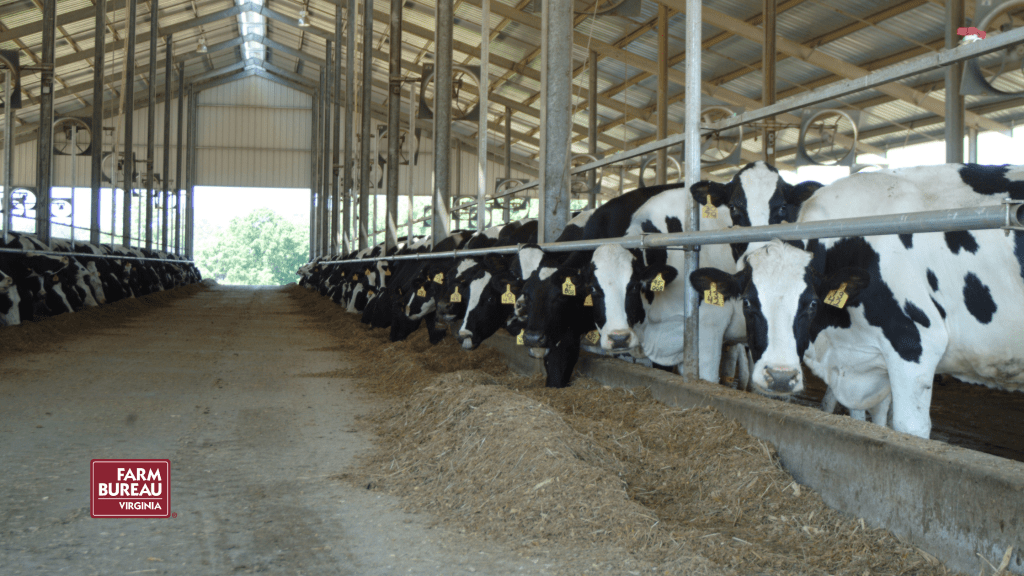
Administered by USDA’s Farm Service Agency (FSA), MLP compensates dairy producers who, because of qualifying weather events, dumped or removed milk without compensation from the commercial milk market in calendar years 2020, 2021 and 2022. Eligible causes of loss also include consequences of these weather events, such as power outages, impassable roads and infrastructure losses. FSA opened MLP enrollment on September 11, 2023; the original MLP deadline was October 16, 2023.
“We recognize that MLP benefits are critical to the financial recovery of dairy operations significantly impacted by weather-related disasters that inhibited their ability to deliver or store their milk in one, or even multiple years,” said FSA Administrator Zach Ducheneaux. “We also understand that dairy farming is a 24/7, 365-day commitment. We hope the application deadline extension ensures that all dairy farmers in need of assistance will now have adequate time to apply.”
How to Apply
To apply for MLP, producers must submit:
If not previously filed with FSA, applicants must also submit all the following items within 60 days of the MLP application deadline:
Most producers, especially those who have previously participated in FSA programs, will likely have these required forms already on file. But those who are uncertain or want to confirm the status of their forms can contact FSA at their local USDA Service Center.
For more information on eligibility and payments, view the MLP fact sheet.
USDA touches the lives of all Americans each day in so many positive ways. In the Biden-Harris administration, USDA is transforming America’s food system with a greater focus on more resilient local and regional food production, fairer markets for all producers, ensuring access to safe, healthy and nutritious food in all communities, building new markets and streams of income for farmers and producers using climate smart food and forestry practices, making historic investments in infrastructure and clean energy capabilities in rural America, and committing to equity across the Department by removing systemic barriers and building a workforce more representative of America. To learn more, visit www.usda.gov.
USDA is an equal opportunity provider, employer and lender.
Robert Harper with Virginia Farm Bureau’s grain division provides this week’s market updates.
#merchandiserminute #grainfuture #virginiafarmbureau

Virginia Tech received a record $80 million grant from the United States Department of Agriculture to help farmers implement climate-smart practices that could significantly reduce greenhouse gasses. This is the single largest grant in Virginia Tech’s history.
With the Alliance to Advance Climate-Smart Agriculture, which is now underway, the College of Agriculture and Life Sciences will distribute more than $57 million of the grant to producers to enact climate-friendly practices and serve as a pilot program that pays producers to implement climate-smart practices on farms of all sizes and commodities, an initiative that could have significant impacts on curbing climate-changing gasses.
The Alliance to Advance Climate-Smart Agriculture incentivizes and rewards farmers and ranchers for adopting climate-smart agricultural practices. Under the three-year, $80-million pilot program, the Alliance and its partners will help producers in Arkansas, Minnesota, North Dakota and Virginia prove the value of paying farmers and ranchers $100 per acre or animal unit for stewardship practices — delivering public value through carbon sequestration, greenhouse gas reduction, improved soil health, water quality, water conservation and other environmental services.
The pilot design, including the structure of producer incentive payments, was developed by Rural Investment to Protect the Environment (RIPE), a coalition of farmers, ranchers, agricultural trade associations and environmental organizations advancing a national policy that invests in rural America by enabling producers to earn a fair return for implementing voluntary conservation practices. RIPE is a former member of the Alliance to Advance Climate-Smart Agriculture.
The pilot is a project of USDA’s Partnerships for Climate-Smart Commodities, administered by Virginia Tech with participation from more than 14 additional partners.

There are many components to starting a farm operation, with access to financing being one of the biggest challenges. To assist new agricultural producers in finding financial sources, the Virginia Secretariat of Agriculture and Forestry, in partnership with key lending institutions and state and federal agencies, will host a Farm Finance and Conservation Planning Seminar.
The educational workshop will be held on October 23 at Virginia State University’s Randolph Farm Pavilion in Petersburg, Va. New and beginning farmers are encouraged to register for this free networking and learning opportunity. Please register by October 19, by emailing Josie.Rao@Governor.Virginia.Gov.
“As agriculture is the Commonwealth’s top private industry, Gov. Glenn Youngkin is committed to the industry’s continued development as a growth engine and source of jobs throughout rural Virginia,” said Matthew Lohr, Secretary of Agriculture and Forestry. Lohr says the free seminar will provide critical farm financing and cost share conservation opportunities to help the next generation of agricultural producers find success.
Monday, October 23, 2023 · 9 am–2:30 pm
VSU Randolph Farm Pavilion, 4415 River Road, Petersburg, VA 23803
Hosted by the Virginia Secretary of Agriculture and Forestry
Join this free networking event for beginner farmers to discover farm financing options and cost share conservation opportunities.
Presentations by:
Register Today! Please register by October 19, by emailing Josie.Rao@Governor.Virginia.Gov.
Robert Harper with Virginia Farm Bureau’s grain division provides this week’s market updates.
#merchandiserminute #grainfuture #virginiafarmbureau
 Plows and Politics