EPA Extends Waters of the U.S. Comment Period

The Environmental Protection Agency (EPA) and the Army Corps of Engineers have extended the public comment period for a proposed rule that defines the Waters of the U.S. that fall under the jurisdiction of the Clean Water Act.

The extension was in response to a number of requests received by the agencies involved with the rule, EPA said. Originally slated to end July 21, the extension gives the public an additional 91 days – or until Oct. 20 – to submit comments.

According to the EPA, the rule is designed to clarify protection under the Clean Water Act for streams and wetlands. Farm Bureau has carefully analyzed the proposal. Simply put, EPA and the Corps are now attempting to regulate virtually all water, something Congress has explicitly chosen not to allow and which two U.S. Supreme Court decisions have rejected.

The EPA proposal also includes an interpretive rule that the agency says ensures that 56 specific conservation practices that protect or improve water quality and are conducted in conformance with the standards of USDA’s Natural Resources Conservation Service will not be subject to Clean Water Act Section 404 permitting requirements for discharges of dredged or fill material. The comment period on the interpretive rule has also been extended by 30 days, until July 7.

American Farm Bureau Federation (AFBF) President Bob Stallman released the following statement regarding the extension of the comment period.  

“The American Farm Bureau Federation is pleased the EPA has extended the time available to comment on new and highly burdensome clean water rules. This is a victory for farming families and a clear signal that America’s farmers know how to stand up and be counted.

“EPA has misled the regulated community about the rule’s impacts on land use. If more people knew how regulators want to require permits for common activities on dry land, or penalize landowners for not getting them, they would be outraged.

“This latest rule broadly expands federal jurisdiction and threatens local land-use and zoning authority. Simply put, it is an end-run around Congress and the Supreme Court. I look forward to expanding on our position in testimony tomorrow before the House Subcommittee on Water Resources and the Environment.

“The new schedule gives us until October 20 to comment on the Waters of the United States rule, and until July 7 to comment on the accompanying interpretive rule. Rest assured we will use that time to its best advantage. We will ditch this rule.”

Breaking News: Sandy Adams Named VDACS Commissioner

Governor Terry McAuliffe has announced Sandra “Sandy” J. Adams as Commissioner of Virginia Department of Agriculture and Consumer Services.
Sandy Adams most recently served as Acting VDACS Commissioner.  This was Adams’ second time serving as Acting Commissioner. 
Prior to leading VDACS in an acting capacity, Adams served for three and a half years as the agency’s Deputy Commissioner.  
In her new role as VDACS Commissioner, Adams is responsible for managing an agency that promotes the economic growth and development of agriculture, provides consumer protection, and encourages environmental stewardship.  
Prior to serving as Deputy Commissioner, Adams served ten years as VDACS Director of Administrative & Financial Services and three years as the agency’s Financial Director.  In addition to her almost 20 years at VDACS, Adams served 12 years in a number of positions at the Department of Taxation.  
Adams received her Bachelor of Arts degree in Economics from Mary Washington College and a post-baccalaureate Certificate in Accounting from Virginia Commonwealth University.

VFLEP Newsletter Now Available on Plows and Politics

Andrew Smith
Senior Assistant Director, GR
A majority of Virginia’s forestland is privately own, much in conjunction with farms. The Virginia Forest Landowner Education Program (VFLEP), develops a newsletter to inform landowners of information and opportunities to best manage their forest resources. We plan to begin sharing this newsletter as it’s available on Plows and Politics. You can read the latest issue here. June 2014 issue

From the Field: County Farm Bureaus Provide Big Time Incentives for Advanced Education

From the Field is a bi-monthly column written by Mark Campbell, Farm Bureau Field Services Director for the Central District. He writes about Farm Bureau member benefits and County Farm Bureau activities.

In my last post, I discussed the major financial support of youth livestock shows and exhibitors by county Farm Bureaus.  Since graduation time has just now wrapped up around most of the country, I wanted to enlighten you on another major area of youth support.  This area is scholarships, and they are offered in many styles and amounts. 

The most common type is for high school students entering college and pursuing a degree in agriculture.  The agriculture field being very broad these days allows numerous students to be eligible.  Some counties don’t restrict eligibility to agriculture only.  One county Farm Bureau that I know of even budgets a certain amount of scholarship money for advanced educational courses that farmers want to take. 
The typical scholarship amount is $1,000, and counties may offer one or more.  Some counties extend the scholarship every year for the full four years of a college degree as long as certain criteria are met.
The county Farm Bureaus advertise their scholarships through the county Farm Bureau newsletter, website, newspaper, high school guidance department, ag teacher/FFA advisor, and any other way they can think of to get the word out.  Once the scholarships are awarded, many counties have a representative make a presentation of the scholarship at the awards ceremony that most high schools have.  This gets some recognition for the county Farm Bureau.
Now here is the amazing part.  Total scholarship money offered by county Farm Bureaus state wide is an astounding $157,400.  So if you have any family members that will be entering college next year, it is definitely worth checking with the county Farm Bureau office for available scholarships.
The county Farm Bureaus are very dedicated to supporting the next generation of agriculturalists and dedicate some serious funding to back up their commitment.  This is another reason to join Farm Bureau or renew your membership.
The county Farm Bureaus do a ton of good things in the local communities.  Your membership dues pay dividends back into your own county.  With more members, think of how much more could be done.  So ask your friends and family to join if they are not members. 
Until next time,

Mark

Washington Post: GMOs Could Improve the Lives of Millions

Lindsay Reames
Assistant Director, GR
The Washington Post recently published the editorial below on the misguided movement to restrict the use of biotechnology in crop production.  The editorial makes a number of good points regarding the responsibility that we in agriculture have to feed the growing world population in a responsible manner and how the use of biotechnology is integral to addressing that challenge.   

Cantor Visits Virginia Farm Bureau Board, Talks Farm Bill and EPA

U.S. Rep. Eric Cantor, R-7th, told members of the Virginia Farm Bureau Federation board Wednesday that an “unholy marriage between food stamps and farm policy” complicated Congress’ ability to pass the 2014 Farm Bill sooner than it did.

“The most difficult challenge of that bill is that 83 percent of it is the (federal) nutrition program” and the remaining 17 percent is related to production agriculture, Cantor noted at the board’s May 28 meeting. As specifics of the bill are finalized this summer in Washington, “I hope it gets a little easier, but it was pretty rough.”

Also complicating many pieces of legislation before Congress, he noted, is “that very unique but difficult balance of power” between a Republican-controlled House and a Democrat-controlled Senate and Democratic administration. “That balance hasn’t been that way since 1859,” and it has been marked by “very many colliding views.”

One of those collisions was a stumbling block for the farm bill, Cantor noted, explaining that, with regard to the bill’s nutrition elements, “there is a real commitment in the House to stop piling up the debt every single year and leaving it to our kids.” Since 2008, he said, Americans’ use of federal nutrition assistance has doubled, and Republicans wanted to emulate welfare-to-work policies implemented in the 1990s and establish accountability among assistance recipients.

Cantor acknowledged that the current U.S. economy is a concern for farmers and many other business operators. “It’s not easy” to remedy a downturn quickly, he said, but at times “it seems as if Washington is doing everything it possibly can to make it more difficult.”

He cited the U.S. Environmental Protection Agency’s proposed “Waters of the U.S.” rule as an example. The rule would put significantly more water-use decisions previously made by states under EPA control and put significantly more control over bodies of water on farms nationwide.

The rule would create more risk for smaller farms and other businesses, he said, “and no one’s going to take that risk if the price of that risk is too high.”

VFBF and the American Farm Bureau Federation are participating in a campaign urging the EPA to “Ditch the Rule.” Go to: www.ditchtherule.fb.orgfor details. 

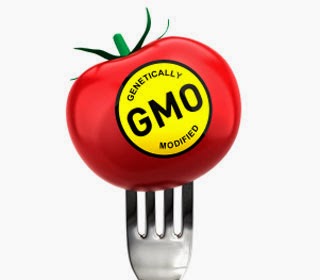
Cornell Study: State-mandated GMO Labels will Drive Up Food Prices

A recent study showing how mandatory labels for foods made with genetically modified ingredients would cost families in one state hundreds of additional dollars each year at the grocery store is yet another reason why Congress shouldn’t delay in passing the bipartisan Safe and Accurate Food Labeling Act, according to farmers and ranchers. 

In making it clear that the Food and Drug Administration is the nation’s foremost authority on the use and labeling of foods containing GM ingredients, the Safe and Accurate Food Labeling Act (H.R. 4432) will provide a federal solution to protect consumers from a confusing patchwork of 50-state GMO labeling policies, and the misinformation and high food costs that would come with them, explained Andrew Walmsley, American Farm Bureau Federation biotech specialist. 

Cornell University researchers earlier this month revealed the results of a study showing that New York’s proposed mandatory GMO labeling bill would cost families an average of $500 per year at the checkout aisle. The findings come on the heels of similar studies in Washington state and California that showed mandatory GMO labels would result in comparable increases in the cost of food.


Proponents of GMO labeling say they’re concerned about the safety of foods made with GM ingredients, despite the fact that GMOs have been used in our food supply for more than 20 years and no study has ever shown them to be unsafe or even different from foods without GMOs.

“There is no uncertainty about the safety of GMO food ingredients,” Walmsley emphasized.  “And as the Cornell study and others have shown, nor is there any doubt mandatory state-by-state labeling requirements will hit consumers’ wallets hard, with those who can least afford it hurting the most. ”

The Cornell study found that a mandatory labeling law like the one proposed would likely cost the state of New York millions of dollars in revenue to implement the new requirements and to account for a loss in farm income. 

The study was conducted by Professor Bill Lesser from Cornell’s Dyson School of Applied Economics and Management to evaluate the added costs that will be passed on to consumers if mandatory labeling becomes law in New York.

The federal Safe and Accurate Food Labeling Act will safeguard farmers and ranchers access to the technology they need to provide consumers with the variety of food options and price points they expect, and need, while ensuring food safety is the leading driver of a national labeling policy.  Specifically, the measure requires FDA to conduct a safety review of all new GMO traits well before they’re available on supermarket shelves and empowers the agency to mandate the labeling of GMO food ingredients if the agency determines there is a health, safety or nutrition issue with a new GMO technology. 

The bill would not prevent companies from voluntarily labeling their products for the absence or presence of GMO ingredients, but would instead direct FDA to establish federal standards for those voluntary labels.