
Robert Harper with Virginia Farm Bureau’s grain division provides this week’s market updates.
#merchandiserminute #grainfuture #virginiafarmbureau
Robert Harper with Virginia Farm Bureau’s grain division provides this week’s market updates.
#merchandiserminute #grainfuture #virginiafarmbureau
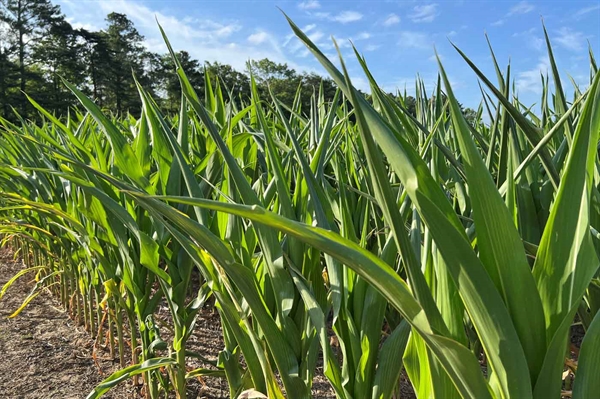
The Virginia Department of Environmental Quality (DEQ), in coordination with the Virginia Drought Monitoring Task Force, has expanded the drought warning advisory to now include 60 counties and cities, and has maintained a drought watch advisory for 32 counties and cities. Due to improving conditions related to recent precipitation, the drought watch advisory previously issued for the Chowan and Southeast Virginia drought evaluation regions has been lifted. All other regions within the Commonwealth remain affected by drought. Continued precipitation deficits in combination with sustained increased temperatures have resulted in rapid intensification of drought throughout the majority of the Commonwealth.
The following regions have been lifted from a drought watch advisory:
A drought warning advisory indicates a significant drought is imminent and is in effect for the following areas:
A drought watch advisory is intended to help Virginians prepare for a potential drought and remains in effect for the following areas:
Several factors have contributed to the lifting of advisories, maintenance of drought watch advisories and the expansion of warning advisories in the affected regions. Precipitation over the past 7–14-day period showed localized heavy rainfall (1.5 – 4.0 inches) along the southeastern portion of the state resulted in improvements in soil moisture, stream flow and groundwater levels. Conversely, precipitation over the central and western part of the Commonwealth has been sparse leading to exceptional dryness within large portions of the Shenandoah, Upper James, New River, Roanoke and Big Sandy drought evaluation regions. Stream flows are currently below the 25th percentile of normal values for seven of the 13 drought evaluation regions with three of these regions currently below the fifth percentile (Big Sandy, Roanoke River and Shenandoah). Groundwater levels for monitoring wells in the Climate Response Network have shown continued declines within the central and western portion of the Commonwealth with nine regions currently below the 25th percentile. Of these, groundwater levels within six drought monitoring regions are currently below the fifth percentile including the Big Sandy, New River, Upper James, Shenandoah, Northern Virginia and York-James.
DEQ is working with local governments, public water works and water users in the affected areas to ensure that conservation and drought response plans and ordinances are followed. Localities and Virginians that are supplied water from the Potomac River should consult the Metropolitan Washington Water Supply and Drought Awareness Response Plan for specific triggers and actions to be taken. All Virginians are encouraged to protect water supplies by minimizing water use, monitor drought conditions and detect and repair leaks.

Homestead Creamery Inc. will invest over $2.5 million to renovate and expand their Franklin County production facility. The company will construct a new ice cream production room and install additional production and refrigeration equipment and freezers, in response to increased customer demand for their premium churned ice cream products. Through this expansion, the company will add two new jobs and purchase an additional $1.9 million of Virginia-produced cream over the next three years.
“I’m grateful to Homestead Creamery for their investment into one of Virginia’s top milk-producing counties and for supporting the growth of Virginia’s dairy industry—the fourth largest commodity in the Commonwealth,” said Gov. Glenn Youngkin.
“Homestead Creamery was the very first recipient of an AFID Facility Grant in 2012. I am extremely pleased that we could partner with the company again with another AFID Facility Grant to support this expansion project,” said Secretary of Agriculture and Forestry Matthew Lohr. “This project builds on the success of a small, Virginia company and positions Homestead for future growth opportunities.”
Founded in 2001 in Burnt Chimney (Franklin County), Homestead Creamery, Inc. utilizes high-quality A2A2 milk from its network of local dairy farms to produce a variety of premium drinkable milk, ice cream, eggnog, and other dairy products that are sold through retail and wholesale networks. The company also operates an on-site retail market and deli featuring a variety of its dairy products along with Virginia’s Finest and Virginia Grown products. Homestead has grown steadily over the years and now sells its dairy products and specialty lemonade in approximately 100 stores across Virginia. Homestead Creamery’s super-premium ice cream is available in twenty-nine flavors across 13 states and Washington D.C.
Homestead Creamery, Inc. Controller Jesse Novak says, “This grant will fuel our vision for impactful building improvements, empowering us to better serve our customers and community. Together, we’re nurturing growth, innovation, and prosperity.”
The Virginia Department of Agriculture and Consumer Services (VDACS) worked with Franklin County to secure this expansion project for the Commonwealth. Youngkin approved a $20,000 grant from the Governor’s Agriculture and Forestry Industries Development Facility Grant program, which Franklin County will match with local funds.
The Agriculture and Forestry Industries Development Facility Grant program supports agribusinesses of all sizes including produce companies, dairy processors, meat and poultry processors, specialty food and beverage manufacturers, greenhouse operations, forest product manufacturers and more. The fund can also support aquaculture projects such as oyster production and nurseries producing native plants for stormwater BMPs.
Interested businesses should contact their local economic development office or the Virginia Department of Agriculture and Consumer Services for more information.
At Virginia Farm Bureau, we believe having engaged farmers who advocate for agriculture is essential to serving our community of farmers effectively. While paying annual dues is important, there are numerous other ways to get involved and help shape the future of farming. By taking an active role, you can ensure agriculture’s interests are being promoted and your voices are heard.
The Farm Bureau’s policy positions start with our farmer members! Each year, farmers can submit policy resolutions through their county Farm Bureau. These are reviewed, discussed and voted on at the county level, by a state resolutions committee, and finally by delegates at the annual state meeting. It’s a true grassroots process that ensures our policies reflect the real needs of those working in agriculture.
Across the state, we host regional legislative meetings where farmer members can share updates on key issues directly to legislators. This allows farmers to have their voices heard on statewide priority matters facing agriculture while connecting with other farmers to discuss shared challenges.
Our annual Legislative Day brings farmers from every corner of the state to Virginia’s capitol for issue discussions and meetings with elected officials. It’s a powerful opportunity to advocate for laws and funding supporting agriculture as we demonstrate Farm Bureau’s strong presence. For urban legislators, it’s also an invaluable chance to share farmer’s stories to help them better understand rural and farm issues.
In addition to annual events, we encourage farmers to build and maintain connections with state and national legislators throughout the year. Reach out regularly, invite them to your farm, attend their local events and be a trusted resource from the agriculture community that they can turn to when major issues arise.
There’s strength in numbers, and Virginia Farm Bureau is only as strong as our active, involved members. Whether through developing policies, attending meetings and events, or reaching out directly to representatives, there are many ways to get involved and make your voice heard as we advocate for the collective interests of agriculture. We’re here to help you amplify that voice!
On January 17, the Supreme Court heard oral arguments in two cases that sought to overturn Chevron deference: Relentless v. Dept. of Commerce and Loper Bright Enterprises v. Raimondo. On June 28, the U.S. Supreme Court struck down Chevron deference, which is a judge-made rule that allows federal agencies—not courts—to decide the meaning of federal statutes. If a statute is ambiguous (or even silent), the agency could to decide what it meant. The doctrine was created by the Supreme Court 40 years ago in a case called Chevron v. Natural Resources Defense Council.
“Farm Bureau applauds the U.S. Supreme Court for recognizing the damage Chevron deference has caused to the federal government’s balance of power. For decades, Congress has passed vague laws and left it to federal agencies and the courts to figure out how to implement them,” said American Farm Bureau Federation (AFBF) president Zippy Duvall. “AFBF has been a leading voice on this issue and has argued on behalf of farmers who are caught in a regulatory back and forth when administrations change the rules based on political priorities instead of relying on the legislative process. We are pleased the Court heard those concerns.”
“The Constitution built a system of checks and balances among three branches of government, to prevent any one branch from becoming too powerful. The legislative branch creates the laws, the executive branch enforces the laws, and the judicial branch interprets the laws. Chevron deference created a super-branch of government. The Supreme Court restored balance with today’s decision.”
Robert Harper with Virginia Farm Bureau’s grain division provides this week’s market updates.
#merchandiserminute #grainfuture #virginiafarmbureau
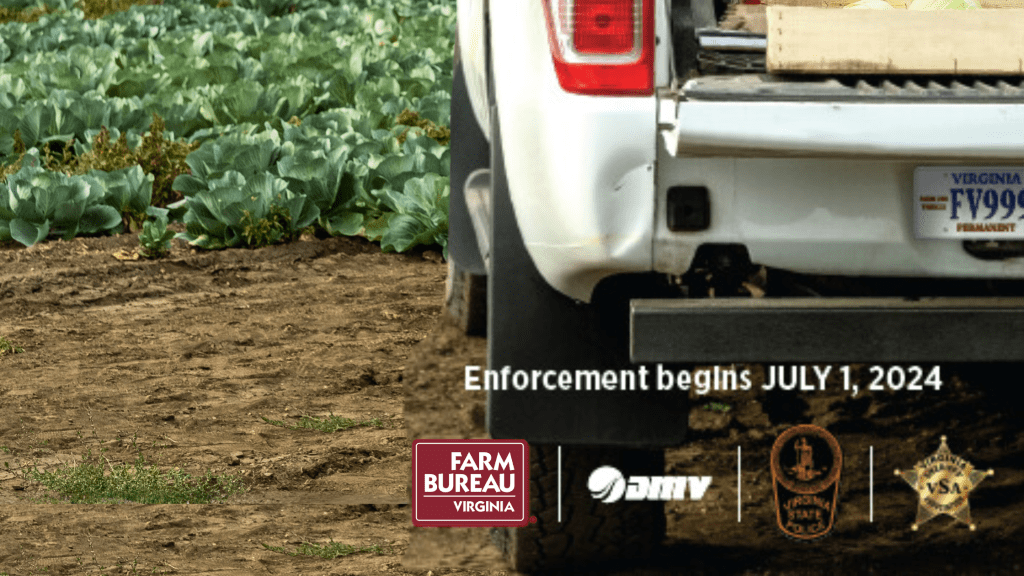
DMV-issued permanent farm use placards are required for unregistered farm use panel trucks, pickup trucks and sport utility vehicles with a gross vehicle weight rating (GVWR) of less than or equal to 7,500 pounds beginning July 1, 2024. DMV issued placards must be displayed in front and rear of vehicles at all times. Trailers, semitrailers, and vehicles with a GVWR of greater than 7,500 pounds must only display the traditional red and white farm use tag if operating under the exemption. This requirement is a result of legislation passed by the 2023 General Assembly to cut down on abuses by the non-farming community and to clarify the program.
Placards are $15 per vehicle and are valid for the vehicle’s lifetime but are not transferable. Vehicles claiming the exemption must be titled. If a title is needed, a separate $15 titling fee will be imposed. Applications for the permanent farm use placard are available at https://tinyurl.com/dmvfarmuse.
No vehicle inspection required. § 46.2-1157 only vehicles requiring inspection are registered vehicles.
Must have liability insurance. § 46.2-684.1. any motor vehicle, trailer, or semi-trailer that is exempt from motor vehicle registration requirements (like farm use vehicles), must be insured under a general liability policy that includes personal injury liability insurance and property damage liability insurance under a motor vehicle insurance policy or an umbrella or excess insurance policy.
Maximum distance allowance of up to 75 miles or to a storage house, packing plant, market, or between your tracts of land. While operating a farm use vehicle, a farmer may stop for a meal or dispose of incidental trash from their or an employee’s home and trash generated on the farm.
Required to have a title. However, if a title is needed, there will be a separate $15 titling fee and no sales or use tax will be imposed if purchasing a permanent placard.
DMV and DMV Select. The application is available at DMV, or online at the DMV’s website. Print and mail-in options are available.
The permanent placards are valid for the lifetime of the vehicle, but are not transferable.
For more information, please see the following documents:

Beanstalk Farms Inc. will build its second indoor farm and distribution facility in the Freedom I-66 Industrial Business Park in Manassas. The project includes 18 new jobs and a capital investment of $4.1 million. Beanstalk Farms expects to produce 2.1 million pounds annually of leafy greens and fresh-cut herbs.
Following the announcement of the expansion, Gov. Youngkin signed House Bill 1429 and Senate Bill 483, which clarifies that the existing classification of farm machinery includes CEA machinery, allowing localities to exempt equipment from personal property taxes, or adopt a reduced tax rate. The same exemption provisions already exist for traditional agricultural operations. The legislation was patroned by Senator Lashrecse Aird, Senate District 13, and Delegate Amy Laufer, House District 55. This is the second year that Youngkin has signed agricultural technology tax exemption legislation. In 2023, legislation was signed to exempt items used in the construction of controlled environment agriculture facilities from sales taxes.
“Congratulations to Beanstalk Farms for their investment in this community and in Virginia. I am pleased that the Commonwealth’s pro-business climate and partnerships continue to be a factor in securing and scaling up projects such as this,” said Gov. Glenn Youngkin. “The legislation I signed today reinforces Virginia’s position as a top state for the controlled environment agriculture industry.”
The Virginia Department of Agriculture and Consumer Services worked with Prince William County, the Prince William County Department of Economic Development and Tourism and the Industrial Development Authority of the County of Prince William to secure this new expansion project. Youngkin approved a $100,000 grant from the Governor’s Agriculture and Forestry Industries Development Fund, which Prince William County will match with local funds.
“This is a great day for the future of controlled environment agriculture in Virginia. We are providing support for Beanstalk Farms expansion, encouraging investment in Prince William County, and creating high paying jobs to this area through the Governor’s Agriculture and Forestry Industries Development Fund grant award. In addition, Governor Youngkin is helping to spur growth in this industry by expanding tax relief through the approval of the agricultural sales tax exemption legislation last year and his signature today on the tangible personal property tax relief legislation,” said Secretary of Agriculture and Forestry Matthew Lohr.

CattlePulse is a monthly update from Virginia Farm Bureau on the Virginia feeder cattle markets, the national trends that affect them and stories of cattle producers across the commonwealth.
The host, Virginia Farm Bureau’s Elijah Griles, covers economics, market trends and stories about Virginia’s cattle industry from across the Commonwealth. CattlePulse is the home for regular market updates about Virginia feeder cattle sales, timely and relevant production advancements, and interviews with producers and industry professionals.
This month’s episode details national beef demand expectations as summer grilling season arrives, regional feeder steer price comparisons, and another new Virginia monthly average price record. Do you have questions, comments or suggestions for Elijah? Contact us at 804-290-1713 or elijah.griles@vafb.com.

Robert Harper with Virginia Farm Bureau’s grain division provides this week’s market updates.
#merchandiserminute #grainfutures #virginiafarmbureau
 Plows and Politics