 SB 1195, currently before the Virginia General Assembly, would provide an important, competitive opportunity for large-scale Virginia produce farms that market fruits and vegetables across state lines. Not all Virginia produce farms fall under this regulation.
The bill authorizes the Virginia Department of Agriculture and Consumer Services to carry out the federal Produce Safety Rule, which sets minimum standards for the safe growing and handling of fruits and vegetables for interstate commerce. If SB 1195 passes in the state legislature, Virginia farmers would not have to rely solely on the U.S. Food and Drug Administration for education, assistance and compliance. To date 41 other states have entered into cooperative agreements to carry out specifics of the rule, including all but one of Virginia’s neighbor states.
The rule is part of the 2011 federal Food Safety Modernization Act. In the event that the act is repealed, the Produce Safety Rule would no longer apply to the nation’s or Virginia’s farms.
If it stands, however, SB 1195 will allow Virginia farmers to have VDACS as a resource close to home for the 400 Virginia operations that will be covered. For that reason, Virginia Farm Bureau Federation encourages state legislators to support this bill.
Please email members of the House Agriculture Committee and ask them to support this bill on behalf of Virginia’s farmers. Click here: app.muster.com/take-action/u6n9hY81X4/
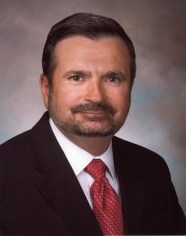
Wayne F. Pryor, President
Virginia Farm Bureau Federation
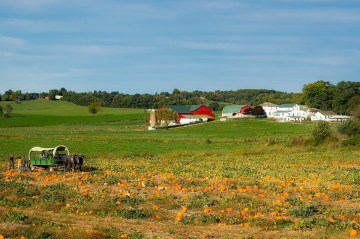 The 2017 Virginia Agritourism Conference will be held April 18-20 in Richmond.
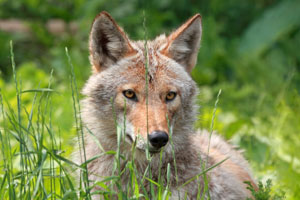 Chuck Shorter has been fighting to keep coyotes from killing his livestock since at least 1973, “and I’m still fighting them,” he said.
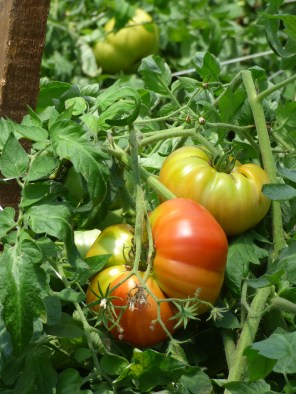 Governor Terry McAuliffe today announced that groups seeking to improve the competitiveness of specialty crops in Virginia are eligible to submit proposals for grants up to $60,000 per project. The Virginia Department of Agriculture and Consumer Services (VDACS) anticipates administering nearly $390,000 in funds for the development of specialty crops. The deadline for submitting applications is March 13, 2017.
 Virginia farmers and forest landowners can apply for assistance to protect the health and productivity of their land under the federal Environmental Quality Incentives Program.
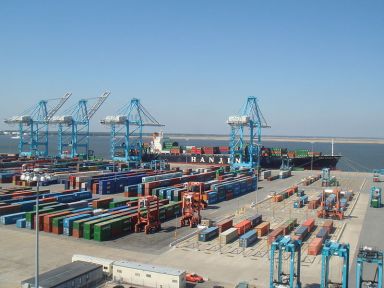 Governor Terry McAuliffe will co-host the 9th Annual Governor’s Conference on Agricultural Trade on March 6-7, 2017 at the Richmond Marriott Hotel. The two-day conference is co-hosted by Virginia Tech’s Department of Agricultural and Applied Economics, the Virginia Department of Agriculture and Consumer Services (VDACS), Virginia Farm Bureau Federation, and the Port of Virginia (POV). The event will bring together producers, agribusinesses, entrepreneurs, exporters, foreign ambassadors and government ministers, land-grant university leadership, state and federal government officials, and others to discuss challenges and opportunities for global agricultural exports.
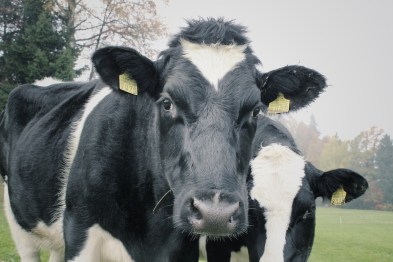 Dairy farmers have been taking it on the chin with falling milk prices for the past year or more. USDA’s Margin Protection Program (MPP), and USDA’s Livestock Gross Margin (LGM) Insurance for Dairy Cattle offer protection on the difference between a milk price and a feed ration consisting of corn, soybean meal, and for MPP, alfalfa hay. Despite significantly lower milk prices, dairy producer premiums and fees have far exceeded any distributed program benefits.
 If it hadn’t been for state cost-share money, Ronnie Nuckols said, he wouldn’t have been able to install 14 fences to keep his cattle out of streams.
 Farm Bureau needs your help in contacting members of the House Agriculture Committee. Farm Bureau supports amending HB2030 to regulate production and sale of raw milk utilizing the principles above and deleting language regarding sale of uninspected meat and reinserting the language regarding other food products. Without such amendments, we oppose the bill.
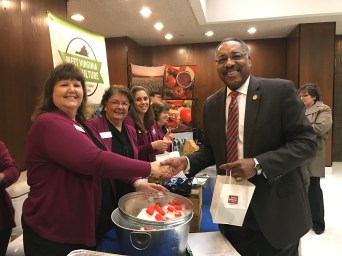 Approximately 120 farmers from across the state attended Farm Bureau’s annual Legislative Day at the Capitol on Wednesday.
