Ag Items Included in Governor’s Budget Proposal

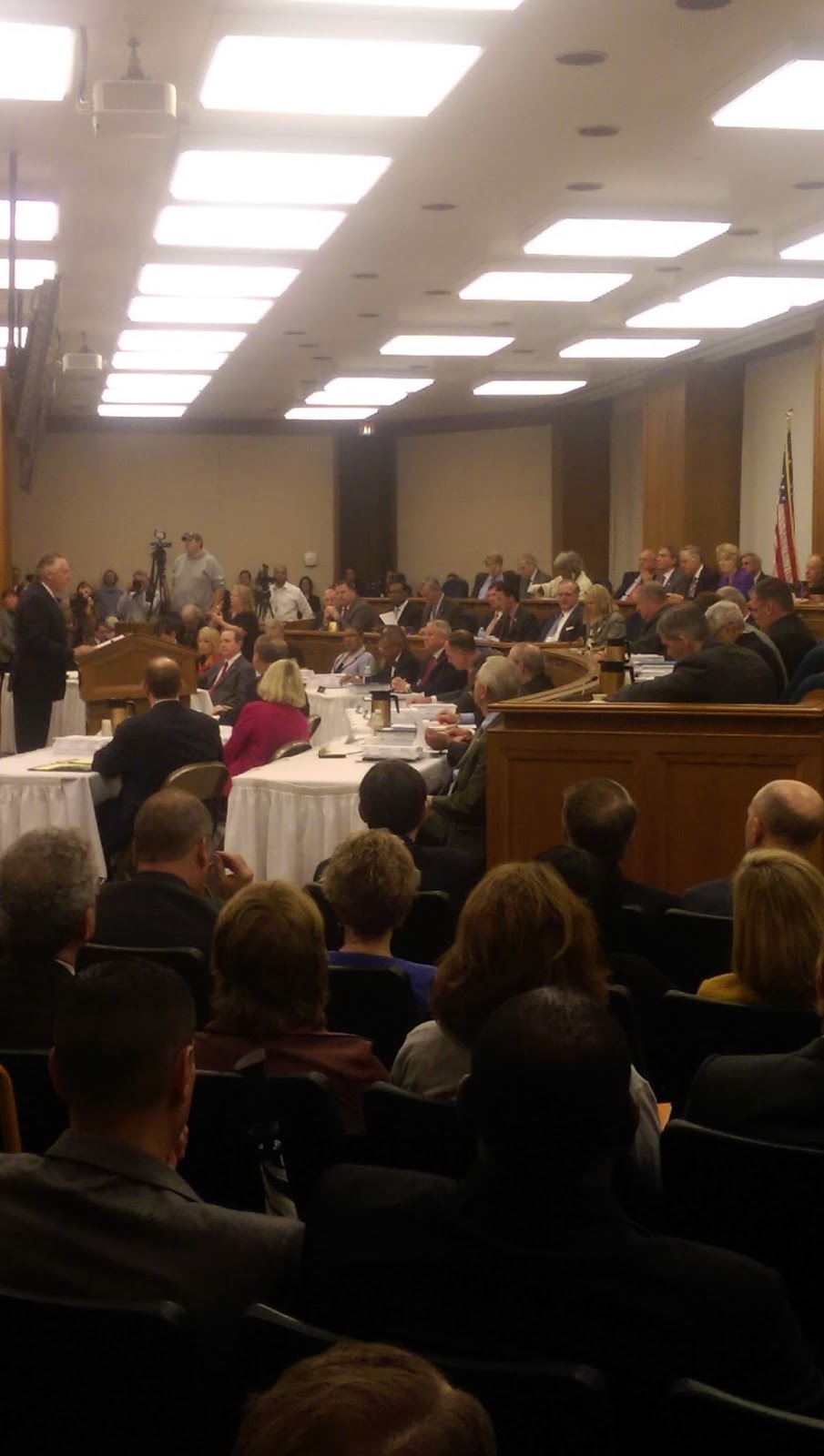
Governor McAuliffe outlined his $109 billion budget proposal yesterday. Below are the agriculture items he included: 


Agriculture Best Management Practices and Soil and Water Conservation Districts
Governor McAuliffe dedicated the entire amount of the surplus in the Water Quality Improvement Fund to nonpoint source pollution projects.  In addition, he maintained the funding from the fee on the recordation tax.  The following is the breakdown:
$34,798,198 to Agriculture Best Management Practices Cost Share
$19,606,641 to address the backlog in the SL6 practice that farmers signed up for prior to July 1, 2015
$6,841,091 for operational funding for Soil and Water Conservation Districts
$7,417,751 for technical assistance for Soil and Water Conservation Districts
While this is not the full amount of the need or the backlog, it will represents historic funding levels for agriculture best management practices cost share program and a significant investment in the backlog for the SL6 practice. We are still evaluating whether we will be seeking a patron to carry a budget amendment to increase the funding further.  

Virginia Department of Agriculture and Consumer Services Weights and Measures
We were disappointed that the Governor did not increase the amount of funding for the weights and measures program.  The program will have $2.8 million.  We will be seeking a patron from the House Appropriations and Senate Finance Committees to carry a budget amendment to increase the funding.
VT Livestock and Poultry Facilities Phase 1
The Governor announced a week ago his bond package that he plans to introduce in the General Assembly.  This includes the $22.5 million for this project.  We will be supporting this project being included in any bonding package that moves forward in the General Assembly.
Other Budget Items of Interest
Virginia Department of Agriculture and Consumer Services
Meat and Poultry Inspection
Matches federal funding in order to provide two inspector positions and one compliance specialist.  This is an increase of $104,255 in state funding to match additional federal funding.
Agriculture and Forestry Industries Development Fund
Provides additional $1 million available to bring the total available to $2 million.  In addition, funding is provided to hire two marketing specialists for this grant program.
Virginia Grown Foods Ambassador and Grow Virginia’s Organic Food Production Specialist
$243,696 to establish a Virginia Grown Food Ambassador and a Grow Virginia’s organic food production specialist to promote Virginia grown products.  These positions will work to raise the profile of Virginia agricultural products and foods and to increase use in restaurants, schools and institutions as well as support the “Bridging the Nutritional Divide Initiative.
Virginia Farmland Preservation Fund
Increases the amount available to $2 million to compensate landowners who voluntarily place an agricultural conservation easement on their property.
National Accreditation for Regional Animal Health Laboratories
Provides $250,138 for the department to pursue national accreditation of the regional animal health laboratories. This should help farmers with their marketing agreements that include animal health components.
Transferring Responsibility of Virginia’s federal food programs in Schools and Other Places to VDACS
Requires Department of Education, Health and Agriculture and Consumer Services to develop a plan to transfer federally funded feeding services governed by the Commonwealth to one agency.  We are seeking additional information on this initiative to understand the benefits of such a consolidation.
Virginia Department of Forestry
Reforestation of Timberlands (RT) Program
Fully funds the RT program to match the industry severance tax.
 Fire Suppression Equipment
Provides $1.076 million to replace fire dozers and transports used in fire suppression activities and additional support vehicles utilized by first responders who are also firefighters.

GAO Legal Opinion: EPA Violated Law Regarding WOTUS

According to a legal opinion issued Monday by the U.S. Government Accountability Office, the Environmental Protection Agency broke the law with its social media and grassroots lobbying campaign advocating for its own Waters of the U.S. rule.

“It’s clear from this report that EPA orchestrated this matter in a biased fashion,” said AFBF President Bob Stallman in a statement. “Now it’s up to Congress to clean up this mess by including a corrective measure in the omnibus bill now taking shape on Capitol Hill.

“Courts already have declared serious doubts about the legal authority for the rule. Now that it has become clear that the agency used illegal tactics to manufacture ill-informed support for the rule, Congress should act immediately to prohibit implementation of this rule, which is the product of an unlawful and misguided process.

“We applaud U.S. Senate Environment and Public Works Chairman Jim Inhofe for asking GAO to conduct this investigation. The GAO findings vindicate those, like the American Farm Bureau Federation, who have claimed all along that EPA’s tactics advocating for this rule stepped past the bounds of proper agency rulemaking. EPA was focused only on promoting the rule rather than hearing good-faith concerns from a wide cross-section of Americans. The public deserves better when important matters of public policy are at stake.”

Members of Congress, States and Business Urge Supreme Court to Review EPA’s Latest Clean Water Act Overreach

A crush of supporters yesterday filed friend-of-the-court briefs, joining the American Farm Bureau Federation in urging the U.S. Supreme Court to hear arguments on the Environmental Protection Agency’s plan to micromanage state land-use and development decisions under the guise of the Chesapeake Bay water quality “blueprint.”
Filers included 92 members of Congress, 22 states, forestry groups represented by the Pacific Legal Foundation, and a broad cross-section of the U.S. economy represented by the U.S. Chamber of Commerce, the National Association of Manufacturers and the National Federation of Independent Business.
“The fact that so many voices are being raised in support of Supreme Court review shows the broad and severe threat that EPA’s action here poses nationwide,” AFBF President Bob Stallman said. “EPA has asserted powers that do not appear in any law written by Congress, and it has done so in the context of an iconic national treasure, hoping that will inoculate its power grab in the courts. We have faith that the nation’s highest court will see this for what it is and hold EPA accountable to stay within its statutory authority.”

Despite aggressive new commitments and water quality achievements by the six states in the Bay watershed in the mid-2000s, the EPA asserted federal control over the Chesapeake Bay recovery in its 2010 “blueprint.” The new federal plan effectively gives EPA the ability to function as a super-zoning authority over local and state governments—dictating where homes can be built, where land can be farmed, and where commercial development can occur.
The plan will impose tens of billions of dollars in direct costs—with unknown economic impacts on local communities and economies. It also denies state and local governments and businesses the flexibility to adapt to new circumstances, instead locking in limits that can quickly become outdated but can only be revised by EPA. The lower courts upheld EPA’s blueprint on the theory that it furthers the water quality goals of the Clean Water Act—despite the absence of words in the statute authorizing such federal action. A significant issue presented for the Supreme Court is the degree to which courts should defer to broad agency interpretations of their statutory power. 
“The broad support for the Farm Bureau petition shows that deep concerns about the Bay blueprint go far beyond agriculture and far beyond the Bay region,” said AFBF General Counsel Ellen Steen. “Members of Congress, states and business groups recognize that this illegal framework will be imposed throughout the country unless the Court intervenes. Given the enormous social and economic consequences, not to mention the grave questions about federalism and deference to agency overreaching, this is a case that cries out for Supreme Court review.”


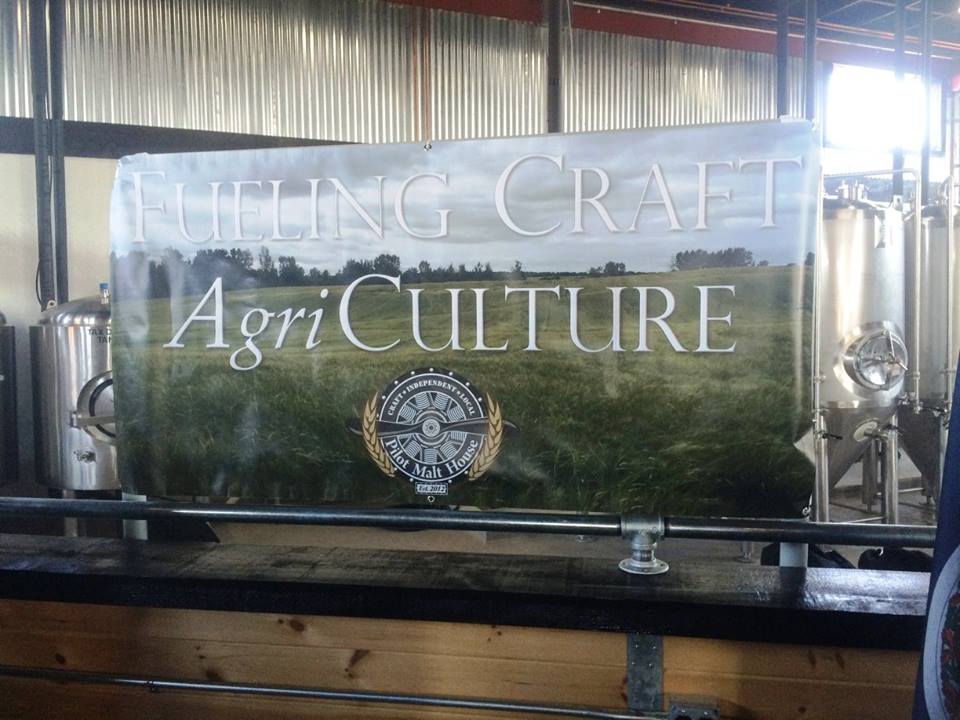
Governor McAuliffe Announces New Craft Malting Operation, Jobs in Loudoun County

Photo credit: Virginia Grain Producers Association
Governor Terry McAuliffe has announced that Pilot Malt House Virginia, LLC (dba Pilot Malt House) will locate its second artisan craft malting operation in Loudoun County.  The company will invest nearly $1 million to construct and operate the facility and create seven new jobs.  In addition, Pilot Malt House will purchase more than 2 million pounds of Virginia-grown barley, wheat and rye over the next three years.  The Commonwealth secured the project during the 2015 Craft Brewers Convention, where Virginia had a significant presence, in Portland, Oregon, this past April.
Speaking about the announcement, Governor McAuliffe stated, “This is a significant win for the Commonwealth as it fills a need for current and future craft brewers and builds on my administration’s efforts to make Virginia the East Coast leader in the fast-growing craft beer industry.  The attraction of Pilot Malt House to Loudoun County represents another step in strengthening Virginia’s agricultural economy and building the infrastructure for our booming craft beverage industry.  This project, with its capital investment, new jobs being created, and commitment to sourcing locally, represents another economic win for this region.  My administration is committed to fully using our diverse agriculture industry, one of the Commonwealth’s greatest assets, to help build the new Virginia economy.”

Founded in Michigan in 2011, Pilot Malt House is an artisan malt house that uses locally grown grains and a mix of traditional and modern processing techniques to produce a variety of base, specialty, and custom malts.  The company will work directly with Virginia producers to source more than 2 million pounds of Virginia grains – 75% of total grain purchases over the next three years – creating new markets for Virginia barley, wheat and rye.  Pilot Malt House currently supplies malt, an important ingredient in beer, to several Michigan and national breweries.  The company plans to work with Virginia’s craft brewers, home brewers, and distilleries to sell its distinct and quality malts.
“This unique facility in Loudoun County represents another step forward for Virginia as we cement our reputation as key players in the nation’s fast-growing craft beer industry, which saw sales increase by more than 22 percent from 2013 to 2014,” said Virginia Secretary of Agriculture and Forestry Todd Haymore.  “Pilot Malt House’s investment also enhances the Commonwealth’s position in the industry, which has an economic impact of nearly $625 million, by providing a new market for Virginia’s grain producers and a new supply of locally grown and processed malt for Virginia’s craft beverage industry.  Craft beer is contributing positively to the economies of big cities and rural communities across the Commonwealth, adding to the Governor’s call to build a New Virginia Economy.”
Erik May, Owner of Pilot Malt House, added, “Pilot Malt House is excited for the opportunity to expand to Loudoun County, Virginia.  The Governor of Virginia has made a commitment to agricultural businesses, and we couldn’t be happier to be expanding our Michigan operation into Northern Virginia.  The Loudoun County team has been a dream to work with, and we are appreciative of their hard work and dedication to expanding Virginia agribusiness.  Pilot Malt House, since its inception, has existed to connect farms to breweries and distilleries.  We will provide the best quality malt to Virginia breweries and distilleries made from Virginia-grown grain made by Virginia-raised folks in a truly Virginia facility.”
Pilot Malt House’s new processing capacity will enable existing Virginia grain producers to grow their production and encourage new producers to enter the market by filling a gap in the supply chain.  In addition to supporting current and prospective grain producers, the facility will benefit Virginia’s craft beer industry by increasing the amount of quality malt produced in the state, allowing brewers to capitalize on the terroir of Virginia.
“I am very appreciative for the major investment that Pilot Malt House is making in Loudoun, almost $1 million in their building and equipment and more than $300,000 buying Virginia-grown grains.  Loudoun has a vital and growing rural economy, and Pilot Malt House fills an important role and is a welcome resource for our farms and businesses,” said Loudoun County Board of Supervisors Chairman Scott K. York.
“Pilot Malt House will close the missing link in Loudoun’s farm brewery industry.  We will now have the ability to malt locally-grown grain right here in our county.  Pilot Malt House will allow more investment to stay in Loudoun and will ensure that Virginia’s craft beer industry is heavily rooted in Loudoun’s rural economy,” said Loudoun Economic Development Director Buddy Rizer.
The Commonwealth is partnering with Loudoun County and Pilot Malt House on this project through the Governor’s Agriculture and Forestry Industries Development (AFID) Fund, which is administered by the Virginia Department of Agriculture and Consumer Services.  Governor McAuliffe approved a $19,500 grant from the AFID Fund to assist with the project, which Loudoun County is matching with local grant funds.

Governor’s Bond Package Includes VT Livestock, Poultry Research Facilities

Virginia’s agriculture community had reason for a pre-holiday celebration when Gov. Terry McAuliffe announced a $2.43 billion bond package on Dec. 9 that will be part of his Fiscal Year 2017-2018 budget.

The package supports capital projects to enhance the state’s technological and economic development infrastructure. It includes first-phase funding for livestock and poultry research facilities at Virginia Tech—a project of considerable interest to Virginia Farm Bureau Federation.

“This is great news for Virginia agriculture,” said Martha Moore, VFBF vice president of governmental relations. “The livestock and poultry industries garner $1.8 billion in cash receipts annually. These research facilities at Virginia Tech help to support livestock and poultry farmers, processors and auxiliary businesses. They also put Virginia farmers at a more competitive advantage in the domestic and global marketplaces.”

The current animal and poultry research facilities at Virginia Tech are more than 50 years old. A 2012 report from the U.S. Department of Agriculture’s National Institute of Food and Agriculture noted that almost every structure “requires repair or renovation. While some of these facilities have received minor repairs and upgrades … many are in much need of further repair, if not a complete overhaul.”

The Animal Sciences Department maintains a 200-ewe sheep flock, a 150-cow beef herd, a 40-sow swine herd, a five-building turkey center with facilities for more than 2,000 young and 1,500 adult chickens, and a herd of 75 to 120 horses for teaching and research activities on campus.

The facilities for Phase 1 of the desired upgrade include 126,000 square feet for a new swine breeding facility, a new swine farrowing and finishing facility, a new equine barn, a new beef nutrition and physiology research laboratory, a new poultry grow-out facility, a new turkey production building, major renovations to the large animal judging pavilion, and numerous feed and equipment buildings.

“These buildings are not like the facilities you would build on a farm,” Moore noted. “They have to meet state building specifications with a higher building life expectancy, and they must comply with laws such as the Americans with Disabilities Act. To conduct funded research expected by the agriculture industry and the government, they must have accreditation from the Association for Assessment and Accreditation of Laboratory Animal Care.”

When McAuliffe spoke Dec. 3 at the VFBF Annual Convention in Norfolk, he told farmers that his proposed budget will be an aggressive one for agriculture, adding, “I think everybody will be happy.”

Moore said his Dec. 9 announcement “is a big step in making farmers happy. While there are a few other critical items that farmers want funded, they are pleased to see that he recognizes the value of this project in growing opportunities for agriculture and strengthening Virginia’s economy.”