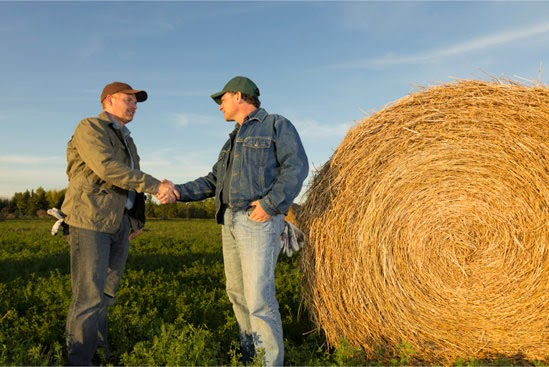
From the Field is a bi-monthly column writtenby Mark Campbell, Farm Bureau Field Services Director for the Central District. He writes about Farm Bureau member benefits and County Farm Bureau activities.
It has been a while since my last blog post of “From the Field.” Some of the critical and urgent Farm Bureau duties, activities, and events of the past few months plus my father’s death in late November 2014 simply crowded out any time for the bi weekly postings. I enjoyed bringing stories and educational information about Farm Bureau and/or agriculture to you, and I look forward to getting back to it.
First, I have to comment on the people in Farm Bureau and the agriculture and rural communities. One of the old slogans that Virginia Farm Bureau (VFB) had when I started working for VFB was “Helping you is what we do best”. While I’m not sure why that slogan went by the way side, I see it exemplified on a continual basis. Whether it be some of the insurance staff or someone in one of the federation departments, they have the mentality to serve and help the member or fellow employee.
When my father passed away, several of my co-workers and Farm Bureau volunteers offered help on the farm, some from a couple of counties away. A farming neighbor helped load up my hay feeder this winter when my tractor was in the repair shop. Another neighbor split some firewood for me. I can’t say for sure that this outpouring of generosity doesn’t happen in the city or suburbs, but it is prevalent in small rural communities. The patchwork of small rural communities with agriculture woven in is one of our country’s greatest assets and qualities.
When my father passed away, several of my co-workers and Farm Bureau volunteers offered help on the farm, some from a couple of counties away. A farming neighbor helped load up my hay feeder this winter when my tractor was in the repair shop. Another neighbor split some firewood for me. I can’t say for sure that this outpouring of generosity doesn’t happen in the city or suburbs, but it is prevalent in small rural communities. The patchwork of small rural communities with agriculture woven in is one of our country’s greatest assets and qualities.
During the past few months, the Membership and Field Services has been diligently working on making your membership in Farm Bureau the best value that it can be. Over 300 recommendations for new vendors to the Member Deals Plus program have been received from employees and volunteers, and we hope that many of them will participate. This will increase the number of discounts available to you. The GM discount on new vehicles continues to be a success story with many members utilizing the program.
The Grainger discount also offers savings to members. Farm Bureau members who register on Grainger.com using the Farm Bureau account code get at least a 10% discount and free shipping on all on line orders. The discount can be much higher on many items. Members can also get discounts at the store if you have an account set up. I see a lot of potential growth in the Grainger program if more farmers use it.
We also have a discount program with Case-IH and Polaris with discounts ranging from $300 to $500. For GM, Case-IH, and Polaris, the member must apply the discount at the time of purchase. It is not valid after the purchase. Farm Bureau offers many other discounts, which you can learn more about by visiting www.vafarmbureau.orgor a county Farm Bureau office.
A Farm Bureau membership is one of the best investments that you can make. For $40 per year, you get legislative representation on your issues in Washington, D.C and Richmond, savings of more than $40 by utilizing our programs, and one on one personal service in your county. Plus your membership helps support and strengthen agriculture and rural communities.
Until next time,
Mark
 Plows and Politics