
Click here for this week’s Commodity Comments, a weekly newsletter designed to provide agricultural producers with an analysis of current market trends by Farm Bureau Market Analyst Jonah Bowles.
Click here for this week’s Commodity Comments, a weekly newsletter designed to provide agricultural producers with an analysis of current market trends by Farm Bureau Market Analyst Jonah Bowles.
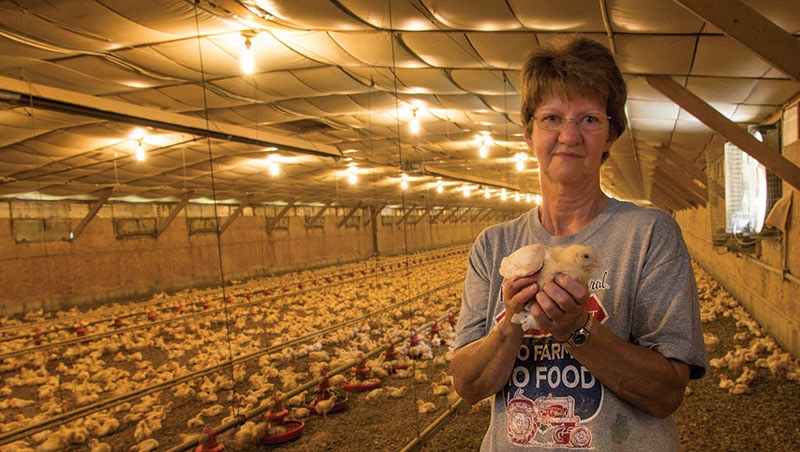
The U.S. Environmental Protection Agency’s decision not to appeal a key federal ruling in favor of West Virginia farmer Lois Alt highlights the cynicism that drives the agency’s water agenda, the American Farm Bureau Federation said on Sept. 22.
The U.S. Court for the Northern District of West Virginia ruled against the EPA and in favor of Alt in October 2013, rejecting the agency’s contention that the Clean Water Act regulates ordinary stormwater runoff from non-production areas of large livestock or poultry farms.
Since no federal court had ever addressed the question of stormwater runoff from farms such as Alt’s, the lower court’s ruling carries implications for tens of thousands of poultry and livestock farms nationwide. An appellate court decision upholding that ruling would make it even harder for the EPA to persist in imposing wide-scale federal permitting requirements on large animal farms. The agency’s voluntary dismissal of its appeal signals a desire to avoid a likely loss.
“EPA knows its effort to regulate perfectly well-run farms cannot withstand legal scrutiny, and the agency doesn’t quite know how to deal with that,” said AFBF President Bob Stallman. “Apparently the agency would rather move on and continue pursuing its regulatory agenda farm to farm but not defend it in court.”
Both AFBF and the West Virginia Farm Bureau joined the suit on the side of Alt.
Stallman called the agency’s move “cynical and cowardly” and said Alt “should be proud of her environmental stewardship and her courage in standing up to EPA. She won an important court victory that will benefit many others, and we are proud to have supported her efforts.”
The EPA’s dispute with Alt began when the agency issued an order threatening her with $37,500 in fines per day unless she applied for a Clean Water Act permit for stormwater runoff from a non-production area of her farm. The agency cited no deficiencies in Alt’s farming practices but contended that stormwater containing even miniscule amounts of manure triggered Clean Water Act liability and permitting obligations.
Alt responded with a lawsuit challenging the order. Her complaint cited the long-standing Clean Water Act exemption of “agricultural stormwater discharges.” The EPA first attempted to back away from the fight about six months after Alt filed suit and just weeks before briefing was to begin. The agency withdrew its order and asked the court to dismiss the suit. The court refused, finding that EPA had not changed its legal position and that the Farm Bureau groups had an ongoing interest in resolving the validity of that position.
 |
| Travis Hill |
 |
| Carrie Hileman Chenery |
Carrie grew up on a family farm in Lexington, Virginia, and received her B.S. in Environmental Policy & Planning and Agricultural & Applied Economics from Virginia Tech. She also served as Governor’s Fellow in the natural resources secretariat under Governor Kaine and is a graduate of the 2013 Sorensen Institute for Political Leadership Political Leaders Program at the University of Virginia.
 |
| Martha Moore V.P. of Governmental Relations |
 |
| Andrew Smith Senior Assistant Director |
A majority of Virginia’s forestland is privately own, much in conjunction with farms. The Virginia Forest Landowner Education Program (VFLEP), develops a newsletter to inform landowners of information and opportunities to best manage their forest resources. We plan to begin sharing this newsletter as it’s available on Plows and Politics. You can read the latest issue here. September 2014 issue


Click here for this week’s Commodity Comments, a weekly newsletter designed to provide agricultural producers with an analysis of current market trends by Farm Bureau Market Analyst Jonah Bowles.
Note: There will be no Commodity Comments for the next two weeks.

Last week Gov. Terry McAuliffe helped kick off a campaign to encourage farmers to enroll in Virginia’s new Resource Management Plan program. Speaking at the farm of one of the first registrants, dairy farmer Gerald Garber, McAuliffe said the RMP program is a major achievement to assure the future of Virginia’s largest industry.
“This is a voluntary program, but if you look at what Gerald has done here, he’s protecting our waterways, which is also protecting his herds,” McAuliffe said. “So this is a commonsense step that we need to take here to be a leader, to make sure we have sustainability for future farmers, and to make sure that we’re encouraging our young children to go into farming.”
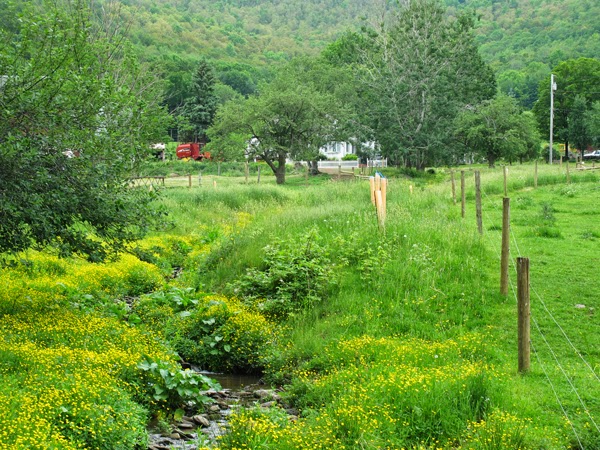
Enrollment is open for the Resource Management Plan program, which allows farmers and landowners to work with a private conservation consultant to document conservation improvements already in place on their farms and plan future improvements. Once a farmer’s RMP is approved, he or she is considered to be in compliance with state conservation regulations for the next nine years. The plans will feature steps farmers can take to reduce soil erosion and runoff, like intensive fertilizer management, fencing cattle out of streams, maintaining buffer strips between farmland and waterways, and using no-till cultivation. Many of those steps also can improve farm profitability, McAuliffe noted.
“This is important for our environment, it’s important for our bay, it’s important for our rivers in order to continue with tourism, which is our second-biggest industry. So it all goes hand-in-hand,” he said.
Every farm in Virginia is different, “and the RMP program gives those producers that want to use that tool a way that they can use those best management practices on their farm. And also, more importantly, verify what they have done and what they’re doing,” said Steve Hopkins, a Louisa County Farm Bureau member and president of the Virginia Cattlemen’s Association.
Being able to track farm conservation practices is important, said Scott Sink, vice president of the Virginia Farm Bureau Federation. “That’s one thing we in the agriculture industry have been saying for years, that a lot of best management practices that farmers have been doing just have not been counted in the system.”
The voluntary RMP program was developed with input from Virginia’s farm community. Virginia is the fifth state in the nation to have such an accountability system and the first state in the Chesapeake Bay watershed to create one. Funding to help producers implement RMPs is available through the Virginia agricultural cost-share program. Farmers can learn more about the RMP program from their local soil and water conservation district staff and the Virginia Department of Conservation and Recreation’s website at dcr.virginia.gov
A total of $160,000 in Virginia Agricultural Cost-Share funding is available to farmers statewide to pay for the development of RMPs. The rate for plan development is $10 per acre with a maximum of $6,500 per plan. Multiple plans can be developed for one farming operation. Details are available from local soil and water conservation district offices.
Additionally, the Virginia Department of Conservation and Recreation has issued a $240,000 request for proposals for RMPs to be developed in the Chesapeake Bay region of the state. Proposals that include the number of plans developers will write are due to DCR by Oct. 1. Awards will be announced on Dec. 1, and plans should be completed by Oct. 15, 2015.
Developers do not have to be certified to submit a proposal, but all plans must be developed by certified developers. DCR is currently accepting applications for certification. Individuals, corporations and businesses are eligible to submit proposals.
A copy of the RFP is available online at dcr.virginia.gov/soil_and_water/rmp.shtml.
 Click here for this week’s Commodity Comments, a weekly newsletter designed to provide agricultural producers with an analysis of current market trends by Farm Bureau Market Analyst Jonah Bowles.
 Plows and Politics