Cantor Visits Virginia Farm Bureau Board, Talks Farm Bill and EPA

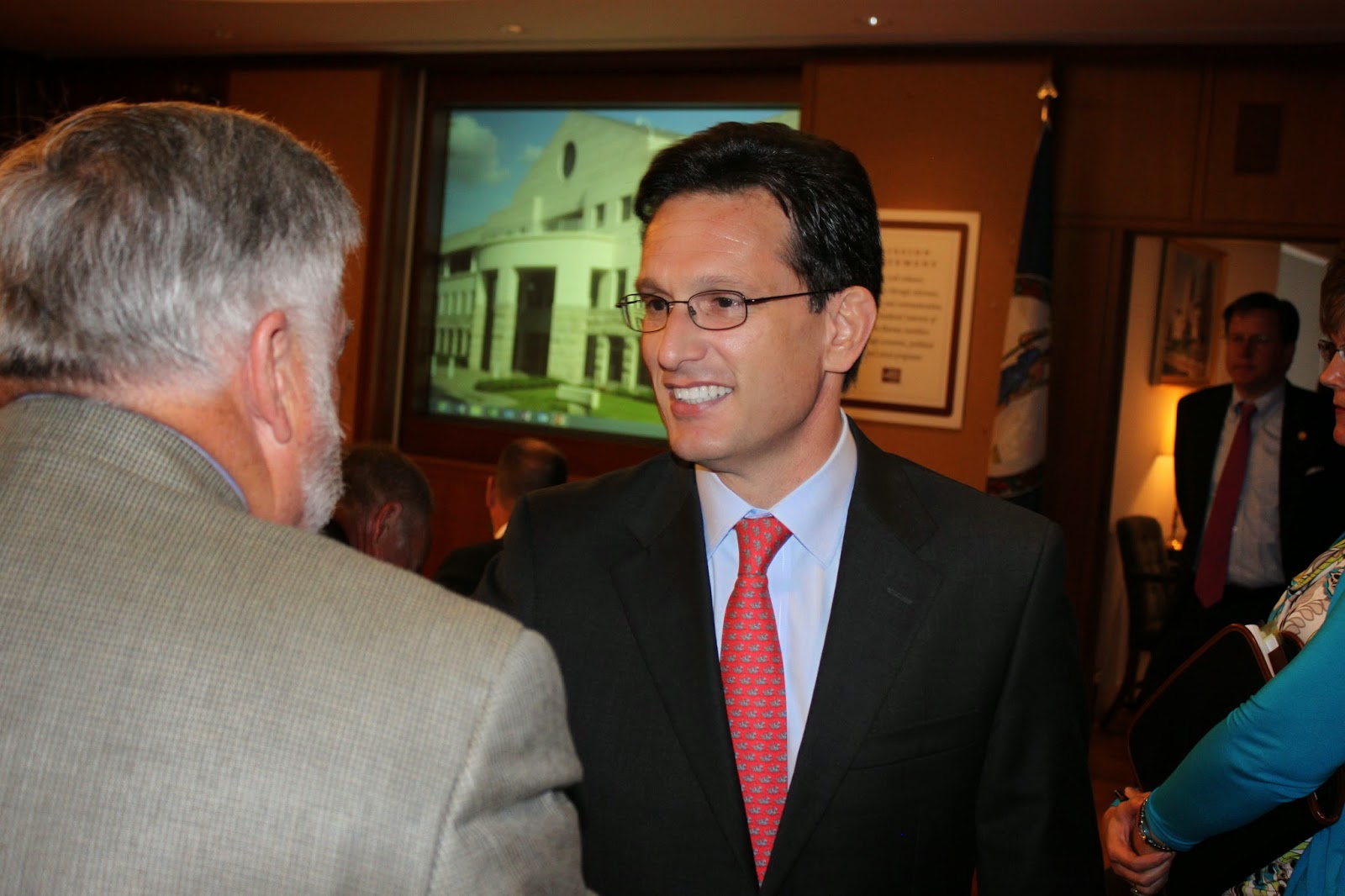
U.S. Rep. Eric Cantor, R-7th, told members of the Virginia Farm Bureau Federation board Wednesday that an “unholy marriage between food stamps and farm policy” complicated Congress’ ability to pass the 2014 Farm Bill sooner than it did.

“The most difficult challenge of that bill is that 83 percent of it is the (federal) nutrition program” and the remaining 17 percent is related to production agriculture, Cantor noted at the board’s May 28 meeting. As specifics of the bill are finalized this summer in Washington, “I hope it gets a little easier, but it was pretty rough.”

Also complicating many pieces of legislation before Congress, he noted, is “that very unique but difficult balance of power” between a Republican-controlled House and a Democrat-controlled Senate and Democratic administration. “That balance hasn’t been that way since 1859,” and it has been marked by “very many colliding views.”

One of those collisions was a stumbling block for the farm bill, Cantor noted, explaining that, with regard to the bill’s nutrition elements, “there is a real commitment in the House to stop piling up the debt every single year and leaving it to our kids.” Since 2008, he said, Americans’ use of federal nutrition assistance has doubled, and Republicans wanted to emulate welfare-to-work policies implemented in the 1990s and establish accountability among assistance recipients.

Cantor acknowledged that the current U.S. economy is a concern for farmers and many other business operators. “It’s not easy” to remedy a downturn quickly, he said, but at times “it seems as if Washington is doing everything it possibly can to make it more difficult.”

He cited the U.S. Environmental Protection Agency’s proposed “Waters of the U.S.” rule as an example. The rule would put significantly more water-use decisions previously made by states under EPA control and put significantly more control over bodies of water on farms nationwide.

The rule would create more risk for smaller farms and other businesses, he said, “and no one’s going to take that risk if the price of that risk is too high.”

VFBF and the American Farm Bureau Federation are participating in a campaign urging the EPA to “Ditch the Rule.” Go to: www.ditchtherule.fb.orgfor details. 

Cornell Study: State-mandated GMO Labels will Drive Up Food Prices

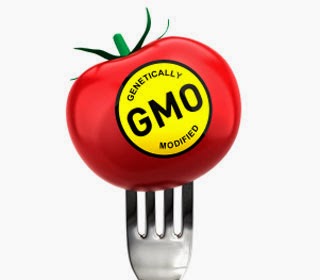
A recent study showing how mandatory labels for foods made with genetically modified ingredients would cost families in one state hundreds of additional dollars each year at the grocery store is yet another reason why Congress shouldn’t delay in passing the bipartisan Safe and Accurate Food Labeling Act, according to farmers and ranchers. 

In making it clear that the Food and Drug Administration is the nation’s foremost authority on the use and labeling of foods containing GM ingredients, the Safe and Accurate Food Labeling Act (H.R. 4432) will provide a federal solution to protect consumers from a confusing patchwork of 50-state GMO labeling policies, and the misinformation and high food costs that would come with them, explained Andrew Walmsley, American Farm Bureau Federation biotech specialist. 

Cornell University researchers earlier this month revealed the results of a study showing that New York’s proposed mandatory GMO labeling bill would cost families an average of $500 per year at the checkout aisle. The findings come on the heels of similar studies in Washington state and California that showed mandatory GMO labels would result in comparable increases in the cost of food.


Proponents of GMO labeling say they’re concerned about the safety of foods made with GM ingredients, despite the fact that GMOs have been used in our food supply for more than 20 years and no study has ever shown them to be unsafe or even different from foods without GMOs.

“There is no uncertainty about the safety of GMO food ingredients,” Walmsley emphasized.  “And as the Cornell study and others have shown, nor is there any doubt mandatory state-by-state labeling requirements will hit consumers’ wallets hard, with those who can least afford it hurting the most. ”

The Cornell study found that a mandatory labeling law like the one proposed would likely cost the state of New York millions of dollars in revenue to implement the new requirements and to account for a loss in farm income. 

The study was conducted by Professor Bill Lesser from Cornell’s Dyson School of Applied Economics and Management to evaluate the added costs that will be passed on to consumers if mandatory labeling becomes law in New York.

The federal Safe and Accurate Food Labeling Act will safeguard farmers and ranchers access to the technology they need to provide consumers with the variety of food options and price points they expect, and need, while ensuring food safety is the leading driver of a national labeling policy.  Specifically, the measure requires FDA to conduct a safety review of all new GMO traits well before they’re available on supermarket shelves and empowers the agency to mandate the labeling of GMO food ingredients if the agency determines there is a health, safety or nutrition issue with a new GMO technology. 

The bill would not prevent companies from voluntarily labeling their products for the absence or presence of GMO ingredients, but would instead direct FDA to establish federal standards for those voluntary labels.

Franklin, Albemarle and Pittsylvania County Projects Awarded AFID Grants

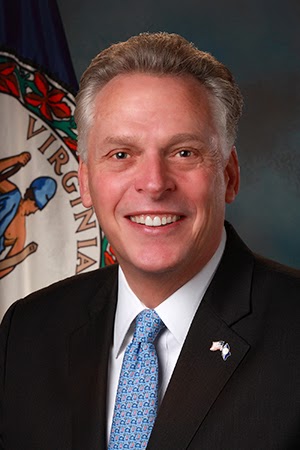
Governor Terry McAuliffe has announced that three projects – two to make locally grown produce available year round and one seeking to bring a major poultry producer to Southside Virginia – were awarded $60,000 in planning grants from the Governor’s Agriculture & Forestry Industries Development Fund (AFID). The AFID planning grant program encourages local governments to work with the agricultural community to identify projects and opportunities that can bring important benefits to local producers, and the community as a whole.
“Supporting Virginia’s diverse agricultural and forestry sectors is a great way to expand and diversify our economy,” said Governor McAuliffe. “Assisting localities in identifying potential new projects and implementing programs that strengthen agriculture and forestry in their communities and will contribute to building a 21st Century Virginia economy. Laying the foundation for possibly larger future projects in these communities, the relatively small, but important, amount of state support provided today allows localities to plan strategically and creatively about how to incorporate two of the state’s largest industries into their economic development efforts.”
The AFID planning grant program, funded annually at $250,000, was developed in 2012 to encourage local and regional governments to think strategically about how they can better support and integrate agriculture and forestry-based industries into their community’s overall economic development efforts. The planning grants are part of the larger Governor’s AFID program, an economic development tool specifically for agriculture and forestry value-added or processing projects. AFID economic development grants are available for political subdivisions of the Commonwealth interested in growing their agriculture and forestry industries by strategically targeting businesses that add value to Virginia grown agriculture and forestal products.

“Partnering with local governments to leverage their resources and innovative ideas on growing and supporting Virginia’s agriculture and forestry industries, like we do with our AFID program, is good policy;” said Secretary of Agriculture and Forestry Todd P. Haymore. “From innovative facilities that preserve locally grown produce for sale throughout the year to recruiting a major new industry to Southside, the projects funded today highlight the innovation and diversity of Virginia agriculture. Benefits from allowing localities to explore and capitalize on these kinds of opportunities have the potential to be felt throughout the business chain, from the individual producer level to the value-adding enterprise.”
Applications for AFID planning grants are accepted on a rolling basis throughout the fiscal year. Successful funding requests must show a clear need to be addressed, a solution to be undertaken, demonstrate strong support from local government and the agriculture and forestry community, and be able to match each dollar requested with a dollar of local government funds, or allowable in-kind contributions. Localities interested in applying may visit http://vdacs.virginia.gov/agribusiness/planning.shtml or contact Stephen Versen at stephen.versen@vdacs.virginia.gov or 804.786.6911 for more information.
According to a 2013 economic impact study conducted by the University of Virginia’s Weldon Cooper Center for Public Service, agriculture and forestry are two of Virginia’s largest industries, with a combined economic impact of $70 billion annually.  Agriculture generates more than $52 billion per annum, while forestry induces over $17 billion. The industries also provide more than 400,000 jobs in the Commonwealth.
Details on the three grant awards are below:
1.  Project Title:  Local Food Initiative
Applicant:      Franklin County
Award:           $15,000
Summary:      Franklin County is seeking an AFID Planning Grant to help Ferrum College implement a shared vision for making locally produced food a part of the County’s economic development strategy.  Included in the project is the operation of a flash freezer and storage freezer that will assist in furthering use of local food production.  This equipment will allow the College to double their purchases of local foods, increasing their local sourcing for campus food from an already impressive 30% to 60% from Virginia producers.  In 2012, Ferrum College’s Dining Services purchased $250,000 worth of product from local producers.  The roughly $100,000 project is also benefitting from $49,402 in Tobacco Commission funds.  The project will allow for at least one Full-Time Equivalent position on campus and provide additional access to local foods for their 1,500 primarily-residential students and 300 faculty and staff.  Ferrum is also working with Franklin County Public Schools on a pilot basis to provide fresh, local food to them as well.
2.  Project Title: Virginia Produced: A Light Processing and Flash Freezing Hub for Virginia-Grown Produce
Applicant:      City of Charlottesville and Albemarle County
Award:           $35,000
Summary:      This project will yield an actionable business plan for a flash freezing and light food processing hub, building on a feasibility study already completed by the Jefferson Area Board for Aging. The resulting business entity would source Albemarle County and Virginia-grown produce supplied by the Local Food Hub and distribute flash frozen bulk and retail packs and prepared meals to institutional customers such as the University of Virginia, Virginia Area Agencies on Aging, and specialty grocery retailers such as Whole Foods.  Growers stand to benefit through greater demand for their crops and exposure to new purchasers.  Local, wholesome food could be available year round for consumption by the local community.
3. Project Title: Integrated Poultry Industry Feasibility Study
Applicant:      Pittsylvania County
Award:           $10,000

Summary:      To conduct an in-depth and independent feasibility study focused on attracting integrated poultry companies to Pittsylvania County.  The study will inventory which companies are considering expanding, how and where a poultry complex could be located, which attributes of an area are attractive to poultry companies, and how the county can enhance its profile and marketing strategies to lobby these poultry companies.  This feasibility study and the data it produces will be utilized to develop promotional pieces and to assist the county in the manner best suited to invite an integrator to Southern Virginia.

Ditch the Rule: Comment on EPA Proposed CWA Rule by July 21

On April 21, 2014, the EPA and the Corps of Engineers released their long-awaited proposed rule to expand the Clean Water Act.
AFBF has carefully analyzed the proposal. Simply put, EPA and the Corps are now attempting to regulate virtually all water, something Congress has explicitly chosen not to allow and which two U.S. Supreme Court decisions have rejected.
For example, normal farming and conservation activities, such as fencing, brush management and pruning shrubs and trees, were exempted by Congress and have never required permits under the Clean Water Act. EPA and the Corps would now require farmers and ranchers to meet otherwise voluntary Natural Resources Conservation Service (NRCS) standards for these everyday normal farming activities and voluntary conservation practices, or else face Clean Water Act liability. By linking the normal farming exemptions to NRCS standards, the rule would make voluntary conservation standards subject to EPA enforcement.
This is unacceptable! AFBF President Bob Stallman recently said, “The American Farm Bureau Federation will dedicate itself to opposing this attempted end run around the limits set by Congress and the Supreme Court.” Read the full statement by clicking here.
Click here to read other stories on the EPA’s Water Rule:
How you can stand with Farm Bureau:
Go here to take action and send your messages to EPA and the Corps by the deadline of July 21, 2014. 

Guide to Writing Your Comments:
A sample letter has been prepared with a required beginning and ending. We ask that you add details around your personal situation – where is your farm or ranch generally located (County/State), what do you raise and how long have you and your family been there?
Identical comments are not as influential as personalized letters, so your comments will have more effect if you can add details of the impact the proposed rule will have on your farm or ranch. Here are some important suggestions for your consideration.
• Talk specifically about some of the features of your farm—ditches, drainage ways, tilled fields and grassed waterways —that will likely be considered Waters of the U.S. under EPA’s proposed rule.
Your Key Message should be: The proposed rule significantly expands the scope of “navigable waters” subject to Clean Water Act jurisdiction. As I read the proposal it would allow the federal government to regulate most ditches, small and remote “waters” and ephemeral drains where water flows only when it rains. Many of these areas are not even wet most of the time and look more like land than like “waters.”
• Express your concerns about how your farm or ranch may be affected if the EPA is allowed to claim jurisdiction over ditches and washes on your land. Clean Water Act jurisdiction could result in severe restrictions on your farming or ranching—or even prohibit farming or ranching activities in or near ditches, washes or isolated “wetlands”—no matter the cost or the practical impact on you, your family and your farm or ranch.
Your Key Message here should be: Because of the proposed rule, farmers, ranchers and other landowners will face roadblocks to ordinary land-use activities—like fencing, spraying for weeds or insects, discing or even pulling weeds. The need to establish buffer zones around grassed waterways, ephemeral washes and farm ditches could make farmlands a maze of intersecting “no farm zones” that could make farming impractical.
• Explain any problems you or your neighbors have had dealing with wetlands or waters. If you personally have had problems with the narrow “normal farming” exemption, share your experience. Have you tried to build a farm pond and been told “no?” Have you tried to plant tree crops in areas where you farmed corn and been told “no?” Have you been told not to use certain tillage practices? Have you been told that you cannot use your prior converted croplands for some reason?
Your personal experiences or those of your neighbors are important and your Key Messages should include: The farming and ranching exemptions in current law are important, but they have been very narrowly applied by the agencies—and they will not protect farmers and ranchers from the proposed “waters” rule.
• Explain why those claiming that farmers and ranchers should have no concerns because they are “exempted” from the rule are wrong. It is important to convey that “normal farming and ranching” exemption only applies to a specific type of Clean Water Act permit for “dredge and fill” materials. There is no farm or ranch exemption from Clean Water Act permit requirements for “pollutants” like fertilizer, herbicide or pest control products. Under the proposed rule, many common and necessary practices like weed control and fertilizer spreading will be prohibited in or near so-called “waters” unless you have a Clean Water Act permit. Second, EPA’s new guidance on the “dredge and fill” exemption actually narrows an exemption that already existed, by tying it to mandatory compliance with what used to be voluntary NRCS standards. Third, EPA and the Corps of Engineers have interpreted the “normal” to mean only long-standing operations in place since the 1970s—not newer or expanded farming or ranching.
Your Key Message should be: EPA’s so-called exemptions will not protect farmers and ranchers from the proposed “waters” rule. If farmlands are regulated as “waters,” farming and ranching will be difficult, if not impossible.

The Farm Bill: How it Works

The American Farm Bureau Federation has produced a new series of webinars and launched a website to help farmers, landowners and other stakeholders better understand the provisions of the 2014 farm bill. Featured content includes videos on key commodity program and crop insurance provisions of the farm bill.
“We have distilled down a massive and complex piece of legislation-the 2014 farm bill-into several ‘bite-size’ pieces, with the goal of helping farmers and managers understand how it will affect their farms,” said John Anderson, deputy chief economist with AFBF.
“Now that safety net and risk management tools important in crop planning are in place, along with the new program for dairies, the next step is for farmers to be able to move forward with confidence in determining the best options for their individual farms,” Anderson said. “We created the farm bill video series with that goal in mind.”
The webinars include a farm bill overview describing the basic provisions of the commodity title, including a description of the decisions related to program participation that will need to be made by farmers and landowners. Four other webinars go in-depth on the Price Loss Coverage and Supplemental Coverage Option, the Agricultural Risk Coverage Program, the Stacked Income Protection Program for Cotton and the Dairy Margin Protection Program.
Links to useful farm bill information from USDA, land-grant universities and other organizations also are available on the website.

Virginia Farm Bureau plans on hosting information Farm Bill meetings across the state in late summer after USDA has finalized some of the rules for the major program changes. Once those meetings have been been set, they will be announced on Plows and Politics

Virginia Wind Forum to be held June 3 in Harrisonburg

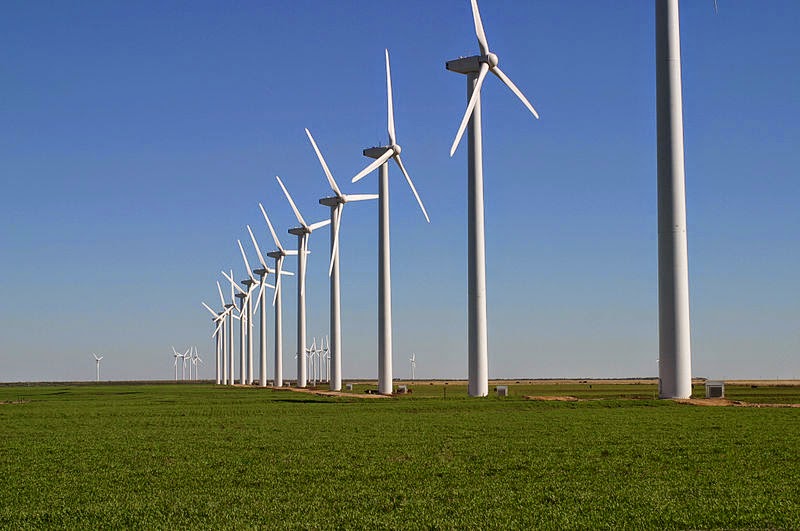
According to data from the National Renewable Energy Laboratory (NREL), Virginia’s onshore wind potential at 80 meters hub height is 1,800 megawatts. Virginia’s offshore wind potential is more than 18,000 megawatts at 90 meters. But to date, Virginia has no installed capacity.

Virginia wind stakeholders will be gathering at James Madison University on June 3rd to discuss the opportunities for, benefits of, and challenges to Virginia’s wind energy future.  In the morning, attendees will hear from AWEA’s senior VP of policy on the national wind energy situation, as well as the regional electricity context in which Virginia operates.  GE will review the wind-natural gas economic picture.  The morning will conclude with the first of 5 Virginia-focused panels, composed of various Virginia stakeholder groups; this panel will focus on the history of wind development in Virginia (panelists will include representatives from the utility, industry, state agency, advocacy, and academic sectors).  

 Lunch will focus on small group topical roundtables where each attendee will have an opportunity to speak to experts in 20 specific wind energy topics, including economics, myths, utility integration, wind for schools, siting and permitting  issues, to name a few. 

The afternoon will include panel sessions on distributed and community wind, land-based utility–scale wind, off-shore wind, and to wrap up the day, Virginia wind futures.  Panelists will represent a broad array of Virginia stakeholders and leaders, with various experiences, approaches, and perspectives.
The agenda can be viewed at http://www.awea.org/events/Event.aspx?EventID=27946.  Please consider joining your Virginia colleagues on June 3 at JMU in Harrisonburg by registering at   http://www.awea.org/events/Event.aspx?EventID=27946&SubSectionID=6336.