Virginia’s Finest Celebrates 25th Anniversary

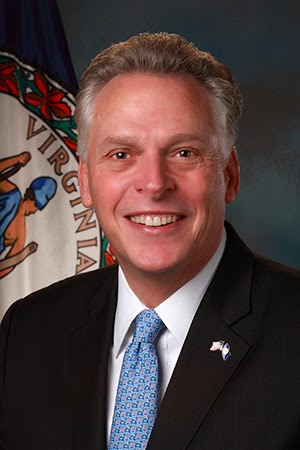
Governor Terry McAuliffe has announced that this year marks the 25th anniversary of the Virginia’s Finest® program.  Developed in 1989 by the Virginia Department of Agriculture and Consumer Services (VDACS), the program identifies, differentiates and promotes top-quality agriculture and specialty food and beverage products.  Buyers and consumers recognize the familiar blue and red “VA check mark” logo and know they are purchasing top quality Virginia-produced and processed products.  Today’s announcement kicks off a series of events in 2014 that will highlight the silver anniversary of the program. 
Speaking about the silver anniversary recognition, Governor McAuliffe stated, “The Virginia’s Finest® program has enhanced the economic opportunities and success of Virginia’s specialty food companies, processors, and agriculture producers.  Agriculture is Virginia’s largest industry and the Virginia’s Finest® program has helped play a key role in that success by raising the profile of the high quality food and beverage products that are made from the Commonwealth’s diverse agricultural bounty.  I am excited to recognize and celebrate the 25th anniversary of this innovative program, which contributes to the Commonwealth’s reputation for being the best state in the nation for doing business, agricultural excellence, entrepreneurialism, and promoting small businesses.” 

Governor McAuliffe also issued a proclamation recognizing 2014 as the 25th anniversary of the Virginia’s Finest® program in the Commonwealth of Virginia.  First Lady Dorothy McAuliffe and Secretary of Agriculture & Forestry Todd Haymore will present today the proclamation to Steven Lynch of Montebello Kitchens, Chair of Virginia’s Specialty Food Advisory Committee, at the Virginia Food and Beverage Expo at the Greater Richmond Convention Center.  This popular tradeshow connects buyers representing grocery stores, restaurants and gift shops directly with Virginia small businesses that produce specialty food and beverage products.  Almost all of the products at the Virginia Food and Beverage Expo have earned the Virginia’s Finest® designation.
Today, the Virginia’s Finest® program boasts more than 400 participating businesses representing a diverse assortment of specialty food products, including meats, cheeses, peanuts, condiments, confections, baked goods, beverages, sauces, soups and seafood.  To discover Virginia’s Finest® offerings, explore a complete list at www.vafinest.com.  Participation in the quality-based trademark program is by application and open to all Virginia agricultural producers and food processors who consistently meet specific quality standards.  Only Virginia products that meet or exceed quality standards are part of the Virginia’s Finest® program. All authorized Virginia’s Finest® products must be approved by the Virginia’s Finest® Review Committee, which consists of food safety officials and product marketing specialists. The Committee reviews product packaging and labels to ensure products meet state and federal regulations. In the case of most products, the producer must provide proof of its current and valid food safety inspection certificate.
The specialty food industry is a growing sector of the nation’s economy.  According to the Specialty Food Association, specialty food is among the fastest-growing industries in the United States, with sales skyrocketing by 22.1 percent between 2010 and 2012.  Total U.S. specialty food sales in 2012 topped $85.87 billion.

Happy National Ag Day and Virginia Agriculture Week/Virginia Agriculture Literacy Week

Today Secretary Haymore read to 3rd graders at St. Bridget School for Virginia Agriculture Literacy Week

Today, March 25, is National Ag Day, a time when producers, agricultural associations, corporations, universities, government agencies and countless others across America gather to recognize and celebrate the abundance provided by American agriculture.
As the world population soars, there is even greater demand for the food, fiber and renewable resources produced in the United States.

The National Ag Day program believes that every American should:
  • understand how food, fiber and renewable resource products are produced.
  • value the essential role of agriculture in maintaining a strong economy.
  • appreciate the role agriculture plays in providing safe, abundant and affordable products.
  • acknowledge and consider career opportunities in the agriculture, food, fiber and renewable resource industries.

In the spirit of National Ag Day, the National FFA Organization developed a list of agriculture facts that you may not know. Check them out:


1. Today, every farmer feeds 144 people — up from 25 in the 1960s
Quite simply, American agriculture is doing more – and doing it better. As the world population soars, there is an even greater demand for the food and fiber produced in the United States. [source]

2. The number of farms operated by women have doubled in the U.S. since 1978
Across the country, nearly 300,000 women serve as principal operators on 62.7 million acres of farm and ranchland, accounting for $12.9 billion in farm products in 2012. Countless more women live, work and raise families in rural America. [source]

3. By 2050, we’ll have to produce more food to feed the world than ever before.
Taking into account a growing population and shifting diets, the world will need to produce 69 percent more food calories in 2050 than we did in 2006.  World Food Prize President Amb. Kenneth M. Quinn calls “the single greatest challenge in human history: whether we can sustainably feed the 9 billion people who will be on our planet in the year 2050.” [source]

4. Agriculture employs more the 22 million people
Agribusiness Management, Agricultural and Natural Resources Communications, Building Construction Management, Agriscience, Resource Development and Management, Parks, Recreations, and Tourism Resources, Packaging, Horticulture, Forestry, Food Science, and Fisheries/Wildlife are all categories of agricultural careers. [source]

5. FFA is showing impressive membership growth 
With global needs today to fight hunger and prepare for the expected population explosion, the agriculture industry needs educated, skilled and passionate people dedicated to sustainability.

Students are answering that call, evidenced by an explosion in FFA membership to nearly 580,000 members throughout the U.S., Puerto Rico and the Virgin Islands in the past year. [Source]

6. Need a job? Several agriculture careers are in demand
Shortfalls of qualified graduates to work as plant geneticists and plant breeders, climate change analysts, and food safety and security specialists are anticipated during 2010–15, according to a Purdue University study. [source]

7. 10 percent of all Americans are involved in farming
One in 10 Americans play a role in the nation’s food and fiber supply, showing the extreme importance of agricultural awareness and understanding. Agriculture is too important a topic to be taught only to the small percentage of students considering careers in agriculture and pursuing vocational agricultural studies. [source]

8. FFA members nationwide are fighting hunger with community-based projects and by donating more than one million meals

In 2014, more than 450,000 meals have been provided by FFA members participating in the FFA Hunger Heroes Challenge while 122 FFA chapters nationwide are fighting local hunger with FFA: Food For All grant projects. [source]

Virginia is also celebrating Virginia Agriculture Week/Virginia Agriculture Literacy Week March 23-29. Throughout that week, VDACS employees and local Farm Bureau members will read to children in schools from Stephens City to Wytheville, Harrisonburg to Hanover. Everyone will read the same book, What’s in the Garden?, to pre-schoolers through second graders. The book asks and solves a riddle about a variety of agricultural products, gives simple recipes using those products and includes instructional sections on the parts of a plant and basic cooking terms.

Click here for information on Ag Week and here for more information on Ag Literacy Week. Teachers, parents and students will find a variety of resources and activities here. Schools that are interested in hosting a reader should contact Elaine Lidholm.

First AFID Award to Promote Economic Development, Increase Agricultural Exports

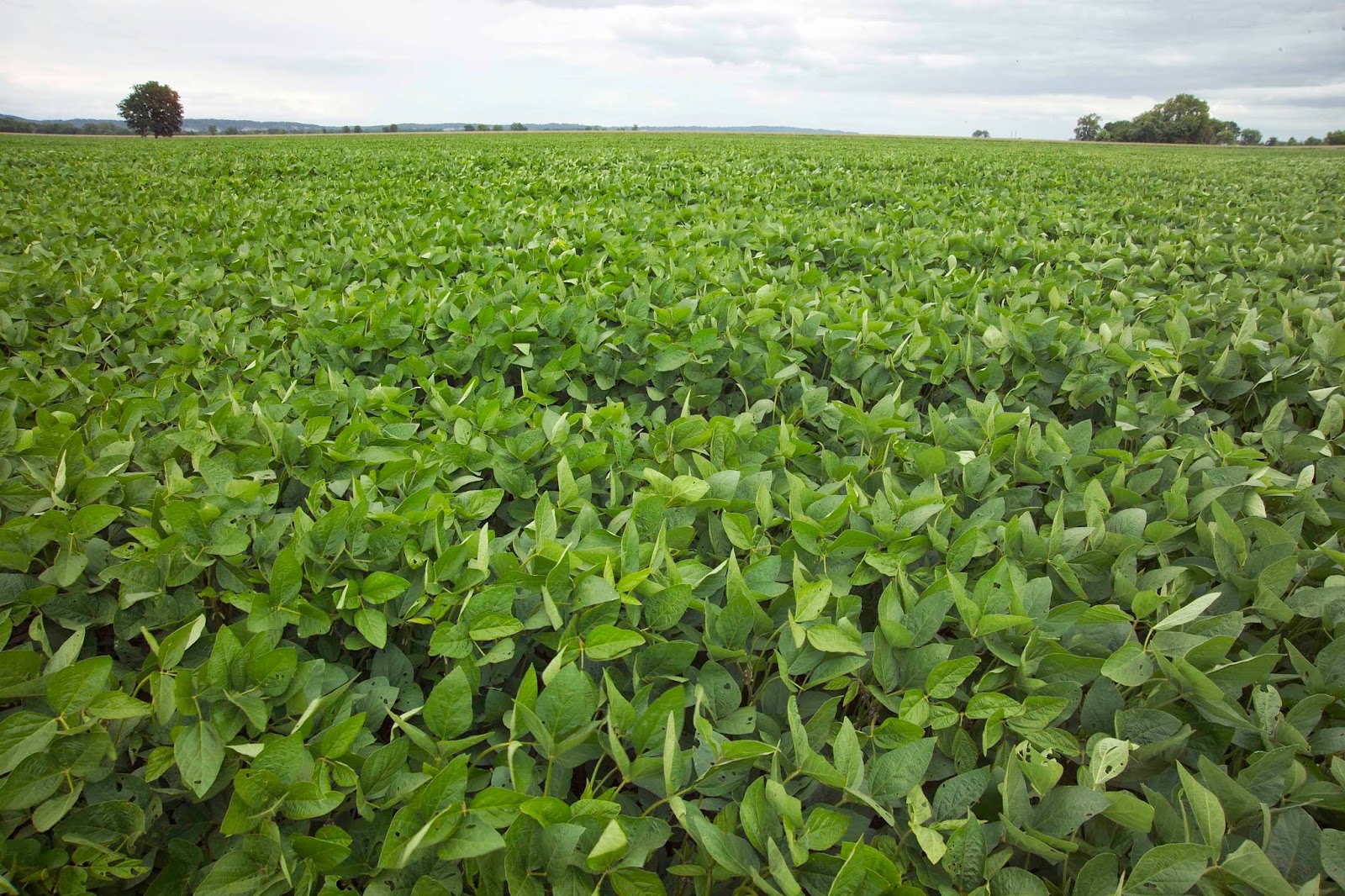
Governor Terry McAuliffe has awarded his administration’s first economic development grant from the Governor’s Agriculture and Forestry Industries Development Fund (AFID) for a business expansion project that Montague Farms, Inc. has undertaken at the company’s Windsor facility in Isle of Wight County.  Montague, a family-owned producer and exporter of specialty soybeans based in Center Cross, will invest more than $600,000 to purchase a new state-of-the-art packaging line, soybean testing lab, and warehouse facility. The AFID grant of $14,100 was matched by Isle of Wight.

In addition to the creation of three new jobs at the facility, the company will now be able to sell into the highly regulated, but lucrative sprouting soybean market of South Korea and beyond.  To serve this new market, the company will purchase more than 4,000 metric tons of Natto soybeans from Virginia producers over the next three years. 

Speaking about the announcement, Governor McAuliffe said, “I am delighted to award the first AFID economic development grant of my administration to Isle of Wight and Montague Farms, furthering two goals of my economic development and jobs creation strategy for the Commonwealth.  By collaborating with our private sector partners and local governments, we can make the make smart, targeted investments needed to position our economy for new opportunities, especially in agriculture, Virginia’s largest industry.  Secondly, with a focus on increasing the amount of products shipped from Virginia into the global marketplace, we can make Virginia the East Coast capital for agricultural and forestry product exports and return more jobs, revenue and prosperity to our rural communities.” 

Montague Farms has been involved in exporting food-grade non-genetically modified organism (GMO) soybeans for over twenty-five years, successfully focusing their exports on the Japanese Natto market, widely recognized for its demanding quality standards.  Investments announced today enable them to enter a new market, increasing and diversifying their opportunities for selling these value-added soybeans abroad.  Further, farmers in the region will now have the opportunity of supplying Montague with product and receiving a premium for their efforts, helping them diversify their farming operations while sending more money to the bottom line.  Montague owns and operates two grain storage and conditioning facilities in Virginia, the Windsor operation and another in Center Cross. 

“More than ninety percent of the world’s customers lie outside the borders of the United States, so if we are to see continued growth in Virginia’s agricultural sector it is imperative that we continue seeking new export opportunities in the global marketplace,” said Todd Haymore, Virginia Secretary of Agriculture and Forestry.  “I thank Montague Farms for their leadership in this area, for supporting so many other Virginia growers by purchasing their crops, and for moving us as toward Governor McAuliffe’s goal of making Virginia the leading state for agricultural and forestry product exports on the East Coast.” 

 “We are very thankful to Governor McAuliffe and Secretary Haymore for making Isle of Wight County not just the first AFID Grant recipient of this administration, but the first locality in Virginia to have received two AFID Grants,” said Byron B. Bailey, Chairman of the Isle of Wight County Board of Supervisors.  “First, this past June, with the reopening of the former International Paper sawmill by Franklin Lumber, and now with this facility, we are continuing our partnership with the Commonwealth in supporting projects in our county that bring jobs to our citizens and create new markets and opportunities for our forest and farmland owners.” 

“Exports are what drives our business, so we are glad to have this assistance from the Commonwealth of Virginia that enables us to continue to develop these markets” said Tom Taliaferro of Montague Farms. “Whether through trade missions promoting Virginia agricultural products, or through their support of the infrastructure needed to access these markets, as we are receiving today, we are appreciative of the Commonwealth’s focus on agriculture exports.”

Young Farmers Remain Concerned About Land Availability

Young Farmers discuss issues at the
2014 YF&R Leadership Conference
Securing adequate land to grow crops and raise livestock was the top challenge identified again this year in the American Farm Bureau Federation’s annual outlook survey of participants in the Young Farmers & Ranchers program. That challenge was identified by 22 percent of respondents, followed by economic challenges, particularly profitability, which was identified by 15 percent of the respondents.

“For young people today, securing adequate land to begin farming or expand an established farm or ranch is a major challenge,” said Jake Carter, AFBF’s national YF&R Committee chair and a farmer from Georgia. “Another major challenge is figuring out how to excel – not just survive – in today’s economy,” he said.

Other issues ranked as top concerns by young farmers and ranchers included burdensome government regulations and red tape, 12 percent; availability of farm labor and related regulations, 9 percent; water availability and urbanization of farm land, 7 percent each; and health care availability and cost, 6 percent.

The 22nd annual YF&R survey revealed that 91 percent of those surveyed are more optimistic about farming and ranching than they were five years ago. Last year, 90 percent of those surveyed said they were more optimistic about farming compared to five years ago.

The 2014 survey also shows 93 percent of the nation’s young farmers and ranchers say they are better off than they were five years ago. Last year, 83 percent reported being better off.

More than 91 percent considered themselves lifetime farmers, while 88 percent would like to see their children follow in their footsteps. The informal survey reveals that 87 percent believe their children will be able to follow in their footsteps.

The majority of those surveyed – 69 percent – consider communicating with consumers a formal part of their jobs. Many use social media platforms as a tool to accomplish this. The popular social media site Facebook is used by 74 percent of those surveyed. Twenty-two percent of respondents said they use the social networking site Twitter, 16 percent have a farm blog or webpage and 13 percent use YouTube to post videos of their farms and ranches.

“Use of technology and all the tools at our fingertips to not only improve production practices on the farm but also to interact with consumers – our customers – among young farmers continues to grow,” Carter said. “Use of social media platforms, personal outreach through farm tours, agri-tourism, farmers’ markets or a combination of these methods is where we’re at today,” he added.

High-speed Internet is used by 71 percent of those surveyed, with 28 percent relying on a satellite connection and fewer than 2 percent turning to dialup.

New this year, the young farmers and ranchers were asked about their rural entrepreneurship efforts, with 40 percent reporting they had started a new business in the last three years or plan to start one in the near future.

The survey also shows that America’s young farmers and ranchers are committed environmental caretakers, with 55 percent using conservation tillage to protect soil and reduce erosion on their farms.

AFBF President Bob Stallman said the results of the YF&R survey point to the future of U.S. agriculture being in good hands.

“I am confident that the know-how and tenacity of our young farmers and ranchers will ensure that the best days are ahead for our country and agriculture,” Stallman said. “They are the future of American agriculture and food production.”

The informal survey of young farmers and ranchers, ages 18-35, was conducted at AFBF’s 2014 YF&R Leadership Conference in Virginia Beach, Va., in February. The purpose of the YF&R program is to help younger members learn more about farming and ranching, network with other farmers and strengthen their leadership skills to assist in the growth of agriculture and Farm Bureau.

From the Field: Spring is On the Way!

From the Field is a bi-monthly column written by Mark Campbell, Farm Bureau Field Services Director for the Central District. He writes about Farm Bureau member benefits and County Farm Bureau activities.

While not a Farm Bureau activity, the winter weather has been the dominant topic of discussion for the past 3-4 months.  Although we did reschedule our Legislative Day at the Capitol and Presidents Conference due to winter weather. 
In addition to cold temperatures, significant moisture has been a big factor in farming this winter.  Many of the grain producers couldn’t get on fields to spread nitrogen.  In some areas, extreme cold temperatures and lack of snow cover stressed some wheat fields and other small grains and diminished stand survivability. Saturated pastures made for muddy feeding and tire tracks in the field that are still present.  Or you may have lost a boot to the mud, or water and mud splashed over your muck boots and down into your socks.  Extra hay stocks at the beginning of the feeding season have quickly declined as livestock required more feed to stay warm and maintain body condition. 
As I heard on a TV farm program one day, the discussion was about field conditions due to the weather.  But the weather man reminded everyone that spring will come.  Temperatures will warm, and farmers will start planting in a few weeks.


We, as farmers and ranchers, are as much in tune with nature and weather as any other profession that I know of.  We have the benefit in Virginia of having four distinct seasons.  Although some people would like to have had a shorter winter.  But as the calendar pages flip, the seasons roll by.  Spring will come.

We were teased this week with two days of temperatures in the 70s.  Teased is right, because Thursday is supposed to have a high that won’t make it to 40 degrees in some parts of the state.  But spring is on its way. 
I love spring time on the farm.  There are all kinds of signs that spring is on its way, and once it arrives; our cold and wet winter will be a distant memory.  The past two weeks, there have been small sprigs of green grass pushing up through the leftover hay that I unrolled a couple of months ago to feed the cows.  The birds such as Meadowlarks and Kill Deer scatter across the fields.  The daylight hours each day are getting longer.  The animals seem to have a pep in their step.  On these warm days, the lambs run and jump as if their energy is limitless.  The cows take the occasion at hay feeding time to give a snort and then a buck and jump at the hay bale being carried across the pasture. 
Farmers and ranchers have the honor and privilege to be stewards of these natural resources, but to also enjoy the splendor of nature.  Springtime for many farmers and ranchers brings calving or lambing.  For others it is the sight of green plants popping out of the soil in rows of green across a field.  With the popularity of backyard chicken flocks, baby chicks arrive on the scene.  
Calving and lambing never ceases to be miraculous to me.  To see that calf or lamb born and shake its head and take its first breath is truly amazing.  To have the built in internal functions and signals to get the lungs to start working and the instinct for the calf to get up and go toward the udder and get milk is nature’s mystery.  I had a heifer that calved during the March snow storm, which for a period of time was a blizzard.  Just like spring coming on its cycle and timing, the birth process of that heifer was taking place and it wasn’t going to stop for a snow storm.  The heifer, now cow, and calf are doing great.  I did have a barn that I got her in before calving to offer some relief from the wind and snow and made available some dry straw to lay on.  In the registered cattle business, most of the cattle have names as part of their registration pedigree.  The little bull calf born on March 3rd was aptly named Blizzard.
 Even though the temperatures have still been cold in the latter half of the winter, the longer hours of daylight have been an overriding factor in getting some typical spring things going.
The past several months in Farm Bureau have been really busy and also a signal of spring is that our meetings start to wind down.  In March we already had the Governor’s Conference on Trade and Presidents Conference.  Meetings still left in March are District Leadership and Policy Development Meetings and the State Women’s Conference. 
Time is a valuable commodity and there always seems to be lots going on.  But I hope that you get to take a few minutes to take in and enjoy natures Spring show.  It has its time and then another season will be upon us. 
Until next time,

Mark

On-Farm Activities Bill Signed By Governor

Trey Davis
Assistant Director
VFBF Governmental Relations
On Wednesday, March 5, Governor McAuliffe signed SB51 (Stuart) into law.  The provisions of SB51 will go into effect July 1, 2014.  HB268 (Orrock) has been passed by the House of Delegates and Senate and we expect it to be signed soon as well.

SB51 is truly a compromise, bi-partisan bill, and we are excited for the potential it has in growing the industry.  The legislation is a result of discussions from the On- Farm Activities Working Group (OFAWG) convened in 2013 by the Department of Agriculture and Consumer Services (VDACS) and the Secretariat of Agriculture and Forestry.  The OFAWG was comprised of private citizens, local government representatives and agricultural stakeholder groups with the mission of identifying problems and potential solutions to address the conflicts that have risen between local governments and farmers relating to zoning regulations.  Following the final meeting of the OFAWG, a consensus was reached among the majority of the participants to present the compromise bill (SB51) in the 2014 General Assembly.

SB51 strikes the appropriate balance between the needs of agricultural entrepreneurs and local government control.  The legislation very closely mirrors the protections given to farm wineries in §15.2-2288.3, and provides the rest of the agriculture industry the same standards of local protection that wineries have enjoyed since §15.2-2288.3 was enacted in 2006.  It specifically encourages farmers to do the following at their farm:

–sell their agricultural products or related items incidental to the operation, and sell food products in compliance with State law; and,

–host agritourism activities as already defined in §3.2-6400, including pick-your-own and farmers markets, and other activities that are usual and customary at Virginia farms.

Localities will still be able to ask for permits and regulate these activities if there is a “substantial impact” on the health, safety, or general welfare of the public. This same standard of review has been applied by localities as they enact local ordinances to address farm wineries, and as such, creates consistency in local government oversight for other portions of the agriculture industry.

Further, localities will still be able to ask for permits that are required by State law, such as erosion and sediment control, health department inspections, etc., and to utilize local taxing authority as established by Title 58.1.  These specific provisions were added at the request of Virginia’s localities during negotiations on SB51 .

All of the activities listed in SB51 must occur at a legitimate “agricultural operation” which is a property “devoted to the bona fide production of crops, or animals, or fowl including the production of fruits and vegetables of all kinds; meat, dairy, and poultry products; nuts, tobacco, nursery, and floral products; and the production and harvest of products from silviculture activity” as defined in §3-2.300.  This will ensure the main purpose of the property remains devoted to the production of agricultural commodities, ensuring that agricultural properties will be able to be used in a diverse manner to bring additional value-added benefit to the agricultural operation.

SB51 was heavily amended throughout the General Assembly to address the various concerns of stakeholders and represents a compromise amongst many groups that do not always agree.  Because of these changes, the bill received overwhelming bipartisan support and passed the Senate on a vote of 33-6 and the House of Delegates on a vote of 75-19. 

Thanks to all of you for your support and the contacts you made in supporting this bill.  If you have any questions, please do not hesitate to e-mail me at trey.davis@vafb.com.

Virginia Agricultural and Forestry Exports Reach New Record High

Governor Terry McAuliffe announced today that Virginia agricultural exports, which also include forestry products, reached a new all-time high of $2.85 billion in 2013, up more than 8 percent in total value from the previous record reached in 2012.  The announcement came during the Governor’s keynote remarks at the sixth annual Governor’s Conference on Agricultural Trade held in Richmond.  The conference runs through Friday at the Richmond Marriott.

Speaking about the new record setting agricultural and forestry export figures, Governor McAuliffe stated, “Continuing to increase Virginia’s agricultural and forestry exports and making Virginia the East Coast capital for these exports are top economic development and job creation priorities for my administration.  Agriculture and forestry, two of the state’s largest industries, play critical roles in maintaining our economic well-being, and the positive economic impact of these sectors is especially important to Virginia’s rural communities.  Beyond that, new export sales can spur economic growth throughout the Commonwealth – from our world-class ports to our outstanding farms – and help us achieve important goals such as preserving more working farmland and attracting new business investments in agricultural processing and related industries.”

The Commonwealth previously reached a record level of agricultural exports in 2012, when more than $2.61 billion in products were shipped from Virginia ports into the global marketplace.  In 2011, more than $2.35 billion in agricultural products were purchased by foreign customers.  The 2011 figure was a six percent increase from 2010.  Agricultural exports have grown in value by approximately 27 percent since 2010 when the Commonwealth launched a strategic plan to grow agricultural and forestry exports.  Virginia’s agricultural exports are competitive in the global marketplace because of the high quality and diversity of products available for export and the Commonwealth’s excellent sea, air, and land port system.  The growth in agricultural exports comes despite a continued slow economic recovery worldwide.

Governor McAuliffe’s strategic plan in agriculture and forestry for continuing to grow Virginia’s economy includes helping existing agribusinesses expand operations, recruiting new agribusinesses to Virginia, expanding international markets for Virginia products, and making strategic investments in rural infrastructure that support job growth in these areas.  Nearly a quarter of all Virginians live in rural communities, meaning the health of Virginia’s entire economy is linked closely to the prosperity of agriculture and forestry.  With more than thirty percent of gross farm income linked to exports, access to vibrant international markets is important to Virginia’s future economic prosperity.

“In spite of sharp decreases in prices for some of our key export products, increased volumes on strong demand and a pro-active and strategic trade marketing plan helped Virginia continue move more goods into the global marketplace,” said Todd Haymore, Virginia Secretary of Agriculture and Forestry.   “Indeed, we now have the infrastructure in place to help Virginia companies find new opportunities overseas.  Exporters can take advantage of Virginia’s network of trade representatives in key markets around the globe who have expertise in a variety of important market regions and countries.  We have on-the-ground resources in Canada, Latin America, Europe, India, Russia, China and Hong Kong covering greater Southeast Asia.  These representatives are there to work one-on-one with Virginia businesses looking to achieve new international sales.”

This year’s record amount of agricultural exports shipped from Virginia was driven by increased strong demand as the overall value of U.S. crops fell almost 10 percent in 2013.  According to figures issued by the United States Department of Agriculture (USDA), farmers saw a decline in crop prices between 2012 to 2013 for major commodity crops such as corn and soybeans.  The value of field crops fell to $166.95 billion in 2013, a significant decrease from $185.12 billion reported in 2012 according to USDA.  Field crop harvests in 2012 were negatively impacted by a severe Midwestern drought, leading to record high prices for corn and soybeans in that year.  In 2013, better nationwide growing conditions led to a record corn crop and third-largest soybean crop, which sent crop prices lower.
The top agricultural and forestry product exports from Virginia in 2013 included: soybeans, soy meal, and soybean oil; lumber and logs; unmanufactured leaf tobacco; wheat, corn, barley and other grains; animal feed; pork; poultry; seafood and other marine products; processed foods and beverages, including wine; wood pellets; animal fats and oils; raw peanuts; and cotton. 

The top three export markets for Virginia in 2013 were China, Canada, both filling the same two spots in 2012, and Switzerland, which moved up from fourth in 2012.  China imported more than $580 million in export agricultural purchases, while Canada totaled just over $259 million.  Switzerland imported more than $190 million in goods from Virginia in 2013.  Virginia’s other top export markets, along with the values shipped rounded to the nearest million dollars include: Russia, $117 million; Indonesia, $110 million; Vietnam, $83 million; Saudi Arabia $80 million; Egypt, $79 million; Venezuela, $76 million; Taiwan $75 million; United Kingdom, $69 million; Poland, $56 million; Turkey, $48 million; Mexico, $45 million; Morocco, $45 million; Ireland, $44 million; Italy, $41 million; Netherlands, $40 million; Malaysia, $39 million; and Cuba, $38 million.

The Governor’s Conference on Agricultural Trade is co-hosted by the Virginia Farm Bureau Federation, Virginia Port Authority, Virginia Tech’s Department of Agricultural and Applied Economics, and the Virginia Department of Agriculture and Consumer Services.  In addition to Governor McAuliffe and Secretary Haymore, the conference featured presentations from Amassador Kenichiro Sasae of Japan; Ambassador Nguyen Quoc Cuong of  Vietnam; C. Larry Pope, President and Chief Executive officer of Smithfield Foods; Bob Stallman, President, American Farm Bureau Federation; Darci Vetter, Deputy Under Secretary of Agriculture for Farm & Foreign Agricultural Services; Giulio Menato, Agriculture Counselor for the European Union; Maria Eugenia de Sanchez, Coordinator of Traffic Forecasting, Panama Canal Authority; and several additional leading industry executives.

According to a 2013 economic impact study conducted by the University of Virginia’s Weldon Cooper Center for Public Service, agriculture and forestry are two of Virginia’s largest industries, with a combined economic impact of $70 billion annually.  Agriculture generates more than $52 billion per annum, while forestry induces over $17 billion. The industries also provide more than 400,000 jobs in the Commonwealth.