AFID-Funded Project Creates 75 New Jobs in Carroll County


Governor Bob McDonnell yesterday announced that Virginia Produce Company (VPC), a family-owned agricultural produce wholesaler located in Hillsville, will more than quadruple the size of its operating facility and create 75 new full-time equivalent (FTEs) positions.  During the three-year project, VPC will invest more than $2.54 million in capital improvements and purchase an additional $12 million of Virginia grown produce from Virginia farms.  A unique aspect of this project will be the employment of 75 packing line workers, accounting for 50 FTEs, from the Mount Rogers Industrial and Developmental Center (IDC), a division of the Mount Rogers Community Service Board that trains and employs disabled Virginians.  In addition to the 75 IDC workers, VPC will also employ 25 full-time positions.
Speaking about yesterday’s announcement, Governor McDonnell said, “Virginia Produce Company symbolizes so much of what defines Virginia agriculture, the Commonwealth’s largest industry.  It is a family-owned business established on the idea that bringing the grower and wholesaler closer together benefits everyone involved, including the consumer.  Incorporating the Nature’s Hope project into this expansion further defines what Virginia Produce is all about. This partnership with Mount Rogers IDC provides a great opportunity for local residents with disabilities to be part of a productive work setting while earning a paycheck.”

VPC currently sorts, processes, packages, and distributes a variety of Virginia grown produce including tomatoes, pumpkins, sweet corn, squash, and broccoli from its 30,000 square foot facility in the Carroll County Industrial Park.  The expansion project will involve VPC purchasing a 138,000 square foot facility in the industrial park and making the necessary upgrades, including installation of larger coolers and more production lines, increasing capacity for current products and allowing expansion into new produce markets. 
 “This VPC project is an excellent example of a company fulfilling the dual purposes of the Governor’s Agriculture and Forestry Industries Development (AFID) program – making positive impacts both at the processing facility and on Virginia growers,” said Todd P. Haymore, Secretary of Agriculture and Forestry.  “The additional capital investment and job creation at VPC’s facility is outstanding for Carroll County.  I am especially excited about VPC’s commitment to purchase 50% of their increased produce demand, an estimated $12 million out of $24 million in new purchases in the next three years, from Virginia growers.  This infusion of additional revenue into the local agricultural economy is a huge boost to our farm families.”
VPC works directly with its growers through a farm-management program, helping farmers grow specifically what the market demands.  VPC’s farm-management program currently includes 20 Virginia growers and 1,800 acres with produce being sold into local and regional markets.  The new facility will help to serve a significant increase in the size of the farm-management program.
The President of Virginia Produce Company, Moir Beamer, said “We are excited about this opportunity to expand our business operations in Carroll County and provide our customers with a larger selection of Virginia grown produce.  With this program, we are working with people with disabilities and providing consumers with more options.”
VPC’s impact on area farmers has been distinctly positive.  Working closely with VPC to coordinate production, farmers have greater certainty that crops will be sold and typically bring more acreage under cultivation over time to meet increased demand.  As the VPC expansion comes online, there will be greater opportunities for existing and new farmers in the region.
David Hutchins, Chairman of the Carroll County Board of Supervisors said, “The expansion of Virginia Produce in Carroll County is an excellent example of utilizing the resources we have to create economic prosperity.  Agriculture is our leading industry in Carroll and to build upon our strengths is vital.  We have a local business that we are able to assist in growing that will generate jobs and capital investment.  And at the same time, Carroll County will sell the former Sara Lee property to Virginia Produce and that real estate will be back on the tax rolls.”
The expansion of VPC also allows for the growth of another signature agricultural institution in the area, the Southwest Virginia Farmers’ Market.  With a retail division owned by Carroll County and a wholesale division owned by the Commonwealth and operated by the County, the market is a tremendous resource for local farmers that provides wholesale, grading, packing and cooling operations.  With its relocation, VPC will lease its existing facility to the market with an option to purchase.  The lease of the VPC facility will double the market’s capacity and ensure that the produce infrastructure in the facility will remain an asset to the farming community.
The expansion is also made distinctive by VPC’s commitment to the “Nature’s Hope” product label it is introducing.  The new product label will involve the employment of up to 75 disabled Virginians in the facility through the Mount Rogers IDC.  HOPE stands for “Helping Organizations & People Excel” and is focused on programs that help disadvantaged groups excel in life through integrating them into different aspects of the creation of the product.  Involvement at VPC could include harvesting, packaging produce, or any other aspect of moving product from farm to table.  With the disabled population facing unemployment rates of 40 percent, “Nature’s Hope” provides a terrific opportunity for these individuals to find meaningful work.  The program has already received support and interest from national grocery chains.
Frank Dowell, Director of Mount Rogers IDC said “We are grateful for the opportunity to partner with Virginia Produce Company in the packaging of locally-grown produce under the “Nature’s Hope” label.  Through the vision shown by company President Moir Beamer and his team, we will be able to provide more employment opportunities for individuals with disabilities in our region.  We would like to express our enthusiasm in eager anticipation of Virginia Produce’s expansion and further collaboration with our agency.”
Steve Smith, President and CEO of Food City said, “We value the relationships we have built with Virginia farmers and Virginia Produce Company.  Working together, we have continued to grow and strengthen our partnership, which has provided critical opportunities for part-time farmers to transition to full-time farming and expand their own operations. Virginia Produce has been extremely instrumental in this process through their collaboration with the farmers in Southwest Virginia. The addition of VPC’s “Natures Hope” project will allow us to continue to work jointly with local farmers to increase our supply and explore the potential to further diversify the crops currently produced in Southwest Virginia.”
The Virginia Department of Agriculture and Consumer Services (VDACS) worked with Carroll County to help make the project a reality. Governor McDonnell approved a $200,000 matching grant from the Governor’s AFID Fund to assist Carroll with the project. The project is receiving additional assistance through the Tobacco Commission’s Tobacco Region Opportunity Fund, the State’s Enterprise Zone Program and through its Virginia Jobs Investment Program.

According to a 2013 economic impact study by the Weldon Cooper Center for Public Service at the University of Virginia, agriculture and forestry are two of Virginia’s largest industries, with a combined economic impact of $70 billion annually. Agriculture generates more than $52 billion per annum, while forestry induces over $17 billion. The industries also provide   more than 400,000 jobs in the Commonwealth.

Reminder: October 1 Deadline for Employers to Provide ACA Information to Employees

In preparation for the January 2014 start up of the Affordable Care Act’s (ACA) health insurance Exchanges, employers must meet the October 1 deadline to provide notice to employees (full and part-time) about the Exchanges and their potential eligibility for premium tax credits. New employees hired after October 1 must be given this notice within 14 days of their start date. Guidance released by the Department of Labor (DOL) can be found here.

The requirement to provide notice applies to employers covered by the Federal Labor Standard Act (FLSA).  In general, this means employers with one or more employee who have a volume of $500,000 of annual business. DOL guidance relating to the applicability of the FLSA can be found here.

Employers must notify workers about premium tax credits and eligibility requirements for the Exchange.  An employee whose employer-provided insurance costs exceed 9.5 percent of their income are eligible for premium assistance and to enter the Exchange.  To determine if an employee’s share of coverage exceeds 9.5 percent of income, a comparison is made between an employee’s W-2 Box 1 income and the employee contribution amount for the lowest cost for a self-only health insurance plan offered by an employer.

The notice for employers offering healthcare coverage can be found here.

The notice for employers without a healthcare plan can be found here

The ACA assesses applicable large employers (more than 50 full time employees or their equivalent) who offer coverage but have at least one full-time employee receiving a premium tax credit the lesser of $3,000 for each employee receiving a premium credit or $2,000 for each full-time employee. The ACA assesses applicable large employers that do not offer coverage and have at least one full-time employee who receives a premium tax credit a fee of $2,000 per full-time employee, excluding the first 30 employees from the assessment.  

Farm Bureau created documents explain how to determine if an employer is an applicable large employer. You can find them here: 

and here:

China Lifts Virginia Hardwood Log Import Ban

The government of China has announced its decision to lift the ban on hardwood logs imported to China from Virginia effective September 15, 2013.  Heading into the fall, a peak log export shipping season, this is great news!  
Secretary of Agriculture and Forestry Todd Haymore has expressed appreciation to members of private industry and federal partners along with the Virginia Department of Agriculture & Consumer Services (VDACS) staff.  Working tirelessly with the representatives from the government of China for an opportunity to demonstration fumigation and testing procedures certifying safety of Virginia hardwood and softwood logs, a visiting delegation of Chinese technical experts arrived in the Commonwealth in April 2012.  A pilot testing program began in June 2012 which has presented verifiable evidence to the safety and surety of Virginia hardwoods.  

While the ban has been lifted for hardwood logs, it remains for softwood logs originating or tested in the Commonwealth.  The Pine Wood Nematode concern that remains will continue to be a top priority within the Administration and Secretary’s offices and both have reached out once again to our industry leaders asking for options so that all Virginia forest products will have access to every global market. 


Watch for more developments on this front in the coming months.

Court Ruling Upholds EPA Chesapeake Bay TMDL

On Friday the 13th, more than two years after the original complaint was filed, Judge Sylvia Rambo upheld the Chesapeake Bay TMDL in its entirety, ruling against the American Farm Bureau Federation’s (AFBF) view that Congress gave that role to the states, not the federal government.
Bob Stallman, AFBF President, said, “The American Farm Bureau Federation is deeply disappointed with the district court’s ruling upholding the Environmental Protection Agency’s total maximum daily load for the Chesapeake Bay.  We believe the ruling is incorrect and has huge implications for farmers and many others in the Bay area and nationwide.”
“Win or lose in this lawsuit, farmers care deeply about our natural environment and want to do our part to improve water quality.  But Congress did not authorize EPA to dictate how farmers, builders, homeowners, and towns would share the responsibility of achieving clean water.  That is the states’ job.  We believe EPA’s approach wrongly puts federal agency staff in charge of intensely local land use decisions.”
This case started in January 2010.  AFBF and the Pennsylvania Farm Bureau filed a lawsuit against EPA in the U.S. District Court for the Middle District of Pennsylvania challenging the lawfulness of EPA’s recently finalized Total Maximum Daily Load (TMDL) for the Chesapeake Bay watershed.  The lawsuit asserted three basic claims: (a) the TMDL micromanages state water quality decisions, in violation of EPA’s limited Clean Water Act authority; (b) EPA arbitrarily disregarded science, in violation of the Administrative Procedure Act (APA); and (c) EPA issued the TMDL with insufficient opportunity for public participation in violation of the APA.
Judge Rambo’s decision is 99 pages long.  Everyone from each side of this issue are analyzing the document to better understand the full implications of the decision.

Stay tuned for more updates on this issue on Plows and Politics.

First List of Certified Farm Seekers Released

 Official certified farm seekers Ryan Pittman
and Richard Kitchen hard at work in the field.
The Certified Farm Seekers Program has released its first official list of certified farm seekers, which can be found at multiple locations on the Virginia Department of Agriculture and Consumer Services’ website, including: here
These individuals have worked tirelessly to complete the program requirements and ultimately gain recognition as a certified farm seeker. Each farm seeker has completed the Introduction to Whole Farm Planning module, produced a professional resume and model business plan, and demonstrated on-farm experience. These seekers are now certified as being prepared to successfully demonstrate their farming commitment and vision to interested landowners.

Landowners in the Virginia Farm Link database are aware of the title’s distinction and are reaching out to certified farm seekers, before other seekers in the database, to discuss a potential farm transition. In addition to elevation in Farm Link, each certified farm seeker received up to $500 in cost share funds towards a farm transition or farm planning service, such as a transition attorney, professional business plan review, or crop/livestock consultant. Each certified farm seeker also gained access to ongoing direct assistance from the CFS coordinator in facilitating conversations and matches with landowners. One certified farm seeker, Ryan Pittman, commented, “It feels good to know there is a system looking for land for me to expand my operation when I am not able, because of my busy work schedule in the field”.

Future certified farm seekers learning about
 business planning at Young Farmers Summer Expo
The “Certified Farm Seekers List” is expected to grow as numerous participants who are extremely close to certification submit their work. They are demonstrating great effort and have noted that even if you are not in direct need of land, the program has many benefits. One such participant, WP Johnson, explains, “Each section of the program requirements has good parts and really makes you think about aspects you wouldn’t normally consider. It’s worth it just to finally get my resume and business plan down on paper.”  
If you are interested in becoming a certified farm seeker or would simply like to learn more about the program, contact:
Stefanie Kitchen
(804) 290-1030
Ron Saacke
(804) 514-4202
Kevin Schmidt
(804) 786-1346

From the Field: Telling Your Story

From the Field is a bi-monthly column written by Mark Campbell, Farm Bureau Field Services Director for the Central District. He writes about Farm Bureau member benefits and County Farm Bureau activities.

Central District Women’s Committee Chair
Joan Talley with VDACS Commissioner
Matt Lohr
That was the theme at the Central/Northern District Farm Bureau Women’s meeting last week.  Speakers were Matt Lohr, Commissioner of Virginia Departmentof Agriculture and Consumer Services (VDACS); Turner Gravitt, Southern States Director of Corporate Events, Member Relations and Government Affairs; and Dane Rothfrom the U.S. Farmers and Ranchers Alliance (USFRA).
Matt Lohr was energetic and motivational as always.  The audience welcomed his message to make the best of their situation and to use their talents to the best of their ability.  Matt reported impressive statistics on Virginia exports, and the potential to further increase agriculture exports.  Matt also made the case that there was room for all types of agriculture, big and small, organic and conventional to feed a growing world population.  As you know there has been a mixed message and attacks within our own agriculture industry.  We can offer the consumer choices.   But we don’t need to confuse them by degrading other production methods.

Turner Gravitt of Southern States shared knowledge about change in the agriculture industry and Southern States 90 years in business.  Part of the change in agriculture has been the development of genetically modified organisms (GMOs).  Round-Up Ready crops have played a huge role in agriculture.  While there is a lot of debate about GMOs, Turner told the audience to make their own decision on GMOs, but telling their personal story is the best way to educate consumers about agriculture.  Lindsay Reames just reported on GMOs in the most recent Plows and Politics Blog, and you can learn more at www.gmoanswers.com 
Dane Roth, with USFRA flew in from Chicago and gave presentations at the central/northern and capital district meetings.  The USFRA is an alliance of approximately 70 groups that support a unified platform to get agriculture’s message out to the general public from farmers and ranchers.  You can find them at www.fooddialogues.com and there is a section of the site dedicated to factual agriculture information.  He talked about conversation with EASE.  EASE stands for Engage, Acknowledge, Share, Earn trust.  EASE is all about having civil discussions about food production.  He shared some really interesting stories about anti-agriculture people who changed their opinions about agriculture after engaging with farmers and ranchers.  There were even examples of people that were hostile toward conventional agriculture ended up defending the farmers that they originally distrusted in online forums.
You are the best expert at what you do. You don’t have to know everything about everything, or recite a bunch of statistics. You will be more convincing by sharing what you do.  Telling your own story is the most convincing to the reader or recipient and helps earn trust.  In today’s world, there are a multitude of communication methods for you to get your message out.  It is hard for someone to argue with you when you are telling your story.
In a few weeks, I will be sharing updates on harvest season straight from the field with some pictures.
Until next time,

Mark

Website Puts Everything GMO-related on the Table

Below is an article from American Farm Bureau about a new website the answers common questions about GMOs. This is the best website I’ve ever seen that is directed towards the consumer and answers their questions thoroughly and accurately. I thought I would share this with you to pass along to any of your friends and neighbors who have questions about GMOs. – Lindsay Reames, Assistant Director, Governmental Relations

What’s for dinner? For many people around the world, they want to know far more than just what’s on their plates. They want to know how it got there and who and what was involved. And that “what” often means whether genetically modified organisms (GMOs) are on the menu. To help consumers answer these questions, the agricultural biotechnology companies that develop GM seeds recently launched the GMO Answers website. 

Through a public Q&A section and other resources, the easy-to-access public website provides information on GMOs, their background, use in agriculture, and research and data.

“From the basics of what GMOs are and how they are used to peer-reviewed scientific studies and data, GMO Answers is a one-stop shop,” said Andrew Walmsley, American Farm Bureau Federation biotechnology specialist.
The public Q&A section is a unique feature of the site, and one that the companies involved are excited for consumers to use. 

“GMOs are a growing topic of discussion today, with a wide range of questions and emotions,” said Cathleen Enright, Ph.D., spokesperson for GMO Answers. “Food is personal, so we want to open the door for personal discussions. We recognize we haven’t done the best job communicating about GMOs-what they are, how they are developed, food safety information-the science, data and processes. We want people to join us and ask their tough questions. Be skeptical. Evaluate the information and decide for yourself. We look forward to an open conversation.” 

Among those ready to answer any and all GMO-related questions are farmers, scientists, academics, and food safety and health experts. The questions currently trending on the site are related to labeling of GMO products, the research behind the safety of GMOs and what would happen if GMO crops mixed with non-GMO varieties. 

As the public discussion on GMOs continues, the scientists who develop biotech seeds, along with farmers who grow them, want to make information about GMOs easier to find and understand. 

“Having grown up on a small farm and spent much of my life in academia I can relate to the issues on several levels. I’ve offered to address questions submitted to GMO Answers openly, based on my personal insights, experience and research,” said Martina Newell-McGloughlin, director of the International Biotechnology Program at University of California-Davis. “I know that many of my colleagues have committed to do the same because we feel consumers have every right to ask questions about how their food is grown, and they deserve an open and honest response so that they can make informed decisions.” 

With a commitment to openness and access to information, GMO Answers is based on five core principles:

  • Respecting people around the world and their right to choose healthy food products that are best for themselves and their families.
  • Welcoming and answering questions on all GMO topics.
  • Making GMO information, research and data easy to access and evaluate and supporting safety testing of GM products, including allowing independent safety testing of our products by validated science-based methods.
  • Supporting farmers as they work to grow crops using precious resources more efficiently, with less impact on the environment and producing safe, nutritious food and feed products.
  • Respecting farmers’ rights to choose the seeds that are best for their farms, businesses and communities and providing seed choices that include non-GM seeds based on market demands.

“As GMOs are tools that help farmers produce more food using less water and fewer pesticides, this website is a tool for parents who want to know more about what they’re feeding their families, or young adults who want to learn about all the options biotechnology provides them as they’re making their abundant food choices,” Walmsley said. 

GMO Answers is produced by the members of The Council for Biotechnology Information, which includes BASF, Bayer CropScience, Dow AgroSciences LLC, DuPont, Monsanto Company and Syngenta. AFBF is a supporting partner of GMO Answers.

VA-MD Vet Med School Student Learns to "See Through A Farmer’s Eyes" During Externship

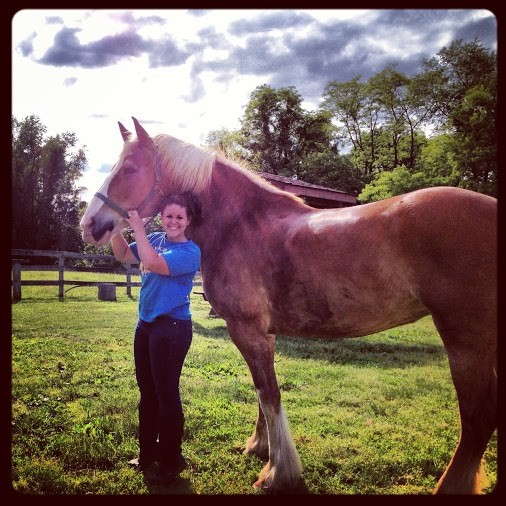
VA-MD Vet Med Student Mallan Willis
Virginia farmers rely on veterinarians for animal health and realize how critical a veterinarian is for the success of their farm.  To help increase the number of large food animal veterinarians in underserved areas and in rural Virginia, Virginia Farm Bureau developed The Virginia Farm Bureau Farm Externship, which exposes veterinary students to animal agriculture and rural Virginiato encourage them to establish food animal/mixed practices. The externship lasts for one week during the summer break (or another school break). 


The goals of the externship program are exposing students to farm life, rural communities and the benefits of being a member of Farm Bureau; giving students experience on the farm and expose them to Virginia Farm Bureau; establishing a relationship with the students and farmers in a rural community that will assist them in returning to a rural area to practice; and helping farmers  understand the need to reach out to new veterinarians in the community to help them get established.

Mallan Willis, a second year student at VA-MD Regional College of Veterinary Medicine at Virginia Tech, recently completed her externship working alongside Peter Truban, who runs a cow-calf operation farmer in Shenandoah County and also serves on the Virginia Farm Bureau Board of Directors, as well as other farmers in the county. Here, she shares her experience. 

The Virginia Farm Bureau Externship was a fantastic learning experience. As a person who is interested in food animal medicine but grew up riding horses, I was looking to gain an understanding of how the food animal industry operated. 

In August, Mr. Peter Truban and various farmers in Shenandoah County graciously opened their doors and farms to teach me about food animals. The first day I learned the terminology commonly used to describe cattle and numerous practices done on the farm. I learned the names of all the different machinery that keeps the farm running efficiently and how they operate.

One particularly eye‐opening realization was that food animal producers double as crop producers. To keep costs at a minimum and maximize the growth or production of their animals, many farmers choose to grow their own feed. Mr. Truban and many of the farmers in the county not only have a main farm on which to keep their crops but also many additional farms or properties on which to grow corn, rye, wheat, and soybeans. They may chop the crops into silage or harvest the grains depending on the rations they are feeding each herd.

My favorite day was Wednesday, August 7th. That morning I visited the French Brothers Dairy where the local food animal veterinarian was performing a weekly herd health check. There were 22 cows that needed to be palpated to determine their location in the estrous cycle or to confirm pregnancy. Once the food animal vet was finished with his assessment of the cow, he permitted me to perform a second palpation to see if I could feel any reproductive structures like the cervix, uterus, ovary, or cysts.

Once the cows had been palpated, we assessed three additional cows that appeared to be sick. Following a physical exam, the veterinarian ruled that the first cow had a left displaced abomasum and surgery must be performed immediately. I had never seen a surgery on a cow before, and I must say that it is quite different from surgery on a horse.

After the cow had been sufficiently blocked and the site was surgically prepped, we opened up the cows right paralumbar fossa to have a look inside. I was given a glove and asked to feel the inflated abomasum and identify a few structural landmarks of that surgery including a piece of omentum called a sow’s ear. This is the medicine I love! 

While I enjoyed the medical aspect of this externship, I truly learned a lot about production agriculture. I was informed on the steps it takes to become a chicken farmer and what precautions must be taken when designing a building to increase air quality. I learned about the numerous laws and regulations farmers must follow in order to sell their products to the public and how to maintain food safety on their farm. 

I was also introduced to the daily difficulties farmers face to keep their farm running and gained a respect for those who work long hours to give the public food to eat.

The single, most important thing I learned was how to look at food animal medicine through a farmer’s eye and how I can use that understanding to be a better food animal practitioner.

If you are a student who is interested in this program or know someone who would be, please contact Lindsay Reames at 804-290-1019 or Lindsay.Reames@vafb.com. Also contact Lindsay if you are a producer member interested in working with a vet school student in the program.


State Announces Crop Expectations: More Corn, Fewer Peanuts

The Virginia Department of Agriculture and Consumer Services announced expectations for 2013 crop yields. Rain has had varied effects on the commonwealth’s crops.

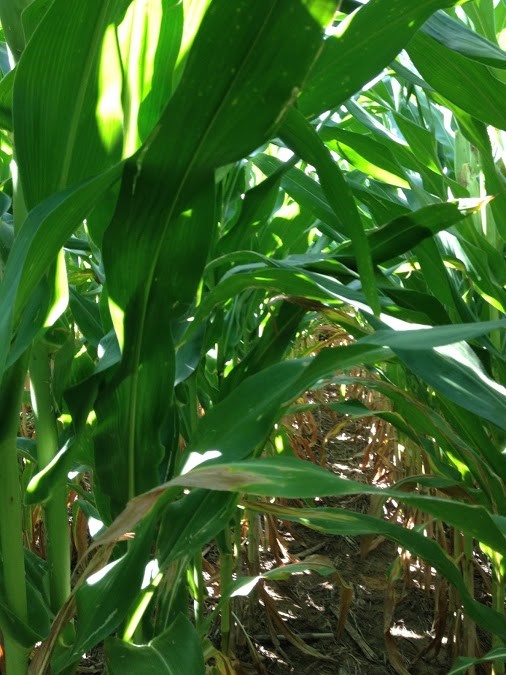
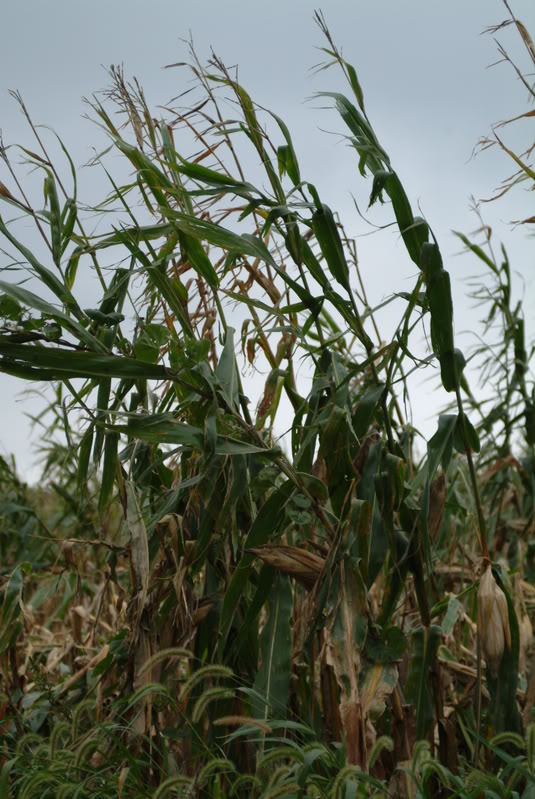
Corn is expected to yield 145 bushels per acre, up 42 bushels from 2012. 

“Generally speaking, most corn producers are having a much better season than 2012 due to plentiful rains. However, the corn yield will suffer in some areas due to waterlogged soil conditions caused by excessive rainfall,” said Tony Banks, a commodity marketing specialist for Virginia Farm Bureau Federation. “Soybeans are also doing relatively well,” Banks said. Soybean producers expect to harvest 42 bushels per acre, the same as they did last year.

Abundant rainfall this summer has not been good for all crops, though. “In some instances the rain has been excessive and will have a negative impact on yield and quality of different crops. For example, excessive rain at the harvest damaged both the wheat and barley crops, especially grain quality,” Banks said.

The winter wheat yield is expected to be 64 bushels per acres, down from 65 bushels per acre last year. Barley yields are predicted to be 78 bushels per acre, down 4 bushels from last year.

Hay producers expect 90,000 acres of alfalfa hay with an average yield of 3.2 tons per acre. With regard to other types of hay, yields are expected to be 1.2 million acres, with an average of 2.5 tons per acre.

“This wet summer also is taking a toll on cotton and flue-cured tobacco,” Banks said. 

The cotton yield is anticipated to average 1,050 pounds per acre, 68 pounds less than last year. If that forecast is accurate, production will be 151,000 bales, 24 percent less than in 2012.

Flue-cured tobacco producers expect 2,300 pounds per acre, 100 pounds less than in 2012. Burley yields are expected to be 1,800 pounds per acre, 50 pounds more than last year. Fire-cured tobacco yields are 2,000 pounds per acre, 300 pounds less than in 2012.

Peanut producers expect to harvest 14,000 acres, 6,000 less than last year. Yields are expected to be 3,500 pounds per acre, 700 pounds less than last year. The overall production will be 49 million pounds, which is 42 percent less than last year.